
Attic Insulation Stopped Working
What’s Happening
When attic insulation stops working, it almost always means one of three things: the material has settled or compressed to the point where it no longer holds a useful air barrier, moisture has gotten in and destroyed the insulating value, or the original installation left gaps that have been letting conditioned air escape the whole time. Any of these will produce the same symptoms – rooms that won’t hold temperature, heating and cooling bills that keep climbing, and a house that never quite feels right no matter what you set the thermostat to.
Insulation doesn’t fail dramatically. It quietly loses effectiveness over months or years, so by the time a homeowner notices, the problem is usually well established. The good news is that every one of these causes has a clear fix, and a trained technician can diagnose which one it is in a single visit. Knowing what to look for before that visit helps you describe the problem accurately and speeds the whole process up.
Why It Happens
Settled or Compressed Insulation
Blown-in insulation – whether fiberglass or cellulose – settles over time, and the older it is, the more it compresses. What started as a properly thick layer gradually loses depth, and once the depth drops below the minimum your climate zone requires, the thermal resistance drops with it. If you can safely peer into your attic hatch without going all the way in, and the insulation looks noticeably thin, almost flat against the joists, that’s a strong sign settling is your problem. You might also notice the effect most in rooms directly below the attic, where temperatures swing more than they do elsewhere in the house.
Moisture Damage
Water is the fastest way to destroy insulation’s effectiveness. A roof leak, a condensation problem, or inadequate attic ventilation can saturate fiberglass or cellulose insulation, and wet insulation conducts heat instead of resisting it. From the attic hatch, look for insulation that appears matted down, discolored, or darker in patches than the surrounding material. A musty smell coming through the hatch is another indicator. If you see staining on the attic deck boards or actual daylight through the roof, stop at the hatch – don’t go further – and call a professional, because wet attic conditions can include hidden mold and compromised structural material that require safe handling.
Air Bypasses and Installation Gaps
Even good insulation material fails when the air sealing underneath it isn’t done correctly. Gaps around light fixtures, plumbing chases, attic hatches, and the tops of interior walls allow conditioned air to flow freely into the attic, bypassing the insulation entirely. This type of failure is very common in houses built before the mid-2000s, when air sealing wasn’t always treated as part of the insulation job. If your bills are high but the insulation visually looks present and intact, air bypasses are frequently the real culprit.
Insulation That Was Never Adequate to Begin With
Sometimes the problem started on day one. Homes that were built to older standards, or where a previous insulation job was done quickly and cheaply, may never have had the depth or coverage the space needed. If your house has always been harder to heat or cool than it should be, and the insulation you can see looks thin and uneven, the original installation is worth questioning. A technician will measure actual depth and coverage during the diagnostic visit and can tell you specifically where the deficiencies are.
What to Do Right Now
- Look, don’t enter. Open the attic hatch and visually inspect from the opening. Note what you see – insulation depth, any wet or dark patches, any visible light coming through the roof deck. Don’t walk into the attic yourself; attic floors are not designed to support weight between joists, and a fall through the ceiling is a real risk.
- Take photos. Use your phone to photograph what’s visible from the hatch opening. These images help your technician prepare before the visit and can confirm what they find once they’re inside the attic.
- Check your energy bills. Pull up the last 12 months of bills if you can access them online. A visible upward trend, especially in months where you weren’t running equipment harder than usual, is useful diagnostic information.
- Note which rooms feel wrong. Rooms directly below the attic that are harder to keep comfortable than the rest of the house, rooms where drafts come from the ceiling, or spaces where the floor above an unconditioned crawl connects to the attic – all of this helps narrow down where the gaps or failures are.
- If you smell something or see staining near vents or the ceiling, stop. Discoloration around ceiling fixtures or a persistent musty or smoky smell from the attic could signal moisture, mold, or a venting problem. Don’t try to investigate further yourself – call for professional assessment before anything else.
How We Fix It
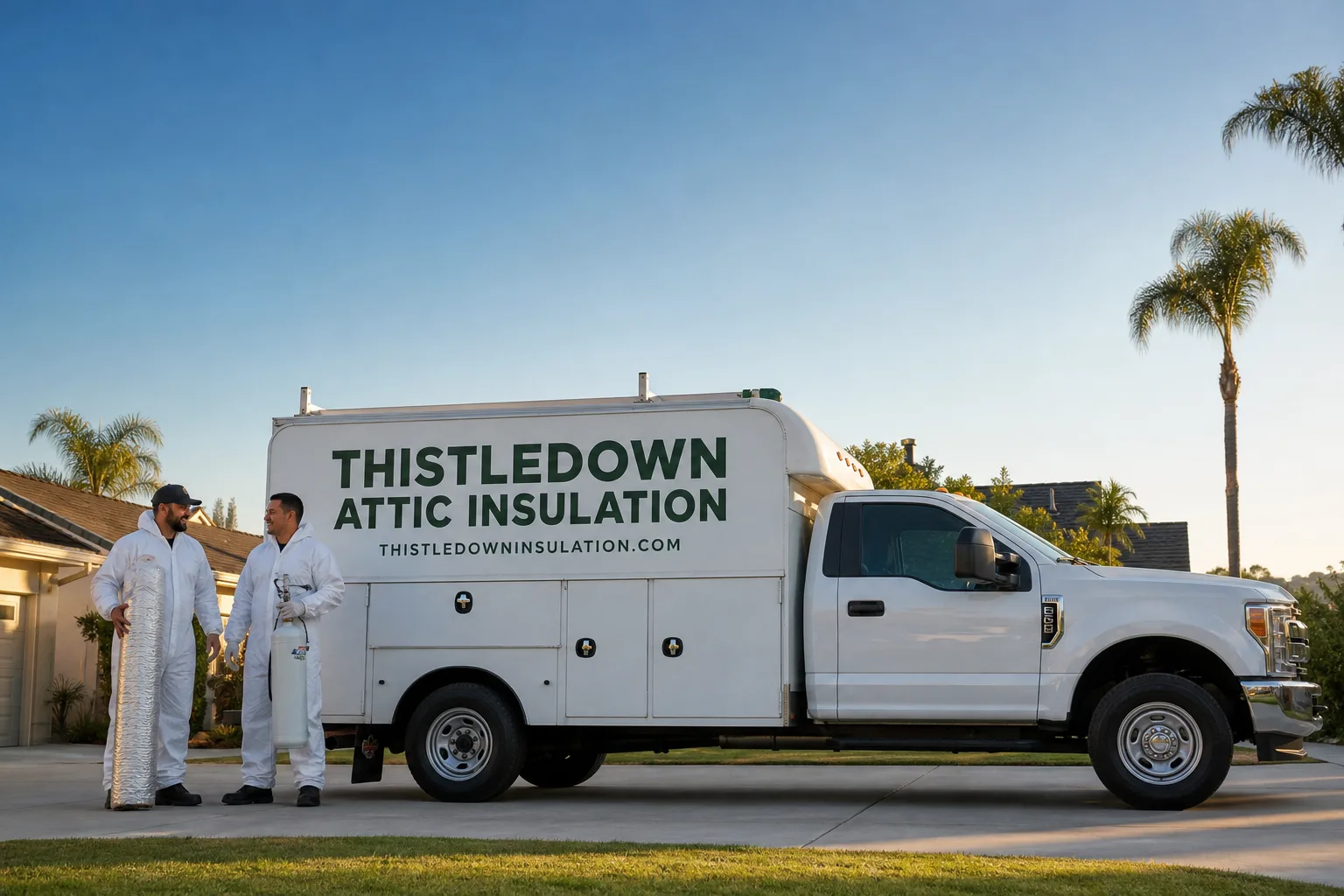
When your local Thistledown Attic Insulation team arrives, the first thing the technician does is a full attic inspection – measuring actual insulation depth at multiple points, checking for moisture, locating air bypasses, and assessing the ventilation. Nothing gets touched until that picture is complete.
From there, the fix almost always involves one or both of our core services: attic insulation and spray foam insulation. Settled or thin insulation gets brought up to the correct depth using blown-in material from brands like Owens Corning, Johns Manville, Knauf, or GreenFiber – whichever is the right match for your attic. Air bypasses are sealed before any new insulation goes down, because adding depth over open gaps just covers the problem without solving it. Where a tighter seal is needed around penetrations or in difficult areas, spray foam from Icynene or Demilec handles it precisely.
Most attic insulation jobs are completed in a single visit. Before anything starts, you’ll have a written price in hand – specific to your job, not an estimate range pulled from a brochure. That’s not an option we offer; it’s how every job works. And the 365-Day Done Right Promise covers the work after we leave: if something isn’t right, we come back and make it right, no debate.
We also work to the Cedarwell Care Promise on every visit: shoe covers and drop cloths inside the house, quiet tools if children are sleeping, pet-safe product options where a choice exists, and a photo of the clean-up before the crew leaves. We ask before we move or touch anything that isn’t directly part of the job.
Frequently Asked Questions
Yes, over time it can. Beyond the energy loss, insulation that has absorbed moisture creates conditions where mold can grow on attic deck boards and roof structure. That’s a more serious and more expensive problem than the insulation itself. Compressed or missing insulation also forces your heating and cooling equipment to run longer cycles than it was designed for, which adds wear. The problem doesn’t get better on its own, so the sooner it’s diagnosed, the simpler the fix tends to be. If you’re seeing any signs of moisture or staining, call (909) 768-6501 – a live person answers around the clock.
If the insulation is simply settled or thin, you have some time to schedule properly – but “some time” doesn’t mean months. Every month of inadequate insulation is a month of higher bills and harder wear on your HVAC. If you’ve spotted moisture, staining, or any sign of a roof leak, treat it as urgent: wet attic conditions deteriorate quickly, and mold can establish in as little as 24 to 48 hours under the right conditions. Call (909) 768-6501 now if you have any doubt.
We don’t publish blanket prices because attic size, current insulation depth, and the scope of any air sealing needed all affect the number significantly. What we can tell you is that every customer receives a written price before any work starts – not after the crew is already in the attic. That price is specific to your job and doesn’t change once you’ve approved it. Call (909) 768-6501 to schedule a free written estimate and you’ll know the exact number before you decide anything.
Your local Thistledown Attic Insulation team works to get to you as quickly as scheduling allows, and a live person is available at (909) 768-6501 24 hours a day, seven days a week – so you won’t be leaving a message and waiting. Call us now, tell us what you’re seeing, and we’ll get the earliest available appointment confirmed while you’re on the phone.
Get It Fixed
Call (909) 768-6501 any time – a live person answers, day or night. You can also book online. Your local Thistledown Attic Insulation team will schedule an inspection, give you a written price before anything starts, and get your attic back to doing its job.
Written by Neil Barron, Owner at Thistledown Attic Insulation, a proud member of the Cedarwell family of independently owned insulation companies, founded in 2003.
What Our Customers Say
"Attic insulation with a baby in the house. The crew was quiet, clean, and protected every floor they crossed. Took away all the debris and left it tidy. Already feeling the difference in comfort."
- Omar Leon"Spray foam in the garage and new attic insulation. Considerate, calm crew that protected the floors and kept the dust down with our little ones around. Explained it all patiently."
- Hassan Qureshi"Careful and clean from start to finish. They covered the hallway, wore booties, and hauled off all the old material without leaving a speck. Respectful of the home the whole time."
- Brett Yamamoto