
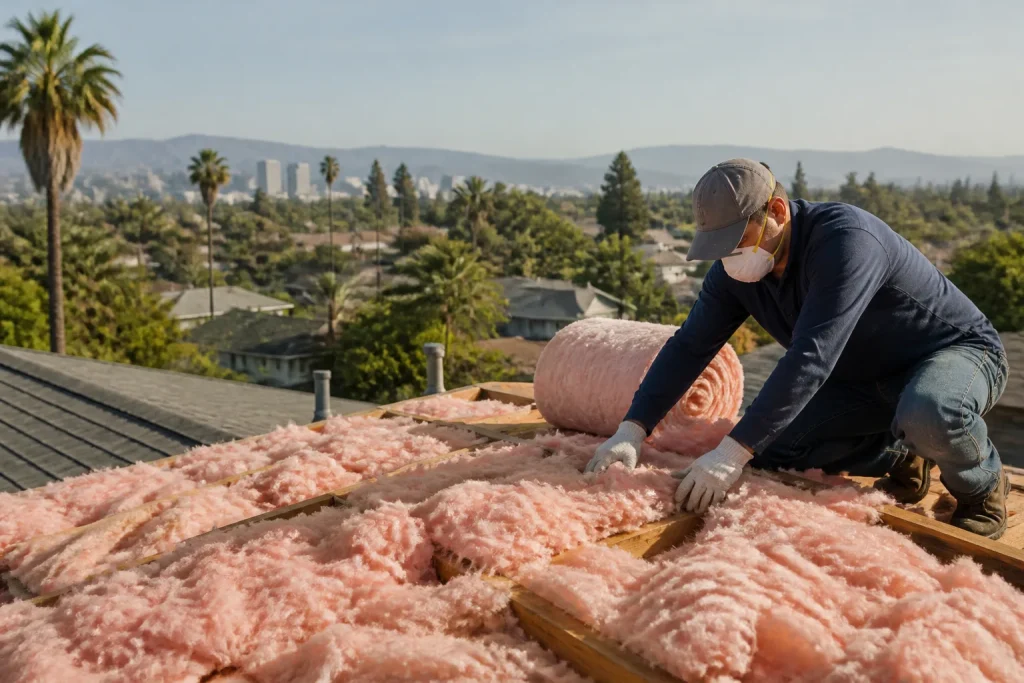
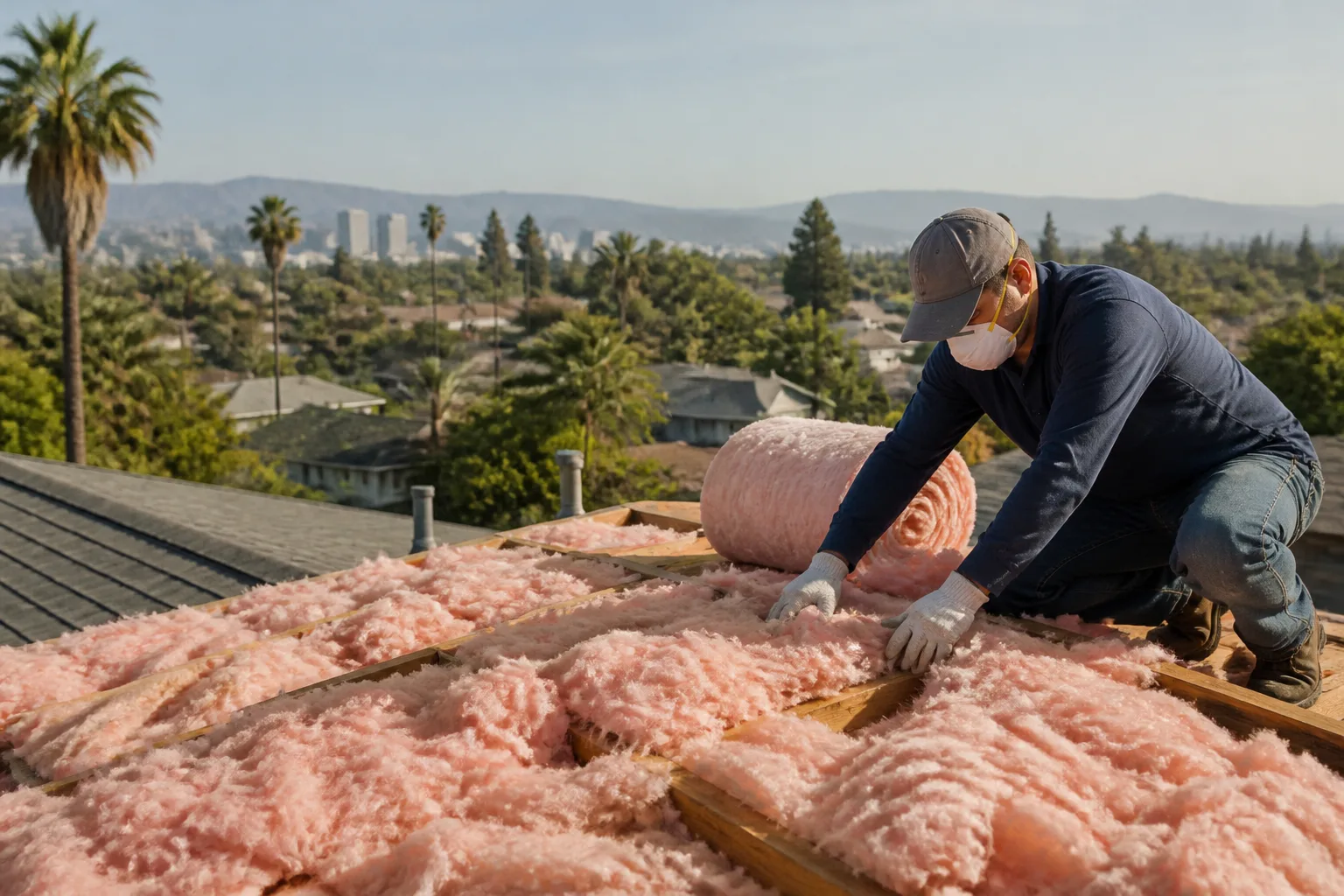
Attic Insulation What It Really Costs: What Los Angeles Homeowners Pay in 2026
Attic insulation in Los Angeles runs roughly $1,800 to $6,500 for a typical single-family home in 2026, with most projects landing between $2,200 and $3,900. The spread depends on attic square footage, material choice, and whether your existing insulation needs removal first. Get a written price before anyone starts, and you won’t be the homeowner stuck explaining a surprise line item. If you’d rather skip the research and just get a straight number, call us at (909) 768-6501.
The One Variable Nobody Puts in the Quote
Most LA homeowners assume the insulation itself drives the price. It doesn’t. The biggest swing factor we see across Los Angeles attics is what’s already up there. Specifically, two conditions can add $800 to $2,400 before a single batt of new material goes in: vermiculite and rodent damage.
Vermiculite is that pebbly, grayish-gold loose fill you see in attics built before the 1990s. It can contain asbestos, which means it requires testing and licensed removal before any new insulation work can happen. That is not a scare tactic. It is a Title 24 and Cal/OSHA compliance reality, and it shows up more often in older Los Angeles neighborhoods like West Adams, Highland Park, and Van Nuys than people expect.
Rodent remediation is the other quiet cost. Rats and squirrels love an attic with old, matted fiberglass. They nest in it, they chew through wiring near it, and they leave behind droppings that no crew should bury under fresh insulation. Cleaning out a lightly affected attic adds a few hundred dollars. A heavily affected one, with damaged ducts or chewed framing, can push past $2,000. A good contractor will flag this during the inspection, not after the crew shows up. We include attic condition checks in every pre-install walkthrough so the written price reflects what the attic actually needs, not what a salesperson hopes you’ll accept later.
2026 Square-Footage Pricing for Los Angeles Homes
Here is what attic insulation actually costs in Los Angeles in 2026, broken out by common home sizes and material type. These numbers reflect current LA labor rates, which run about 15 to 20 percent higher than the national average due to local licensing requirements, workers’ comp costs, and the logistics of working in tight older attics across the basin.
Blown-in fiberglass is the workhorse. It fills around pipes and bracing better than batts, and it is easy to top off existing insulation to hit target R-values for climate zone 9.
- 1,200 sq ft attic: $1,800 to $2,700
- 1,800 sq ft attic: $2,400 to $3,400
- 2,400 sq ft attic: $3,000 to $4,300
Blown-in cellulose performs well in our dry climate and helps with sound transfer, which matters in neighborhoods where houses sit close together, like Echo Park or North Hollywood.
- 1,200 sq ft attic: $2,000 to $2,900
- 1,800 sq ft attic: $2,600 to $3,700
- 2,400 sq ft attic: $3,200 to $4,600
Fiberglass batt is the budget-friendly option, but it’s labor-intensive to install correctly around obstructions. Poor batt installation with gaps and compression loses a big chunk of its R-value, which is why many Los Angeles contractors have moved away from it for retrofit work.
- 1,200 sq ft attic: $1,500 to $2,300
- 1,800 sq ft attic: $2,000 to $3,000
- 2,400 sq ft attic: $2,600 to $3,800
Open-cell spray foam is the premium option. It air-seals as it insulates, and it is especially effective in the unvented attic assemblies common in mid-century Los Angeles homes. We install Icynene and Demilec lines for 2026 projects. It costs more because the application is slower and the material itself is pricier.
- 1,200 sq ft attic: $3,400 to $4,800
- 1,800 sq ft attic: $4,400 to $6,100
- 2,400 sq ft attic: $5,300 to $7,400
These are honest working ranges for Los Angeles County in 2026. A quote that comes in dramatically lower usually means a crew is skipping prep work, using thinner coverage, or planning to add charges mid-job. A quote far higher should come with a very specific explanation.
The Four Pre-Install Conditions That Add Cost
Here is where Los Angeles homeowners get burned. Almost every initial quote assumes a clean attic with an open path to the eaves. Real attics in LA are rarely that friendly. These four conditions show up constantly, and each one changes the number.
- Air sealing. Before new insulation goes in, gaps around plumbing vents, recessed lights, and wiring chases should be sealed with foam or caulk. In Los Angeles, without sealing, the Santa Ana winds push dust and hot air through those gaps all year. This adds roughly $300 to $600 depending on attic size.
- Existing insulation removal. If the old material is water-damaged, compressed, or full of rodent waste, it has to come out before new material goes down. Removal and bag-out runs $1 to $2 per square foot of attic space in LA.
- Rodent damage remediation. Covered above, but worth repeating: a heavily contaminated attic needs professional cleaning, and often duct repair if animals chewed through the flex ducts.
- Blocked soffit vents. In older Los Angeles homes with blown-in insulation already present, the original installer often buried the soffit vents. That starves the attic of airflow, which makes the house hotter in summer and traps moisture in winter. Clearing and restoring ventilation costs $200 to $500 and is rarely in the first quote a homeowner receives.
Ask any contractor whether their quote includes these four items. If it doesn’t, ask what happens when they find problems. The answer should be a clear, written process, not “we’ll figure it out when we get up there.” We put every pre-install condition in writing before work begins, because our 365-Day Done Right Promise means walking away from a job isn’t the move. Fixing it properly is.
What Title 24 Actually Requires in 2026
Los Angeles falls under California climate zone 9 for Title 24 energy standards. As of the 2025 update cycle, which is what inspectors are enforcing in 2026, attics in existing homes need to meet R-38 minimum when insulation is being added as part of a retrofit, and R-30 when insulation is being replaced where existing conditions make R-38 impractical without significant structural changes.
Here is what that means in plain English. If your attic has old R-19 batts and you are topping off with blown-in fiberglass, you need enough additional material to bring the assembly up to at least R-38. That’s typically 10 to 13 inches of settled fiberglass, or 8 to 10 inches of cellulose.
Under-insulated attics also matter at the point of sale. California Civil Code 1102 requires sellers to disclose known insulation deficiencies on the real estate transfer disclosure statement. Listing agents in Los Angeles are increasingly flagging attics that fall below Title 24 minimums, because a buyer can use that as a negotiating point or request a credit. The practical upshot: upgrading insulation before listing, or right after buying, protects the value of the transaction.
If you are unsure what R-value you currently have, measure the depth. Fiberglass at roughly 11 inches is about R-30. Cellulose at 8 to 9 inches is around R-30. At R-38, you’ll want 12 to 14 inches of fiberglass or 10 to 11 inches of cellulose. That’s a rough guide. A proper inspection confirms it.
How to Read Two Competing Bids Side by Side
The $1,500 to $6,000 range for the same Los Angeles house exists because contractors are bidding on different scopes. Here are the five line items that must match before any two numbers mean the same thing.
- Material type and brand. Rockwool batt is not the same price as unbranded blown fiberglass. CertainTeed has a different cost structure than Knauf. If the bid doesn’t name the product, the comparison is meaningless.
- Target R-value. One bid for R-30 and another for R-38 will be hundreds apart. Confirm both are bidding Title 24 compliance.
- Removal and disposal. Does the price include hauling away old material, or is that an add-on? Fees for disposal are real and should be listed.
- Air sealing scope. Is it a detail-level seal of top plates, penetrations, and the attic hatch, or is it a quick foam blob around three pipes? Both get called “air sealing.”
- Clean-up and protection. Shoe covers, drop cloths, and post-job vacuuming take real time. If one bid is $300 less but doesn’t mention clean-up, it’s not cheaper. It’s incomplete.
We pulled one bid apart over in Silver Lake last month where a homeowner had three quotes for the same 1,400 square foot attic. The low bid was batt insulation at R-30 with no removal, no sealing, and no clean-up. The high bid was open-cell spray foam at R-38 with everything included. The middle bid, which was ours, specified Owens Corning blown-in fiberglass, full air sealing, and written clean-up standards. Three different jobs wearing the same label: “attic insulation.”
The fix is simple. Demand a written price that lists material, R-value, removal, sealing, and clean-up as separate items before you sign. If a contractor won’t do that, call someone who will. At Thistledown Attic Insulation home, a written price before work starts is not an option or an add-on. It’s how we’re built.
What a Written, Locked Price Looks Like vs. a “Starting At” Estimate
The phrase “starting at” in an insulation quote is a red flag. It means the contractor will discover reasons to charge more once the crew is in the attic. A written, locked price is the opposite: the number you sign on is the number you pay, even if the job takes longer than expected or the attic turns out to be more awkward than predicted.
Here is language to require in any contract before work begins in Los Angeles:
- “Total project price is $[X] and includes all labor, materials, removal, disposal, air sealing, and clean-up as described in the scope of work.”
- “No additional charges will be incurred without a separate written change order signed by the homeowner.”
- “The contractor will complete the work to meet current Title 24 requirements for climate zone 9.”
- “The contractor will protect flooring from entry to attic access with drop cloths and shoe covers.”
That last one matters more than people think. Insulation crews track fiberglass dust through hallways, onto stairs, and into carpet fibers. We use shoe covers and drop cloths from the front door to the attic hatch, and we photograph the clean-up before we leave. It is part of the Cedarwell Care Promise we operate under at every independently owned Cedarwell location. The name Thistledown comes from the soft fluff of the thistle, one of nature’s lightest insulators. The way we work is meant to match that lightness.
When to Call a Pro
You can measure attic depth and check for obvious signs of rodent activity without much equipment, but the moment anything looks irregular, stop and call someone who does this every day. Vermiculite identification, air sealing, and Title 24 compliance are not DIY projects, and getting them wrong in Los Angeles can mean failed inspections, wasted material, and an attic that still bakes the house through August. If the attic smells musty, if you see droppings, or if the insulation is thin and matted, call us at (909) 768-6501 and we’ll walk the space with you.
Related services in Los Angeles: Attic Insulation in Los Angeles covers blown-in fiberglass, cellulose, and batt work across every neighborhood from San Pedro to Sylmar. If you’re considering spray foam for an unvented attic, see our Spray Foam Insulation in Los Angeles page for specifics on Icynene and Demilec options.
The Bottom Line
Attic insulation in Los Angeles costs between $1,800 and $6,500 in 2026, and the difference between the low and high ends comes down to what is already in your attic and whether any contractor is bidding on a complete scope or a bare minimum. Get the material named, the R-value stated, the removal and sealing itemized, and the clean-up spelled out in writing. That is how you compare bids without getting confused by ranges that span thousands of dollars for the same house. If you’re in Los Angeles and need help sorting through it, Thistledown Attic Insulation offers free estimates. Call (909) 768-6501 and you’ll get a written price before anyone picks up a tool.
Frequently Asked Questions
Most Los Angeles homeowners pay between $2,200 and $3,900 for attic insulation in 2026, with a full range of $1,800 to $6,500 depending on attic size, material, and whether existing insulation needs removal. A 1,800 square foot attic with blown-in fiberglass typically runs $2,400 to $3,400. Call (909) 768-6501 for a written price specific to your home.
Topping off existing insulation with blown-in fiberglass is almost always cheaper than full removal and replacement, typically $1,800 to $3,400 versus $3,000 to $5,000 for a full remove-and-replace. However, if the old insulation is rodent-contaminated or water-damaged, replacement is the only correct option. We can inspect your attic and tell you which path makes sense.
Title 24 requires R-38 for attic insulation retrofits in Los Angeles climate zone 9 as of the 2025 update cycle, with R-30 accepted in retrofit situations where structural constraints make R-38 impractical. Most 2026 inspections in LA are enforcing R-38 for new insulation work. A quick attic inspection will confirm whether you’re compliant.
Yes, for most standard blown-in fiberglass or cellulose jobs we can complete same-day installation across Los Angeles once the pre-install inspection is done and the written price is approved. Removal-heavy jobs or spray foam applications typically take one to two days. Call (909) 768-6501 to check current scheduling.
Written by Neil Barron, Owner at Thistledown Attic Insulation, serving Los Angeles since 2003.
Need Insulation Help?
Call Thistledown Attic Insulation - licensed & insured, here with fast after-hours help in Los Angeles.
(909) 768-6501