
Demilec Attic Insulation in Los Angeles: A Homeowner’s Guide
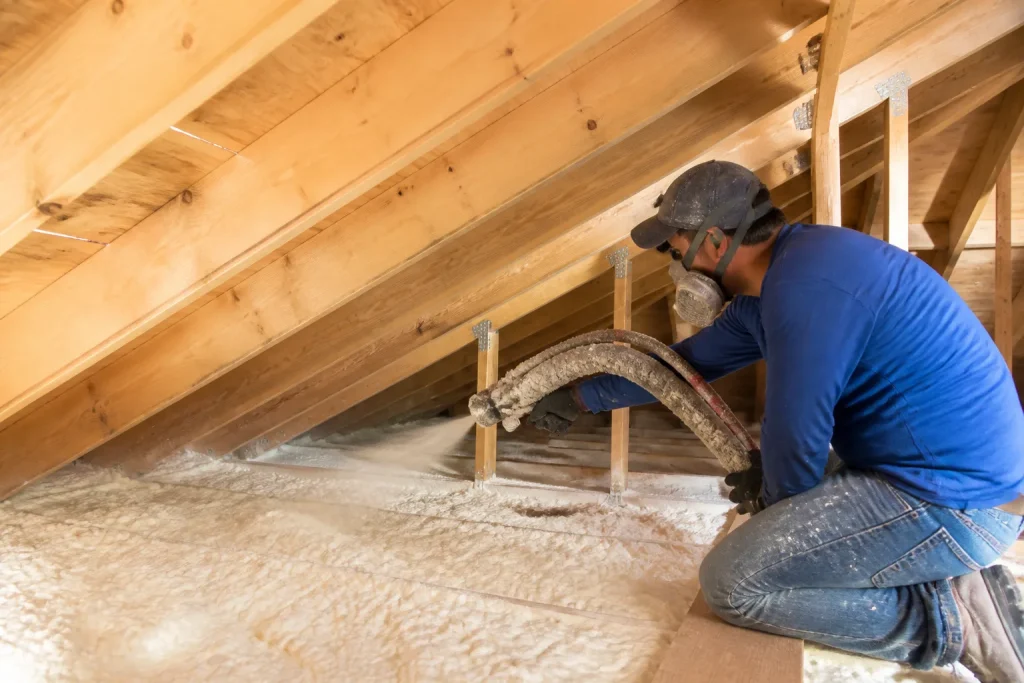
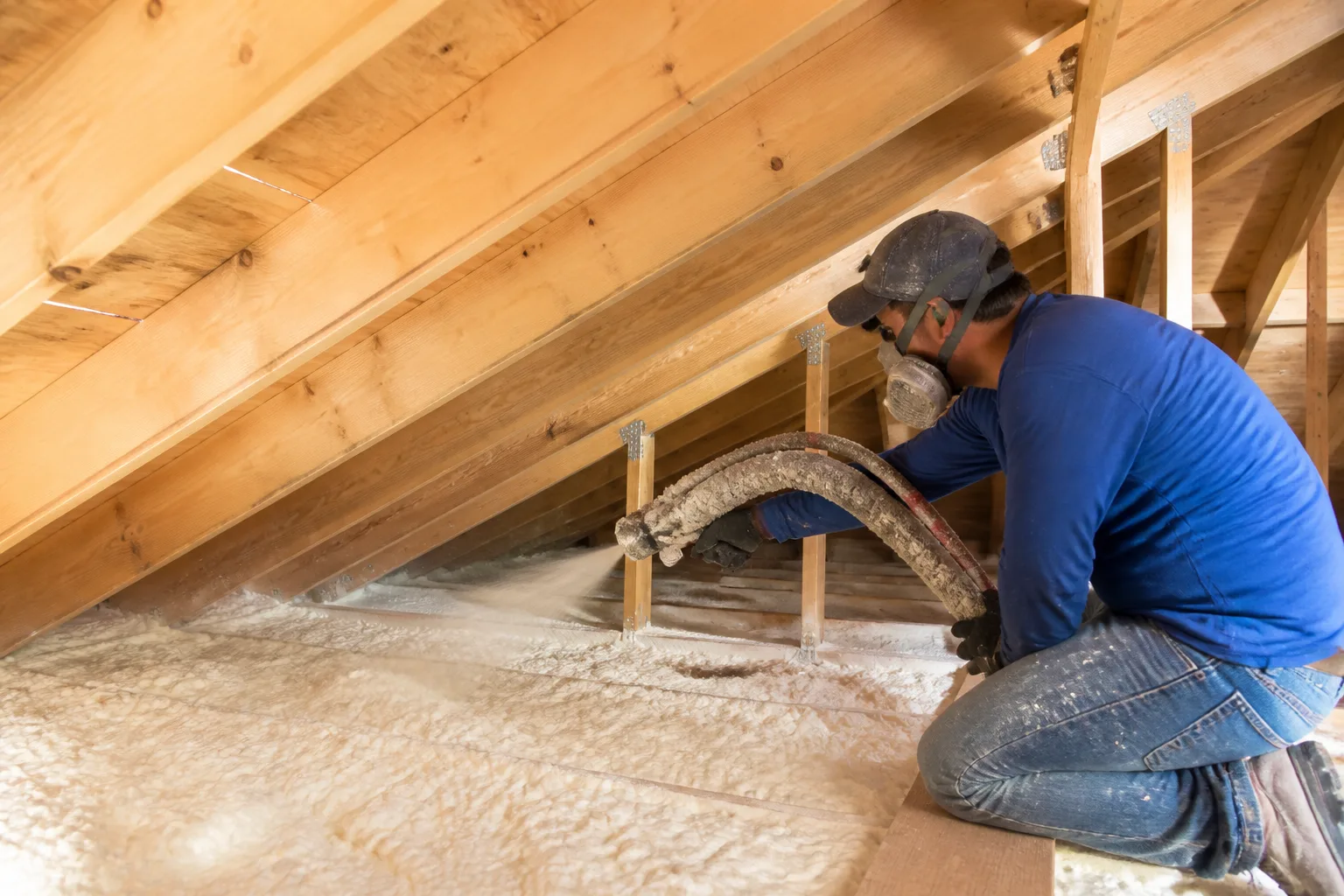
Demilec attic insulation in Los Angeles usually means one of three spray foam products: Sealection 500 (open-cell), Heatlok XT (closed-cell), or Heatlok Soy 200 (closed-cell with soy-based content). The right choice depends on your attic’s ventilation design, your roof’s age, and whether you’re aiming for air sealing plus insulation or insulation alone. If you’d rather skip the research and get a straight answer, call Thistledown Attic Insulation at (909) 768-6501 and we’ll walk you through it.
Here’s the thing most guides skip: Demilec is one of the few spray foam manufacturers that makes both open-cell and closed-cell products certified to GREENGUARD Gold. That matters in Los Angeles because our attics get hot enough to bake a pie in August, and the foam you choose determines whether your roof deck stays dry or traps moisture you won’t see until it’s too late. We’ve pulled foam out of attics in Hancock Park and Van Nuys where the wrong product, installed by a crew that only stocked one type, turned a $6,000 job into a $18,000 remediation. This guide exists so that doesn’t happen to you.
Key Takeaways for Los Angeles Homeowners
- Demilec makes three attic-relevant products: Sealection 500 (open-cell, air-permeable), Heatlok XT (closed-cell, high R-value per inch), and Heatlok Soy 200 (closed-cell, partially soy-based).
- In most Los Angeles vented attics, open-cell Sealection 500 is the right choice for the roofline if you’re converting to an unvented assembly, while closed-cell handles specific code and moisture scenarios.
- Demilec’s warranty only applies when a Demilec-certified contractor installs the product. Uncertified installs void the warranty, period.
- After any Demilec install, you should receive three measurements in writing: thickness gauge readings, yield calculation, and cured density.
- Los Angeles climate zones (3B and 6 in the foothills) drive different Demilec product decisions. What works in Santa Monica doesn’t always work in Sunland.
The Three Demilec Products That Matter in an LA Attic
Demilec is a Quebec-based spray foam manufacturer, but their products show up in more Los Angeles attics than most homeowners realize. The company’s lineup for attics breaks into three products, and each serves a different purpose in Southern California construction.
Sealection 500 is an open-cell, low-density spray foam. It runs about R-3.8 per inch, which means you need roughly 5.5 inches to reach R-21, the California Energy Code baseline for many LA roof assemblies. Open-cell foam is air-permeable but still functions as an air barrier, which sounds contradictory until you understand what’s happening: it stops air movement (drafts, stack effect, conditioned air escaping) while allowing water vapor to pass through. In a Los Angeles attic with proper ventilation or a correctly designed unvented assembly, that vapor permeability is a feature, not a bug. It lets moisture that gets into the roof cavity dry toward the interior instead of getting trapped against the roof deck.
Heatlok XT is a closed-cell, high-density foam. It delivers around R-6.5 to R-7 per inch, which means you hit R-21 with just over three inches. Closed-cell foam is both an air barrier and a vapor retarder, and it adds structural rigidity to the roof deck. In Los Angeles, we spec Heatlok XT when the attic is unvented and the roof deck is in a climate zone where the California Energy Code requires a vapor retarder layer, or when the homeowner wants maximum R-value in a shallow rafter cavity.
Heatlok Soy 200 is closed-cell foam with a percentage of soy-based polyol replacing some petroleum-derived polyol in the chemical blend. The soy content matters to homeowners who want a reduced-petroleum product. Performance-wise, it delivers the same R-value per inch and the same air-sealing performance as Heatlok XT. The soy component doesn’t make it eco-friendly in a biodegradable sense, and it doesn’t change the application requirements. We’ve had customers in Culver City and Eagle Rock choose Soy 200 specifically for its lower petroleum content, and they’ve been happy with the result.
Open-Cell vs. Closed-Cell: The LA Unvented Attic Decision
The Los Angeles Department of Building and Safety enforces the California Energy Code (Title 24, Part 6), which drives the open-cell versus closed-cell decision in unvented attics. Here’s the practical decision tree we walk through with every homeowner:
- Is the attic vented or unvented? If it’s ventilated (soffit vents, ridge vents, gable vents all working), insulation goes on the attic floor, and the Demilec choice is usually open-cell on the floor or, more commonly in LA, we’re not spraying the roof at all. If it’s unvented or being converted to unvented, insulation goes against the roof deck, and the product choice matters enormously.
- In an unvented attic in LA’s climate zone 3B, what does the code ask for? Open-cell foam against the roof deck must be covered with a Class II vapor retarder (like latex paint) on the interior side of the foam, or the roof assembly needs a ventilation channel above the foam. Closed-cell foam at sufficient thickness satisfies the vapor retarder requirement on its own. This is why Heatlok shows up in so many unvented LA attics: it simplifies the assembly.
- What about climate zone 6 in the foothills? Homes in Sunland, Tujunga, and parts of the San Gabriel foothills fall into a cooler climate zone where the math shifts. Closed-cell foam often becomes the default choice because it handles the dew-point location differently and gives you more R-value in a thinner profile.
We’ve looked at attics in Los Feliz where a previous crew sprayed open-cell against the roof deck with no vapor retarder, and the homeowners discovered water staining on the roof sheathing when they went to re-roof. That’s not a Demilec problem. That’s an installation problem, and it’s why Demilec’s contractor certification program exists.
The Demilec Certification Program (and Why Uncertified Installers Void Your Warranty)
Demilec operates a contractor certification program through its official training channels. Certified contractors complete manufacturer training on proper substrate preparation, correct temperature and humidity ranges for spraying, and required equipment settings. The certification isn’t a one-time rubber stamp; it’s tied to ongoing product updates and technical bulletins.
Here’s what Los Angeles homeowners should understand about warranty protection: Demilec’s material warranty only applies when a certified contractor performs the installation. If you hire an uncertified crew that happens to get their hands on Demilec product through a distributor, and the foam fails, de-laminates, or doesn’t deliver the specified R-value, Demilec will point to the certification requirement and close the file.
Before any crew starts spraying in your attic, ask these three questions:
- “Show me your current Demilec certification letter.” Certified contractors can produce documentation from Demilec or their training partner. If they hesitate or say something vague about “making a phone call,” that’s your answer.
- “Which Demilec product are you installing, and why that one for my attic?” A certified installer can explain the product choice in plain English. A crew that only installs one product will always recommend that product, whether or not it’s right for your roof.
- “Will you provide thickness gauge readings, the yield calculation, and cured density measurements in writing when the job is done?” Those three measurements are how you verify the foam was installed at the correct thickness, the correct amount was used for the square footage, and the foam cured to the proper density. We provide all three on every Demilec install in Los Angeles, and we photograph the readings.
Post-Install Quality Checks: What to Ask for in Writing
Spray foam looks finished as soon as it’s sprayed, but the quality of the install lives in measurements you can’t eyeball. After any Demilec attic installation in Los Angeles, request these three items in writing before you pay the final invoice:
Thickness gauge readings. A certified installer uses a depth gauge to measure foam thickness at multiple points across the roof deck. If you’ve paid for R-21, which is about 5.5 inches of Sealection 500, the readings should show consistent thickness everywhere the foam was applied. Low spots under the eaves or around penetrations are the most common places installers short the material.
Yield calculation. Demilec foam comes in two-component kits or bulk drums with a known theoretical yield. The contractor should be able to show you the math: square footage of the roof deck, target thickness, expected board-feet of foam, and actual board-feet used. If the actual number is wildly lower than the expected number, the foam went on too thin or the contractor didn’t spray the full area.
Cured density measurement. Open-cell and closed-cell foam each have a target cured density. Sealection 500 should cure to roughly 0.5 pounds per cubic foot. Heatlok products should cure to around 2 pounds per cubic foot. A core sample or a field density test confirms the foam catalyzed correctly and will perform as designed.
We had a homeowner in Sherman Oaks call us last year who had paid another company for a closed-cell foam attic, and when we opened a small core sample for her, the foam was soft and crumbly instead of firm. The density was way under spec. That foam wasn’t doing what she paid for, and the manufacturer warranty wasn’t going to cover it because the installer wasn’t certified. That’s the moment the three-measurement request would have saved her six thousand dollars.
What the Soy in Heatlok Soy 200 Actually Does
Heatlok Soy 200 gets a lot of attention because of the word “soy,” and Los Angeles homeowners understandably ask what that means for performance, indoor air quality, and the environment. The honest answer is more measured than most marketing.
The soy component replaces a percentage of the polyol side of the chemical reaction with soy-derived polyol. The isocyanate side remains petrochemical. The cured foam performs equivalently to Heatlok XT: same R-value per inch, same closed-cell structure, same air-sealing properties. The soy-based polyol does not make the foam compostable, biodegradable, or food-grade, and it doesn’t meaningfully change how the foam behaves in your attic over 30 years.
What it does change is the feedstock. A portion of the raw material comes from a renewable source instead of a petroleum well. For some Los Angeles families, that’s a meaningful choice. For others, price and availability decide between Heatlok XT and Soy 200, and that’s fine too. Both products carry GREENGUARD Gold certification, which means they’ve been tested for low chemical emissions into indoor air, something we take seriously when we’re spraying an attic above a kid’s bedroom.
When to call a professional: This is not a place to be careful and confident with a DIY kit. Spray foam is a two-component chemical reaction that requires precise equipment calibration, substrate temperatures within a specific window, and protective gear including full-face respirators. A botched DIY spray foam job in Los Angeles will cost more to remove than the original install would have cost from a certified crew. If the framing is exposed and you’re considering a foam kit from a big-box store, call us instead at (909) 768-6501 and get a written number before you buy anything.
How Demilec Compares to Other Brands We Install
We install eight brands at Thistledown Attic Insulation home, including Demilec, Knauf, Rockwool, CertainTeed, and Icynene. Homeowners sometimes ask why we don’t just pick one brand and stick with it. The short answer: attics are different, families are different, and budgets are different.
Demilec stands out for GREENGUARD Gold certification across both open-cell and closed-cell lines and for robust heat performance in LA’s roof-deck temperatures. Spray Foam Insulation in Los Angeles using Icynene or Demilec gives us options for open-cell projects. In budget-sensitive jobs, Knauf fiberglass batts or blown-in insulation provide solid thermal performance at a lower installed cost. Rockwool’s mineral wool is our default when fire resistance is the top priority, like attached garages or accessory dwelling unit conversions. CertainTeed gives us another fiberglass option when a homeowner has a brand preference already.
The point isn’t that Demilec is universally superior. It’s that Demilec’s open-cell and closed-cell products cover both sides of the unvented attic decision in Los Angeles, and the certification program means the manufacturer stands behind the product when the installation is done right. That confidence is what makes Demilec a frequent recommendation from us for spray foam attic work in LA.
Demilec Attic Projects in Los Angeles: What We See
We’ve been installing Attic Insulation in Los Angeles since 2003, and Demilec foam goes into specific homes for specific reasons. A 1920s Spanish-style in Los Feliz with a low-pitch roof and no attic ventilation is a classic Heatlok Soy 200 candidate: closed-cell handles the unvented assembly, the higher R-value fits in a shallow rafter bay, and the soy content appeals to a family choosing lower-petroleum materials. A sprawling mid-century ranch in Woodland Hills with a ventilated attic and blown-in fiberglass in poor condition might get the attic floor air-sealed and re-insulated instead, with no spray foam on the roof at all.
The pattern we notice across Los Angeles: homes built before 1978 have rafter bays that are inconsistent, roof decks with years of thermal cycling, and sometimes asbestos-containing vermiculite from previous eras. Demilec foam can handle the rafter inconsistencies well, but the substrate prep matters as much as the product. We clean, inspect, and document the roof deck before a single pass of the spray gun, and if the deck shows signs of moisture or rot, that gets addressed before foam locks it in place.
Related services in Los Angeles: We also install Spray Foam Insulation in Los Angeles across the LA Basin and the San Fernando Valley, and full attic air sealing with any of the eight brands we carry. Every job gets a written price before we start, shoe covers and drop cloths in the house, and a photo of the cleanup before we leave.
The Bottom Line
Demilec attic insulation in Los Angeles comes down to a few clear decisions. Open-cell Sealection 500 works for unvented attics when paired with a vapor retarder and gives you an air seal at a lower material cost. Closed-cell Heatlok XT or Soy 200 gives you higher R-value per inch and built-in vapor control, which matters in certain LA foothill climate zones and shallow rafter situations. The non-negotiable is installer certification: Demilec’s warranty dies with an uncertified crew, and the three measurements (thickness, yield, density) are your receipt that the job was done correctly.
If you’re in Los Angeles and ready to talk about your attic, Thistledown Attic Insulation offers free estimates. We’ll inspect your roof assembly, explain which Demilec product fits or whether another brand makes more sense, and put a written number in your hand before any work starts. Call (909) 768-6501.
Frequently Asked Questions
Demilec open-cell spray foam on an attic roofline in Los Angeles typically runs $2.50 to $4.00 per square foot installed, while closed-cell Heatlok products run $4.50 to $7.00 per square foot depending on thickness, access difficulty, and prep work. A typical 1,200-square-foot attic roof deck lands between $5,000 and $8,000 for open-cell or $7,000 to $11,000 for closed-cell. Call (909) 768-6501 for an exact written quote; estimates are free.
Demilec’s Sealection 500, Heatlok XT, and Heatlok Soy 200 all carry GREENGUARD Gold certification for low chemical emissions, which means they’ve been tested against strict indoor air quality thresholds. During installation, the home should be vacated for several hours while the foam cures and the space ventilates. We choose pet-safe product options where a choice exists, and we’ll walk you through re-entry timing before we start.
Yes, but often the better investment is air sealing and re-insulating the attic floor rather than spraying the roofline. If your attic is vented and functioning, Demilec foam can still seal the floor penetrations and provide insulation above the ceiling plane. If you’re converting to an unvented attic or adding living space, Demilec’s closed-cell products handle the roof deck. The right call depends on your attic’s current condition and your goals.
In most cases, yes. Los Angeles homeowners can usually get an inspection within a few days and installation scheduled within the same week or the next, depending on job size and product availability. Larger closed-cell projects may require additional scheduling time. Call Thistledown Attic Insulation at (909) 768-6501 and a live person will answer, 24/7, and get you on the calendar.
Written by Neil Barron, Owner at Thistledown Attic Insulation, serving Los Angeles since 2003.
Need Insulation Help?
Call Thistledown Attic Insulation - licensed & insured, here with fast after-hours help in Los Angeles.
(909) 768-6501