
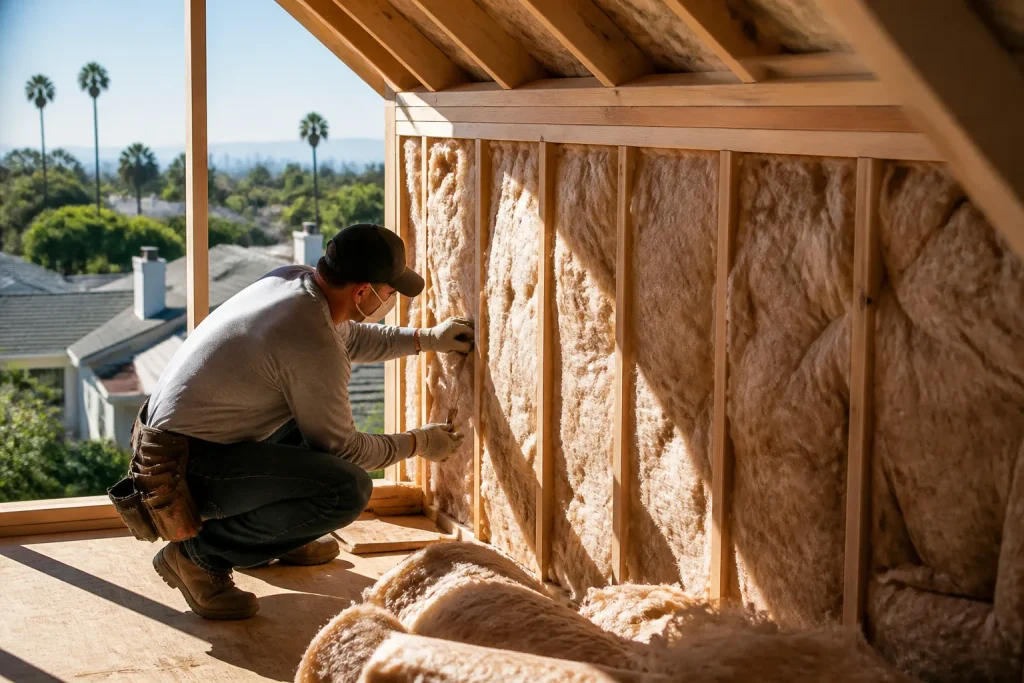
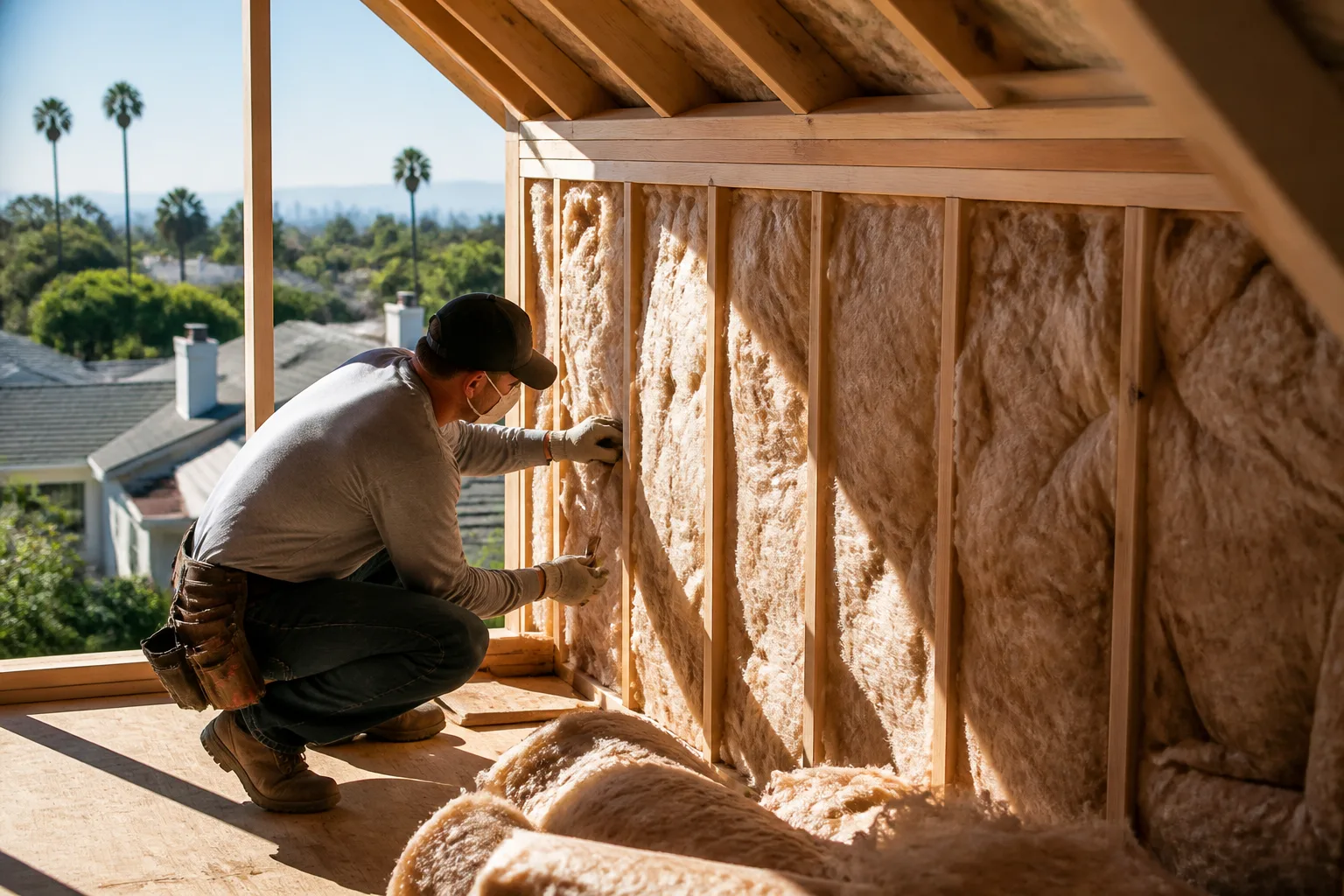
Spring Insulation Checklist for Los Angeles Homes
Spring is the best time to check your attic insulation in Los Angeles because the attic is still cool enough to work in, but winter moisture has had time to show itself. A 60-minute inspection in April or May catches problems while they’re cheap to fix. If you’d rather not climb the ladder yourself, call (909) 768-6501 and we’ll do the full assessment for you.
Here’s the thing most LA homeowners don’t realize: the window between our last real rain (usually late March) and the first sustained 90°F attic heat (usually mid-June) is narrow. Miss it, and you’re either diagnosing wet insulation in a 120°F attic or waiting until October. We’ve been doing this since 2003, and every spring we see the same pattern: attics that got damp in February, dried out just enough to hide the damage, and then baked all summer with compromised R-value.
Why Spring Is the Right Time in Los Angeles
Los Angeles attics face a specific moisture cycle that most national insulation guides miss entirely. Our winters are mild but not dry. Coastal fog, morning dew, and those few real rainstorms we get each year push moisture into attic spaces through unsealed vents, recessed light housings, and gaps around the attic hatch. Then summer arrives and the attic turns into an oven.
That moisture cycle matters because damp insulation loses its loft. Blown-in fiberglass or cellulose that got wet in January will look almost normal by April, but it won’t perform the same. The fibers clump. The air pockets collapse. And by August, your air conditioner is working harder to cool rooms that should be holding temperature fine.
In neighborhoods like Pacific Palisades, Playa del Rey, and San Pedro, the marine layer adds another variable. June Gloom isn’t just a coastal nuisance. It pushes cool, damp air against attic vents for weeks at a time. If your attic insulation near the eaves is already compromised, that fog finds its way in and sits there. Spring is when you can catch that before it becomes a July problem.
The 20-Minute DIY Attic Hatch Checklist
You can check most of what matters without fully entering the attic. Stand at the hatch, shine a good flashlight, and work through these five checks. Each one takes about four minutes.
- Measure your insulation depth. Use a yardstick or tape measure. In Los Angeles, you want at least 13 inches of fiberglass or 10 inches of cellulose for roughly R-38 to R-44. If you’ve got less than 8 inches anywhere in the attic, you’re losing money every month. Write down the shallowest measurement you find.
- Look for dark or water-stained spots near the eaves. Shine the light along the roofline where the roof meets the outer walls. Dark gray or brown staining on insulation facing the eaves means moisture has been moving in. This is the classic marine-layer sign we see in coastal LA attics.
- Check for gaps around recessed lights and vent pipes. From the hatch, look for any spot where you can see direct light or feel air movement coming up from the living space. Every gap is a chimney pulling conditioned air into the attic.
- Smell for mustiness. This one sounds obvious but it’s the fastest diagnostic tool you have. Mold and mildew in damp insulation have a distinct smell. If the attic smells like old laundry left in the washing machine, moisture has been present.
- Look at the ductwork. If your ducts run through the attic, check the connections. Silver tape peeling off, disconnected joints, or sections of duct drooping between supports all mean conditioned air is leaking into the attic before it reaches your rooms.
Each of these findings has a different fix and a different cost. A shallow depth measurement on one side of the attic is usually a two-hour job to top up. Water staining near the eaves can mean anything from a simple vent fix to needing sections of insulation removed and replaced. The point of the spring check is catching these while they’re still small.
How LA’s Marine Layer Attacks Your Insulation
If you live within five miles of the coast, your attic deals with something inland homeowners never experience: weeks of fog that acts like a slow leak. The marine layer that rolls in during June and hangs around into early July isn’t rain, but it carries substantial moisture. Coastal attics with soffit vents or gable vents pull that damp air in every evening as temperatures drop.
The issue isn’t the fog itself. It’s what the fog does to insulation that’s already been compromised by a small roof leak, a bathroom vent that terminates in the attic instead of outside, or gaps around plumbing penetrations. Dry fiberglass and cellulose can handle normal humidity swings. Damp insulation absorbs fog moisture like a sponge and holds it against the ceiling drywall.
In our experience working in Venice, Mar Vista, and Culver City attics, the first sign is usually just above the bedrooms that face the ocean. Homeowners notice a faint mildew smell when the house has been closed up for a few days. That’s the insulation near the eaves holding fog moisture. By the time you smell it indoors, the affected area has usually spread past the eaves into the main attic field.
The spring window matters because April and May conditions let you measure this while it’s still happening. A pin meter pressed into the insulation near the eaves will tell you the moisture content in seconds. Dry insulation reads between 5 and 10 percent. Anything above 15 percent near the eaves in a coastal Los Angeles attic means vapor migration is active and needs addressing.
The AC Connection: Why Your HVAC Guy Should Care About Your Attic
Spring is when most Los Angeles homeowners service their air conditioners. That’s smart. But here’s what rarely gets mentioned: an AC tune-up doesn’t matter much if the ducts running through your attic are leaking into an under-insulated space.
The math is straightforward. The Department of Energy has long estimated that duct leaks in unconditioned attics waste 20 to 30 percent of the air you’re paying to cool. In Los Angeles, where summer attic temperatures routinely hit 130°F, that loss is on the higher end. Your AC can be running perfectly and you’ll still lose a third of its output before the air reaches the bedroom vent.
This is why we tell homeowners to sequence the work. If you’re getting the AC serviced in May anyway, have someone check the attic duct connections at the same time. Disconnected duct joints, tears in flexible duct sleeves, and unsealed register boxes are all visible from the attic hatch or from inside the attic with a flashlight. These fixes are cheap compared to running an overworked AC all summer.
And it’s not just about leaks. Ducts running through an attic with thin insulation pick up heat from the attic itself. Even a sealed duct passing through 130°F air loses measurable cooling capacity before it hits the room. Increasing attic insulation reduces the attic temperature, which means every duct in that space works better. The two systems are connected, and Los Angeles homeowners who treat them together get the most from their spring maintenance budget.
Spring Rebate Windows: LA DWP and SoCalGas
If you’re planning attic insulation work this spring, there’s a timing angle most contractors won’t mention: rebate application windows. Both LA DWP and SoCalGas run energy efficiency rebate programs that reset on fiscal-year cycles, and spring applications tend to land when funding is fresh.
The LA DWP attic insulation rebate program typically offers homeowners a per-square-foot incentive for upgrading attic insulation to meet current R-value standards. The exact dollar amount shifts year to year, but the pattern holds: applications submitted in the first half of the fiscal year (which starts July 1 for DWP) are more likely to get approved before program funds run low. So spring applications, while the home is still comfortable and the work is easy to schedule, position you ahead of the summer rush.
SoCalGas operates similarly. Their energy efficiency rebate programs run on an annual cycle, and spring is when the year’s new funding is announced. Attic insulation qualifies as a whole-home efficiency measure when paired with other upgrades like duct sealing or air sealing. The spring window lets you apply, get approved, and schedule the work before the late-summer backlog hits.
We don’t handle rebate paperwork for you, but we’ll point you to the right forms and tell you exactly what documentation you need: a pre-installation photo of current insulation depth, a post-installation photo, and an invoice showing the R-value installed. Having those ready makes the application process straightforward.
Professional Assessment vs. Sales Visit: Three Questions That Tell You Which One You’re Getting
When you call an insulation company for a spring assessment, you might get a real evaluation or you might get a sales pitch with a flashlight. Here’s how to tell the difference before anyone climbs into your attic.
Question one: “Will you measure the current insulation depth and moisture levels, and can I see the numbers?” A real assessment produces measurements. Specific depths in specific areas. Moisture readings if there’s any question. If the person can’t or won’t show you numbers, they’re selling, not assessing.
Question two: “Will I get a written price before any work starts?” This is our standard at Thistledown Attic Insulation home, and it should be yours too. A legitimate company writes the number down. No ranges, no “we’ll see once we get in there,” no verbal ballpark. The price goes on paper before tools come off the truck.
Question three: “What exactly will you do about my floors and my pets during the job?” This question reveals a lot about how the crew operates. We lay drop cloths from the front door to the attic hatch and put shoe covers on before stepping inside. We ask about pets and quiet hours. If the answer is vague or defensive, keep looking.
A professional spring assessment should take 30 to 45 minutes and leave you with a clear picture: current R-value, any moisture concerns, duct condition, and a written plan if work is needed. If you’re getting a 15-minute walkthrough and a pushy close, that’s not an assessment.
When it’s time to call a pro, it’s usually for one of three reasons: you found water staining during your hatch check, your insulation depth is well below the R-38 minimum for Los Angeles homes, or you’re planning AC service and want the attic evaluated at the same time. For Attic Insulation in Los Angeles, we handle all three. And if you’re considering Spray Foam Insulation in Los Angeles as an upgrade path, spring is the right season for that conversation too, since foam seals the gaps that marine-layer moisture exploits.
One note on products, since homeowners ask us about this constantly: we install Rockwool, CertainTeed, Icynene, and Demilec alongside the full range of fiberglass and cellulose options. Different attics need different materials, and different families need different considerations. We’ll walk through the options, including pet-safe choices where they exist, so you know exactly what’s going above your kids’ bedrooms.
The Bottom Line
Spring in Los Angeles is the single best window to inspect your attic insulation. It’s cool enough to work safely, damp enough to reveal moisture problems, and early enough that fixes cost a fraction of what emergency summer repairs run. A 20-minute hatch check tells you most of what you need to know: depth, staining, gaps, smell, and duct condition. If any of those come back questionable, the fix is almost always cheaper in May than it will be in August.
If you’re in Los Angeles and want a professional spring assessment, Thistledown Attic Insulation offers free estimates with a written price before any work starts. Call (909) 768-6501 and we’ll schedule a time that works around your family’s schedule.
Frequently Asked Questions
Attic insulation projects in Los Angeles typically range from $1,500 to $5,000 depending on attic size, current insulation depth, and whether air sealing or duct work is included. You’ll have your exact written number before any work begins. Call (909) 768-6501 for a free estimate specific to your attic.
Los Angeles attics should have at least R-38, which means about 13 inches of fiberglass or 10 to 12 inches of cellulose. Many older LA homes have R-19 or less, which is roughly half the recommended level. Spring is a good time to measure and top up if needed.
Yes. From the attic hatch, you can measure insulation depth with a yardstick, look for water staining near the eaves, check for gaps around recessed lights, and smell for mustiness. These checks take under 20 minutes and tell you whether a professional assessment is worth scheduling.
Usually yes, but the extent varies. Insulation that’s been damp loses its loft and its R-value performance even after it dries out. In coastal Los Angeles attics, moisture-damaged sections near the eaves often need removal and replacement rather than just adding more on top. Call (909) 768-6501 and we’ll tell you exactly what your attic needs.
Written by Neil Barron, Owner at Thistledown Attic Insulation, serving Los Angeles since 2003.
Need Insulation Help?
Call Thistledown Attic Insulation - licensed & insured, here with fast after-hours help in Los Angeles.
(909) 768-6501