
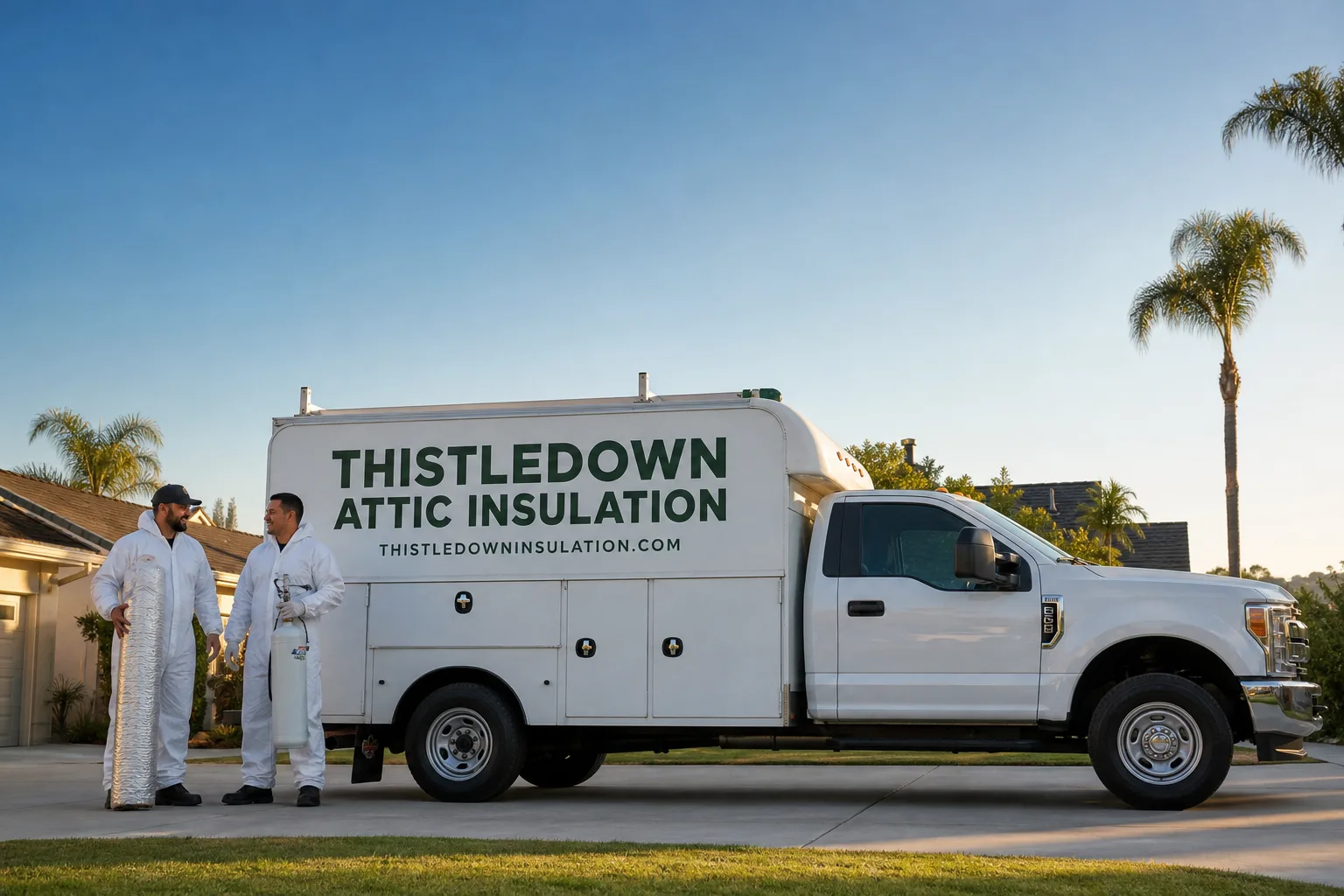
Blown In Insulation Across the United States
Blown in insulation is loose-fill material, usually cellulose or fiberglass, pushed through a hose into an attic until it forms a seamless blanket over the ceiling below. It fills the gaps, corners and odd spaces around wiring and framing that batts leave behind, which is why it is the most common way to bring an under-insulated attic up to current standards. We are Thistledown Attic Insulation, a Cedarwell-family company that has been in this trade since 2003, and we price the job in writing before anyone climbs the ladder. A live person answers our line 24 hours a day at (909) 768-6501.
Cellulose Insulation
Cellulose insulation is made from recycled paper that has been treated with borate to resist fire, pests and mold. When it is blown into an attic it packs tightly around joists, pipes and wire runs, and it slows the movement of air through the layer better than many loose fills of the same depth. We use it often in older homes where the attic floor has uneven framing and plenty of obstructions. The material also dampens outside noise, which homeowners under flight paths and near busy roads tend to notice right away.
Where Cellulose Works Best
Dense-packed cellulose does well in cooler regions and in attics with irregular joist spacing. It settles a little over the first few years, so we install to a depth that accounts for that settling and write the final R-value into your estimate. If your attic already has a layer of old fiberglass, we can usually blow cellulose over the top once we have checked for moisture and sealed the leaks underneath.
Blown In Attic Insulation
Blown in attic insulation is the standard fix for a house that is hot upstairs in summer, cold in winter, or both. The attic floor is the largest surface where heat escapes, and a blanket of the right depth cuts that loss without opening any walls or disturbing the rooms below. A typical single-family attic takes a crew of two about four to six hours, and the home stays livable the whole time.
Before we blow anything, we measure the current depth, look for bath fans and recessed lights that need to be boxed in, and mark the target depth on baffles or rulers so you can see it for yourself. Our attic insulation page explains the rest of the work we do up there, from ventilation to cleanup.
Depth Markers You Can Check
We leave a ruler stapled to a rafter near the hatch with the finished depth showing in inches. Anyone can climb up a year later and confirm the layer is still where it should be. If it has dropped below what we wrote down, that is covered by our 365-Day Done Right Promise.
Blown In Cellulose Insulation
Blown in cellulose insulation is the pairing most people mean when they ask for a loose-fill job on a budget. It tends to cost less per square foot than fiberglass of the same R-value, and it is made largely from recycled newsprint. We calibrate the machine so the material leaves the hose at the right density, because cellulose that is blown too light will settle and cellulose that is blown too heavy wastes bags without adding warmth.
Typical cellulose projects run from about $1,500 to $4,200 for an average attic, depending on square footage, how much is already up there, and how hard the space is to reach. Removal of an old damaged layer and air sealing are separate line items on the same written estimate, so nothing shows up later on the invoice.
Blown In Fiberglass Insulation
Blown in fiberglass insulation is made of fine glass fibers that stay fluffy and light. It does not absorb water the way paper-based products can, and it holds its loft well in humid climates and in attics that see big swings in temperature. It is also non-combustible without any added treatment, and it is the loose fill that most builders spec for new construction.
Fiberglass or Cellulose
The honest answer depends on your attic. Fiberglass is usually the better pick in damp regions and in attics with a history of condensation. Cellulose is usually the better pick where you want a tighter seal against air and a little more sound control. We carry both, we will tell you which one we would put in our own house, and the product name and R-value are always written on your quote.
Loose Fill Insulation
Loose fill insulation is any insulation that comes as small pieces or fibers instead of rolled batts or boards. That includes cellulose, fiberglass and mineral wool. Because it flows, it fills the cavities around bridging, ductwork, wires and plumbing that rigid products cannot reach, and that is where much of the heat loss in an older attic comes from.
Loose fill is also the right call for attics that were never insulated well, for homes where the existing batts have slumped or been disturbed by pests, and for top-ups where the layer is thinner than modern recommendations. If you are not sure what you have, call (909) 768-6501 and we will tell you what to look for before anyone comes out.
Blown In Insulation Contractors
Blown in insulation contractors are the trained crews who size up your attic, choose the product, and run the machine so the finished layer is even from the eaves to the peak. The work looks simple from the driveway, but depth, coverage near the eaves, and clearance around flues and fixtures all decide whether the job performs. A rushed install leaves thin spots that you will feel on the first cold night.
Every Thistledown Attic Insulation technician is background-checked, uniformed and introduced to you by name before entering the house. We lay drop cloths, wear shoe covers, and photograph the cleanup before we leave. That is the same Cedarwell Care Promise standard on every visit, and it is why homeowners ask us back for the next project.
Signs You Need Blown In Insulation
Most people find out their attic is under-insulated from their energy bill, not from a ladder. A few other signs are easy to spot without a professional.
- Upstairs rooms that are hotter or colder than the rest of the house
- Ice dams or uneven snow melt on the roof in winter
- Joists visible across the attic floor, which means the layer is too thin
- Insulation that is matted, damp, stained or full of droppings
- Heating and cooling bills that keep rising with no new appliances
If you see two or more of these, a free inspection is worth your time. We measure, photograph and write down what we find, whether or not you hire us.
Our Process, Step by Step
The same steps run on every blown in insulation job, so you always know what happens next.
- Call and schedule. A live person answers and books a window that fits your day.
- Inspect and measure. We check depth, moisture, vents and air leaks, and take photos.
- Written price. You get one number with the product and R-value named, before any work starts.
- Prep and seal. We protect the floors, seal the gaps at the attic floor, and set baffles at the eaves.
- Blow and verify. We install to the target depth and confirm it with markers you can see.
- Clean up. We vacuum, remove all bags and debris, and photograph the finished attic.
How Much Does Blown In Insulation Cost?
Most blown in attic jobs fall between $1,500 and $4,200. The main drivers are attic square footage, how much insulation is already there, how hard the space is to reach, and whether air sealing, ventilation work or removal is needed first. Pulling out a contaminated old layer typically adds $1,000 to $3,000, while added vents run $300 to $1,200 depending on how many the attic needs.
You avoid overpaying by hiring a crew that measures and writes down a specific number rather than quoting a wide range and seeing how it goes. For a closer look at what goes into the price, read our attic insulation cost breakdown, or call (909) 768-6501 for a free estimate.
Products and Brands We Install
We install loose fill from Owens Corning, Johns Manville, Knauf, CertainTeed and GreenFiber, and we match whatever a builder or earlier contractor specified when that matters for your warranty. Your quote names the exact product, the bag count, the target R-value and the finished depth in inches. If a manufacturer warranty applies, we install to the published spec so it stays valid.
If the old layer needs to come out first, we handle that too. See our attic insulation removal work for how we bag, vacuum and haul it away without spreading dust through the house.
Where We Work
Thistledown Attic Insulation serves homeowners and businesses across the United States through local crews who carry the same Cedarwell Care Promise into every home. Our teams arrive in uniform, cover floors before they walk, explain prices before they work, and photograph the cleanup before leaving. Wherever your attic is, the standards do not change.
Frequently Asked Questions About Blown In Insulation
Blown in insulation is loose-fill cellulose or fiberglass that is pushed through a hose into an attic to create a continuous layer over the ceiling. It fills gaps and odd spaces that batts miss, which cuts heat loss and evens out room temperatures.
Most attics take four to six hours from drop cloths to the final vacuum. Air sealing, removing an old layer or adding vents can stretch that, and we give you the timeline in writing before the day starts.
Most projects run between $1,500 and $4,200 depending on attic size, current depth and access. Removal, air sealing and ventilation work are listed as separate lines on the same written estimate. Call (909) 768-6501 for your exact number.
Neither wins everywhere. Cellulose seals air movement and quiets noise, while fiberglass holds up better in humid attics. We look at your attic and tell you which one we would choose.
Often yes, as long as the old layer is dry, clean and free of pest damage. We check for moisture and seal air leaks first, then add the new material to reach the target R-value.
Every job is backed by our 365-Day Done Right Promise. If it is not done right, we make it right, with no fine print. Manufacturer warranties on the product apply as well.
Schedule Your Blown In Insulation Service Today
Call (909) 768-6501 and a live person answers, any hour, any day. Tell us what is happening upstairs and we will schedule an inspection with a background-checked technician, give you a written price before any work starts, and back the whole job with our 365-Day Done Right Promise. The estimate is free, the cleanup is photographed, and the number you are quoted is the number you pay. Call us today.
Written by Neil Barron, Owner at Thistledown Attic Insulation, serving homeowners across the United States since 2003.