
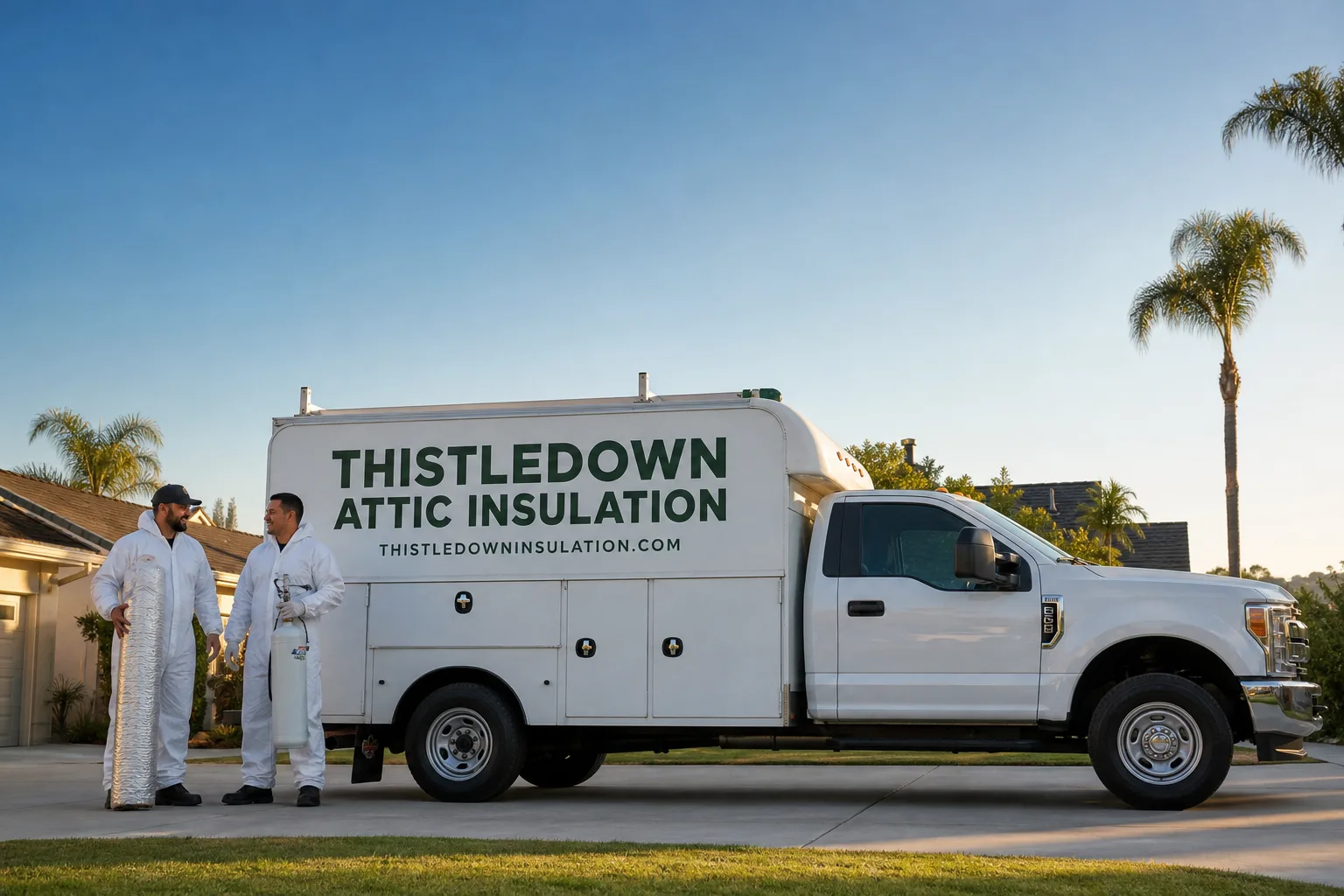
Fast, Reliable Attic Insulation Across Palm Desert
Attic insulation in Palm Desert is not a comfort upgrade. It is the difference between an AC that cycles normally in July and one that runs for 14 hours straight while the rooms nearest the garage still sit at 80°. Most homes here were built between 1970 and 1995 with R-19 or R-22 fiberglass batts, and after 30-plus years of 155°F attic cycling, that original insulation is compressed, heat-degraded, and doing a fraction of the job it was designed for. Our Attic Insulation crews work in Palm Desert every week, and we know exactly what these resort-era attics look like when we open the hatch. If you want a written price before any work starts, call (909) 768-6501.
Why Thistledown Attic Insulation Is Palm Desert’s Preferred Attic Insulation Company
We are not a general contractor who happens to insulate attics. Thistledown is an independently owned Cedarwell-family company that has handled attic insulation exclusively since 2003. When our crew pulls up to a gated community in Palm Desert, they arrive in uniform, with shoe covers on before the front door opens, and drop cloths laid across the hallway to the attic hatch. That might sound like a small thing until you have a crew working over a cream-colored carpet in a home off Portola Avenue. We treat the house like it is our own.
Every Palm Desert job gets a written price before we touch a rafter. No ranges that balloon later, no “we’ll see what we find” pricing. The number we give you before work starts is the number on the invoice. And every job is backed by the 365-Day Done Right Promise: if it is not done right, we make it right. No debate, no fine print. Neil Barron leads our team with one rule: explain before you act, clean up like it is your own home, and leave a photo of the clean-up before the van pulls away.
We answer our phone with a live person, 24 hours a day, seven days a week. If you call at 9:30 on a Saturday night because you just got back to your Palm Desert home and the upstairs is stifling, a human answers. Not a voicemail tree.
Radiant Barrier in Palm Desert
Radiant Barrier in Palm Desert is the single most effective upgrade we install in low-slope and flat-roofed homes, because this city’s biggest attic problem is not conductive heat rising from below. It is radiant heat pounding down through the roof deck. Palm Desert sits in California Title 24 Climate Zone 15, the state’s most extreme hot-dry designation, and summer attic temperatures here routinely hit 155 to 160°F. A foil radiant barrier stapled to the underside of the roof framing reflects that heat before it ever reaches your insulation or your air handler. Without it, even R-38 blown-in insulation is absorbing heat from a roof surface that can exceed 170°F at midday in August.
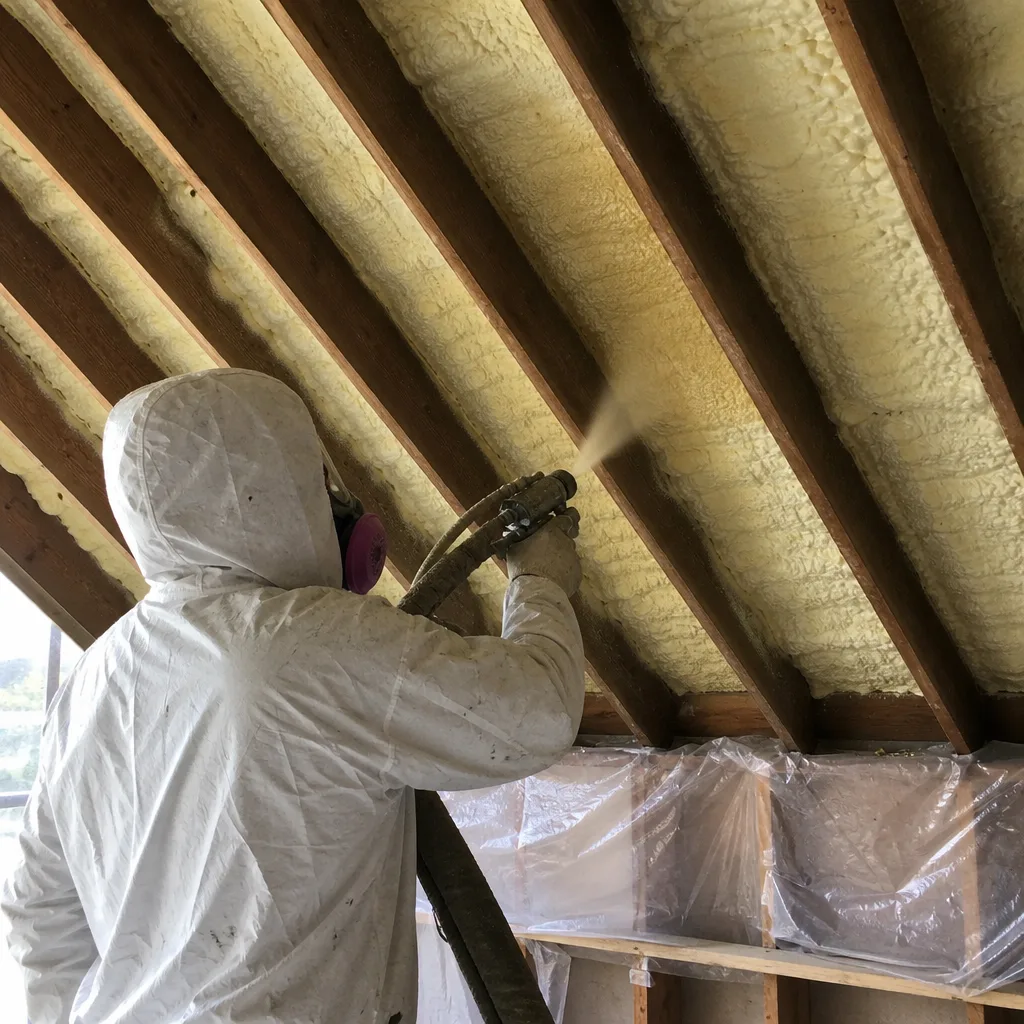
In Palm Desert’s gated golf communities, the homes that need this most are the 1970s through 1990s single-story stucco builds with low-slope roofs and air handlers sitting directly in unconditioned attic space. That setup forces your HVAC system to cool a room that is itself a heat source. Our crews install radiant barrier as a foil laminate stapled to the roof framing underside, paired with blown-in cellulose or open-cell spray foam over the ceiling plane. The combination blocks the radiant load and slows the conductive load at the same time, which is the only approach that works in CZ15’s heat-rejection environment. A typical radiant barrier installation in Palm Desert runs $1,200 to $2,800 depending on attic square footage and access, and it is included in the written quote we hand you before any work begins.
How We Match Radiant Barrier to Your Roof
Low-slope roofs in Palm Desert behave differently from the pitched roofs you see in coastal cities. The sun hits them at a steeper effective angle for more hours of the day, and the radiant load transfers almost straight down onto whatever is below. We measure this during the estimate, not guess at it. The foil product we use reflects up to 97% of radiant heat when installed with the proper air gap, and we pair it with baffles to keep your soffit vents clear so the attic can still breathe.
What Radiant Barrier Costs Alongside Other Work
Most Palm Desert homeowners combine radiant barrier with a blown-in insulation top-up or full replacement. Radiant barrier alone typically runs $1.50 to $2.75 per square foot of roof area in this market. When we pair it with GreenFiber cellulose blown to R-38 or R-44, the combined project usually lands between $2,800 and $6,500 for a standard 2,000-to-3,000-square-foot home. You get the exact number in writing before we start.
Attic Cleaning Services in Palm Desert
Attic Cleaning Services in Palm Desert are not a luxury add-on. They are often the first step toward fixing the reason your AC cannot keep up. After decades of 150°F-plus attic cycles, old fiberglass batts break down into dust, rodent and bird droppings accumulate, and the air handler sitting in that attic pulls debris straight into your duct runs. We see this in home after home across Palm Desert, especially in the original 70s and 80s builds where decades of blown-in dust have settled into a layer of grit over everything. Cleaning the attic before we insulate means the new material actually sits flat and performs to spec.
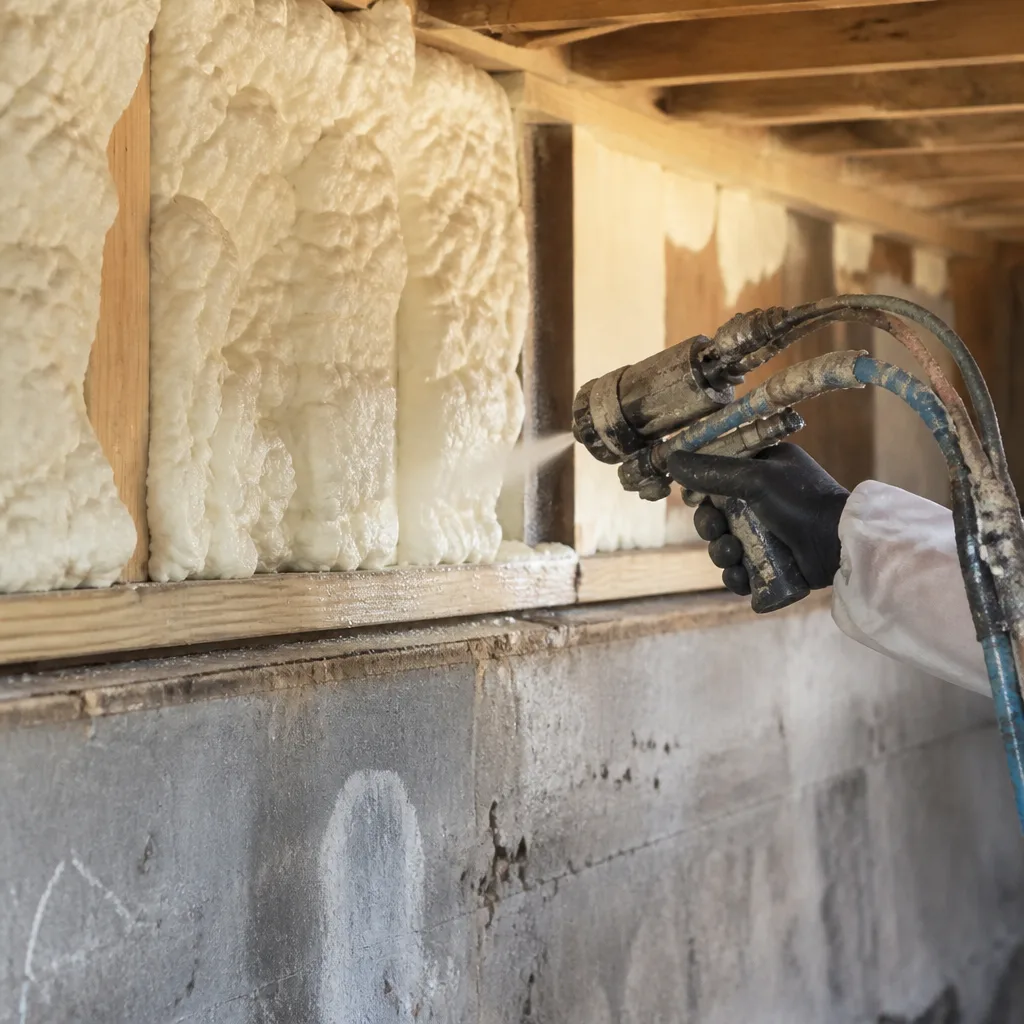
We start with a full removal of old insulation, debris, and any pest waste, then sanitize and deodorize the attic cavity. The process matters here because Palm Desert’s dry heat turns old batt facings brittle and dusty, and that dust finds its way into air handlers that are already working too hard. A full attic cleaning in Palm Desert typically runs $1,800 to $4,200 depending on attic size and the amount of material that needs to be removed, and it is part of the written estimate from the first visit.
Why We Clean Before We Insulate
Blowing new insulation over old, broken-down material is like putting a clean shirt over a dirty one. The old layer still compresses, still holds dust and odors, and still leaves air gaps at the ceiling plane. In Palm Desert homes with recessed lighting cans and older bath fan penetrations, that gap is where 155°F attic air leaks into your living space. We remove it all first, then build back from a clean deck.
What Happens to Your Air Handler
We do not insulate over your HVAC equipment. In Palm Desert attics, the air handler and flex duct runs sit directly in the heat load, and burying them in blown-in insulation without addressing the radiant gain above just bakes them slightly slower. We clear the equipment area, seal the duct connections, and recommend the radiant barrier placement that gives the handler a fighting chance during those 115°F stretches in July and August.
What happens when you call
- 1
A real person answersNo phone trees - you reach a local pro.
- 2
You get an upfront price rangeHonest numbers before anyone is dispatched.
- 3
A background-checked tech heads outLicensed & insured, dispatched right away.
- 4
You approve before work beginsNothing starts until you say go.
Trusted Brands We Service in Palm Desert
We install and service attic insulation from brands we trust in extreme heat: Owens Corning, Johns Manville, Knauf, and Rockwool. These are not interchangeable products in Palm Desert’s climate. Owens Corning’s blown-in fiberglass holds its loft in dry heat, Knauf’s batt products install clean in tight low-slope attics, and Rockwool’s stone wool performs well in the temperature swings we get from midday to pre-dawn. We stock the products our Palm Desert customers need most and can usually start a job within the same week. For pet-safe homes, we match the product to the family, not just the attic. Call (909) 768-6501 and we will talk through what works in your specific roof.
Common Attic Insulation Problems We See in Palm Desert Homes
- Compressed original R-19 and R-22 batts from 1970s – 1990s builds. After 30-plus years of 150°F attic cycling, those batts are often sitting at less than half their labeled R-value, compressed under their own weight and heat-degraded to the point they crumble when touched. We see this in nearly every resort-era stucco home we open in Palm Desert.
- Low-slope roofs transmitting radiant heat straight onto air handlers. The flat and near-flat roofs that dominate Palm Desert’s gated golf communities do not vent the way pitched roofs do. Radiant heat pours down through the roof deck and hits the duct runs and HVAC equipment directly, which is why batts alone never solve the problem here.
- Vacant snowbird homes heat-soaking from May through October. Palm Desert has a huge share of seasonal homes that sit empty during the hottest months. Without ventilation cycles to move any air, those attics hold 155 – 160°F day after day, and by the time owners return in October, the insulation facings are brittle and the equipment has been baking for five months.
- Title 24 CZ15 compliance failures flagged at home sale. Palm Desert’s climate zone is California’s strictest for attic insulation, and we regularly get calls from homeowners whose sale inspection flagged the attic as out of compliance. The fix is usually radiant barrier plus a blown-in top-up or full replacement, and it needs to be done before escrow closes.
Pricing for Attic Insulation in Palm Desert, CA
Here are real numbers for Palm Desert’s market, not broad ranges that cover half the state. A blown-in attic insulation top-up to bring a typical 1,800-2,200-square-foot home from R-19 to R-38 runs $1,500 to $3,400. A full attic insulation replacement with old material removal, air sealing, and new blown-in cellulose or fiberglass to R-38 or R-44 typically runs $3,500 to $7,800 depending on attic size and access. Radiant barrier installation as a standalone project runs $1,200 to $2,800. Attic cleaning before insulation work adds $1,800 to $4,200. Every Palm Desert customer gets a written price before any work starts, and that price includes shoe covers, drop cloths, and a photo of the clean-up before our van leaves your driveway. Call (909) 768-6501 for a free estimate.
We Also Serve Cities Near Palm Desert
Our crews work throughout the Coachella Valley corridor, and we regularly take calls from Thousand Palms, Rancho Mirage, La Quinta, and Indio. If you are just outside Palm Desert, we still bring the same written pricing, the same shoe covers, and the same 365-Day Done Right Promise to your door. The dispatch and scheduling are coordinated from our Inland Empire office, but the crews serving your home are local to the valley and know the attics here.
Serving Palm Desert, CA - Our Local Coverage Area
We’re based in the Palm Desert area and know this community well. Use the map below to see our service coverage - if you’re nearby, we can almost certainly help.
FAQs About Attic Insulation in Palm Desert
Palm Desert is in California Title 24 Climate Zone 15, which sets the strictest attic insulation requirements in the state because our summer attic temperatures reach 155 – 160°F. Original R-19 or R-22 batts from the 1970s – 1990s builds are drastically undersized for today’s cooling loads, and after decades of heat cycling they have typically lost a significant portion of their original R-value. A home sale inspection in Palm Desert now flags this as a required upgrade, which means you need to bring the attic to current code before the sale can close. Call (909) 768-6501 and we will walk the attic with you and give you a written number for the exact work the inspector is asking for.
Yes, in most cases. Blown-in insulation slows conductive heat moving through the ceiling plane, but it does almost nothing to stop the radiant heat that low-slope roofs in Palm Desert transmit directly downward onto your attic air handler and duct runs. That heat comes through the roof deck as infrared radiation, and a foil radiant barrier is the only thing that reflects it back out before it reaches your insulation or equipment. Without it, your blown-in insulation is absorbing heat from a roof surface that can reach 170°F. We pair the two in nearly every Palm Desert retrofit we do.
It changes it significantly. A vacant Palm Desert home heat-soaks for months without any ventilation cycling, and that means the attic holds 155 – 160°F air for weeks on end. The work you need focuses on two things: a radiant barrier to reject the constant downward heat load, and air sealing around attic penetrations so that superheated air does not migrate into the living space and bake the whole house. Snowbird homes are the most common place we find disintegrated batt facings and equipment damage from months of unmitigated heat. We can schedule the work while you are away and send you the clean-up photo before you fly back.
We install Owens Corning, Johns Manville, Knauf, and Rockwool products in Palm Desert, matched to the specific roof and the family. Owens Corning’s blown-in fiberglass holds its loft well in dry heat, Knauf batts install clean in tight low-slope attics, and Rockwool stone wool handles the 40-degree diurnal temperature swings we get in shoulder seasons. For homes with pets or babies, we choose pet-safe product options where a choice exists. The right product for your attic depends on your roof pitch, your equipment location, and how long the home sits empty each year. We will explain the options when we walk the attic.
Because the insulation is either compressed below its labeled R-value, or it is not stopping the heat source that matters in Palm Desert: radiant heat from the roof deck. An air handler sitting in an unconditioned attic that reaches 155°F is trying to cool a room that is itself a heat source. We see homes with R-30 blown-in insulation that still cannot hold 78° in August because the radiant load from the low-slope roof is overwhelming the equipment. The fix is usually a radiant barrier plus an insulation top-up to bring the ceiling plane to R-38 or R-44, along with air sealing at the attic hatch and penetrations. Call (909) 768-6501 and we will figure out exactly what is happening in your attic.
Written by Neil Barron, Owner at Thistledown Attic Insulation, serving Palm Desert since 2003.