
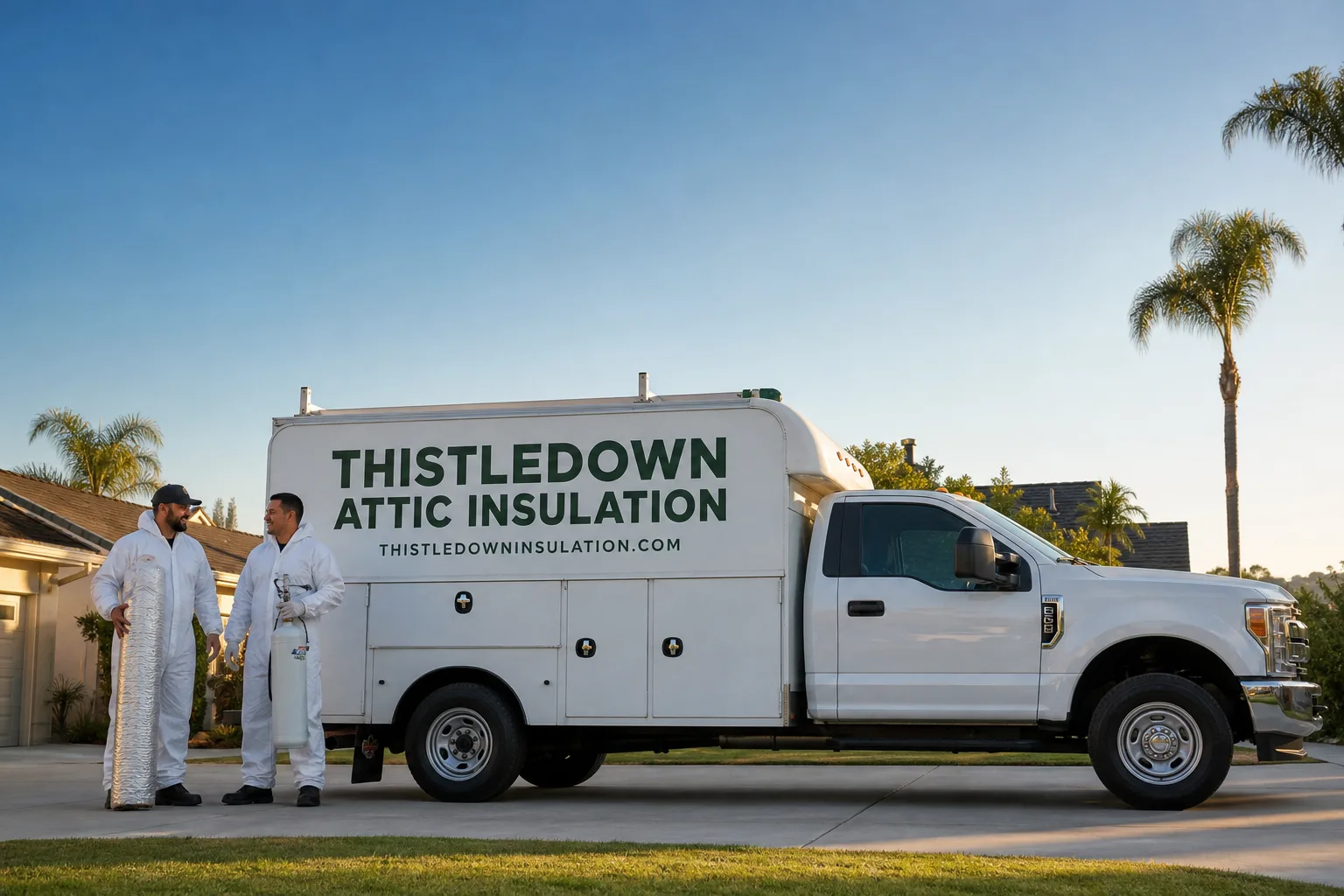
Fast, Reliable Attic Insulation Across Stanford
Attic insulation in Stanford typically runs $1,800 to $4,200 for a full retrofit on a 1,200 to 1,800 square foot faculty home, with radiant barrier adding $900 to $1,600 depending on attic configuration. Most jobs on Gerona Road or Salvatierra Walk are completed in a single day once Stanford University’s Building Inspection Services clears the permit. If your heating bill climbs every winter while the upstairs stays cold, the attic is usually the first place we look. We answer the phone live at (909) 768-6501, and we’ll give you a written price before anyone touches a rafter.
What makes Stanford different from Palo Alto or Menlo Park isn’t just the ZIP code. It’s that nearly every home sits on university-owned land, which means permits flow through Stanford’s Building Inspection Services rather than a city office, and retrofits are often tied to the university’s Carbon Neutral commitments. Our Attic Insulation team knows that process cold. We’ve filed envelope documentation through Stanford’s vendor portal for Central Energy Facility electrification packages, and we understand that a bid missing those reporting requirements gets disqualified before a site visit ever happens. That’s the part most insulation contractors don’t know until they’re turned away.
Why Thistledown Attic Insulation Is Stanford’s Preferred Attic Insulation Company
We’re a Cedarwell-family company, founded in 2003, and Neil Barron leads our crews with one rule: explain before you act, and clean up like it’s your own home. Stanford homeowners tell us the same thing after every job: the floors looked untouched, the price matched the quote, and someone actually answered the phone at 7 a.m. when they called to schedule around a napping toddler.
Every technician who walks through your front door is background-checked and uniformed. We lay drop cloths across your hallway, wear shoe covers from the entry to the attic hatch, and take a photo of the clean-up before the van pulls away. That’s the Cedarwell Care Promise, and it’s not optional. We choose pet-safe insulation products where a choice exists, so the dog can stay home during the job. And our 365-Day Done Right Promise means if something isn’t right, we make it right. No debate, no fine print.
Response time to Stanford is usually same-day or next-morning, because our scheduling desk covers the mid-Peninsula without routing through a far-off call center. A live person answers 24/7, not a voicemail tree. When you call at 6 a.m. because you heard scratching in the attic and need to know if it’s insulation-related, you get a human on the line. That matters in a university town where faculty schedules are packed and the window between morning drop-off and evening grading is the only time a job can happen.
Radiant Barrier in Stanford
Radiant barrier in Stanford is one of the most effective upgrades we install, specifically because of how the mid-Peninsula sun hits attic roofs through the dry afternoon hours after the marine layer burns off. A radiant barrier is a reflective foil layer stapled to the underside of your roof rafters. It reflects radiant heat away from the attic floor, which keeps the living space below measurably cooler in summer and reduces the load on any heat pump or air conditioner.
For a typical Stanford attic of 1,200 to 1,800 square feet, radiant barrier installation runs $900 to $1,600, depending on roof pitch, existing insulation depth, and whether baffles need adjusting first. The job takes a half day with a two-person crew, and it pairs well with attic air-sealing because both address the same heat-transfer and moisture problem from different directions.
Radiant Barrier Before Electrification
Stanford’s Central Energy Facility program is moving faculty homes to all-electric heat pumps. A radiant barrier installed before that HVAC changeout reduces the cooling load on the new system, which means the heat pump runs less and lasts longer. We file the envelope improvement through Stanford’s vendor portal so it counts toward the university’s electrification documentation.
What We Install and Why
We use perforated radiant barrier film that allows moisture vapor to pass through rather than trapping condensation against the roof deck. In Stanford’s fog-heavy mornings, that perforation is not a minor detail. It’s the difference between a barrier that performs for decades and one that becomes a moisture trap by the second winter. We also keep the barrier off the attic floor and away from recessed light housings, which older Stanford ranches on Gerona Road often have in abundance.
Attic Cleaning Services in Stanford
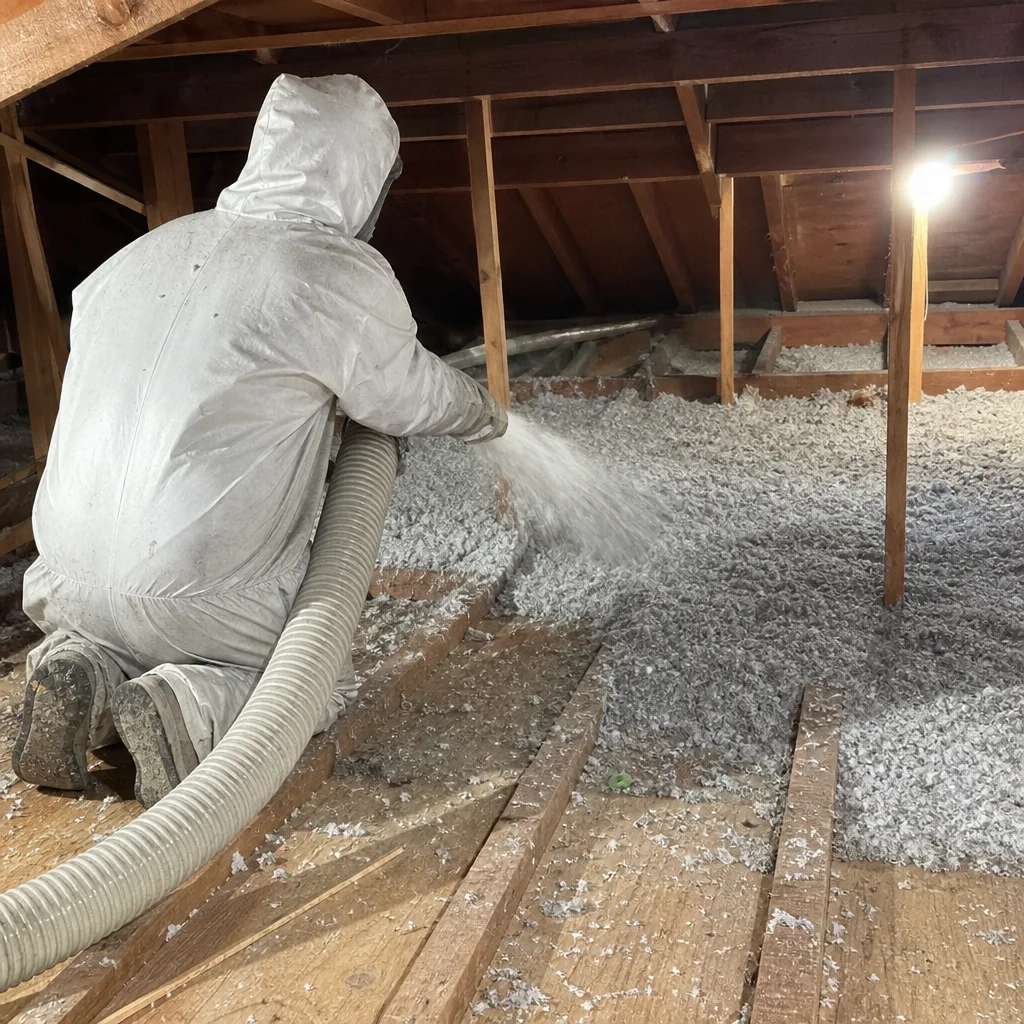
Attic cleaning services in Stanford are a prerequisite for any insulation retrofit on faculty housing built between the 1950s and 1970s. Those attics have had decades to accumulate rodent droppings, dust from degraded fiberglass batts, and debris from roof replacements. You can’t blow new insulation over that. The right sequence is clean first, air-seal second, insulate third.
A full attic cleaning on a Stanford faculty home typically runs $600 to $1,100, depending on attic size and the condition of what’s up there. The job involves removing old, compressed, or contaminated insulation with a commercial vacuum, cleaning the attic floor and framing, and preparing the space for new material. We dispose of everything properly, and we show you a photo of the clean attic before we move to the next step.
When Rodents and Squirrels Are Involved
Stanford’s mature oak trees and dense hedging along Gerona Road and Salvatierra Walk make attic wildlife relatively common. When droppings or nesting material are present, we’ll recommend cleaning and sanitizing before any new insulation goes in. We don’t do pest exclusion ourselves, but we’ll tell you exactly what we found, where the entry points appear to be, and what to have sealed before we insulate. Insulation over an active entry point is wasted money.
Cleaning Before Air-Sealing
Air-sealing requires a clean, dry surface to adhere to. On a 1960s ranch home on Gerona Road, our tech found the original fiberglass batts compressed to about half depth and a moisture-stained top plate where marine-layer fog had been condensing in the under-insulated wall cavity for decades. We cleaned the attic plane, air-sealed every penetration, blew in Owens Corning loose-fill to the university’s spec, installed a radiant barrier, and then filed the envelope documentation through Stanford’s vendor portal for the Central Energy Facility electrification package. That sequence works because the clean surface let the sealant bond properly.
What happens when you call
- 1
A real person answersNo phone trees - you reach a local pro.
- 2
You get an upfront price rangeHonest numbers before anyone is dispatched.
- 3
A background-checked tech heads outLicensed & insured, dispatched right away.
- 4
You approve before work beginsNothing starts until you say go.
Trusted Brands We Service in Stanford
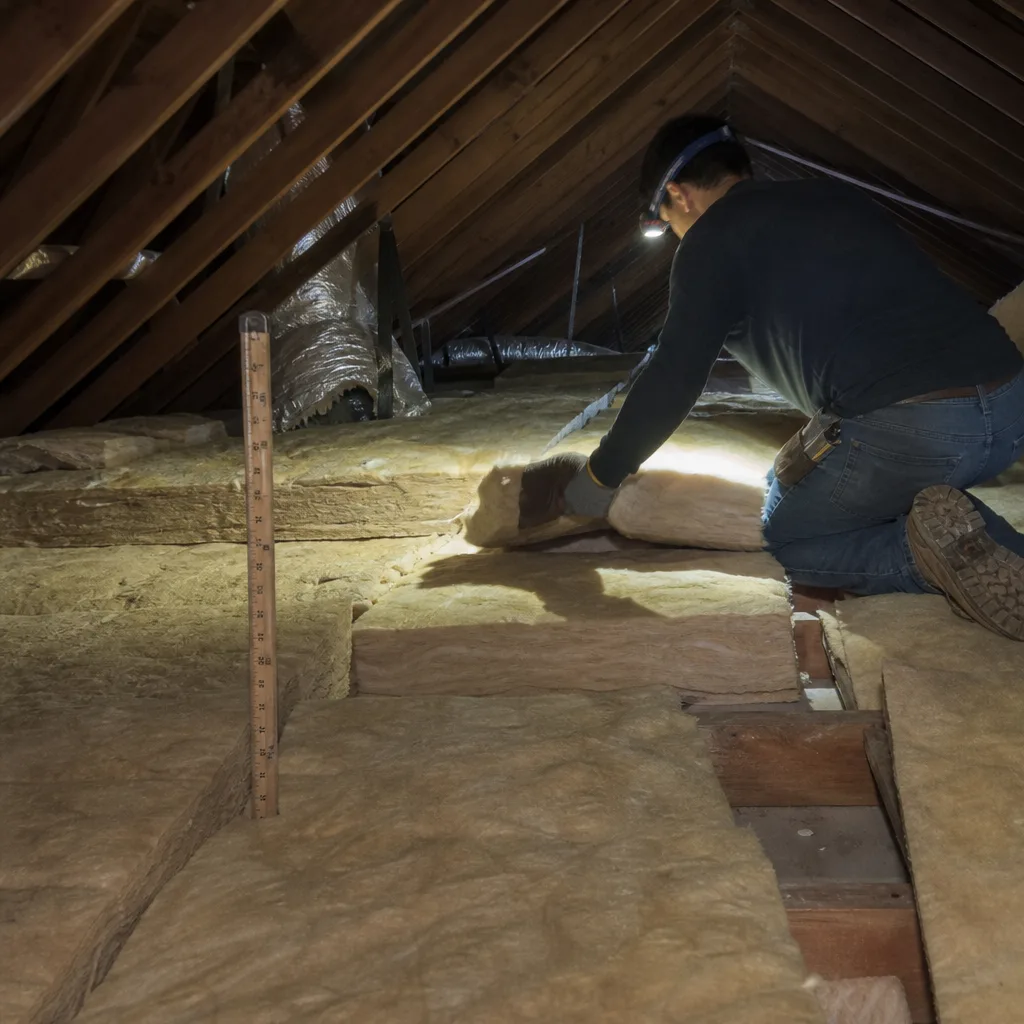
We install and service insulation from Johns Manville, Knauf, and Owens Corning, and we stock common materials and fasteners for Stanford jobs so we don’t lose a day waiting on a distributor. CertainTeed and Rockwool are also in our regular rotation, and we’ll match the right product to your attic’s specific conditions rather than pushing whatever is on the truck. For older Stanford ranches with moisture-sensitive wall cavities, we often recommend Rockwool’s stone wool batts for their water resistance. For open attics needing a fast, even fill, Johns Manville loose-fill works well and satisfies Stanford’s documentation requirements without friction.
Common Attic Insulation Problems We See in Stanford Homes
- Marine-layer moisture in mid-century wall cavities. The fog-heavy mornings and dry afternoons Stanford gets from its mid-Peninsula position push moisture into walls built with minimal insulation. Batts sag, compress, and lose R-value, and staining shows up on the top plate. We address this with air-sealing before any new insulation goes in.
- Compressed original fiberglass from the 1960s and 1970s. Faculty housing along Gerona Road and Salvatierra Walk was built when R-11 was standard. Most of that material has settled to half its original depth. A top-up or full replacement restores the R-value to Stanford’s current electrification specs.
- Bids disqualified at Stanford’s vendor portal. Contractors who don’t include Carbon Neutral and Central Energy Facility documentation never make it past the first screen. We file that paperwork correctly because we’ve done it before, not because we’re reading a guide for the first time.
- Envelope penetrations mismatched to new heat pumps. When a retrofit doesn’t coordinate with the concurrent all-electric changeout, attic air-sealing ends up mismatched to the new HVAC load. That forces rework in the next renovation cycle. We coordinate with the university’s renovation schedule whenever possible to avoid that double cost.
Pricing for Attic Insulation in Stanford, CA
Here’s what Stanford homeowners should expect to pay. A straightforward attic insulation top-up on a 1,200 square foot faculty home runs $900 to $1,500. A full attic insulation replacement, including removal of old material, air-sealing, and new blown-in or batt insulation, typically lands between $1,800 and $4,200. Radiant barrier adds $900 to $1,600. Attic cleaning before insulation runs $600 to $1,100.
What moves the number within those ranges is the depth of existing insulation, the condition of the attic floor, whether baffles or ventilation prep are needed, and whether Stanford’s electrification documentation is required. You’ll have your exact written number before we start. No ranges on the invoice, no surprises at the end. Call (909) 768-6501 for a free estimate, and we’ll walk the attic with you if you want to see what we see.
We Also Serve Cities Near Stanford
While this page focuses on Attic Insulation in Stanford, our crews serve the surrounding mid-Peninsula communities of Palo Alto, Menlo Park, Atherton, and Los Altos. Many of those homes share the same marine-layer moisture patterns and mid-century construction quirks we see on Gerona Road, and the same documentation discipline that Stanford requires carries over well to those university-adjacent neighborhoods.
Serving Stanford, CA - Our Local Coverage Area
We’re based in the Stanford area and know this community well. Use the map below to see our service coverage - if you’re nearby, we can almost certainly help.
FAQs About Attic Insulation in Stanford
Stanford University’s Building Inspection Services is the permitting authority for faculty housing on university-owned land, not a city permit office. Every attic insulation retrofit on Gerona Road or Salvatierra Walk goes through their review process. We prepare and file the paperwork correctly the first time. Call (909) 768-6501 if you’re unsure whether your home falls under university jurisdiction.
Yes, in most cases. Stanford’s Carbon Neutral commitments and Central Energy Facility electrification program require that insulation retrofits be documented as part of the building’s thermal envelope improvement. Bids that don’t include that documentation are typically disqualified at the vendor portal before any site visit. We file envelope documentation as a standard part of every Stanford job.
Stanford sits mid-Peninsula, where persistent marine layer mornings and warm dry afternoons create moisture stress that inland San Jose doesn’t experience the same way. That moisture wicks into under-insulated mid-century wall cavities, degrading batts and staining top plates. Air-sealing matters more here because it prevents that damp air from cycling into the attic in the first place.
We install Owens Corning, Johns Manville, Knauf, Rockwool, CertainTeed, Icynene, Demilec, and GreenFiber products, matched to the attic’s condition and the university’s spec. For most Stanford faculty homes, we recommend blown-in loose-fill for full coverage plus a radiant barrier where the attic gets direct afternoon sun. The written quote tells you exactly which product and depth you’re getting.
Yes, and we recommend it on every older home. Cleaning removes compressed, contaminated, or moisture-damaged material. Air-sealing closes penetrations that let marine-layer air cycle through the attic. Then new insulation goes in over a clean, sealed plane. We’ll show you a photo of the cleaned attic before the new material arrives, and the whole sequence usually takes one day.
Written by Neil Barron, Owner at Thistledown Attic Insulation, serving Stanford since 2003.