
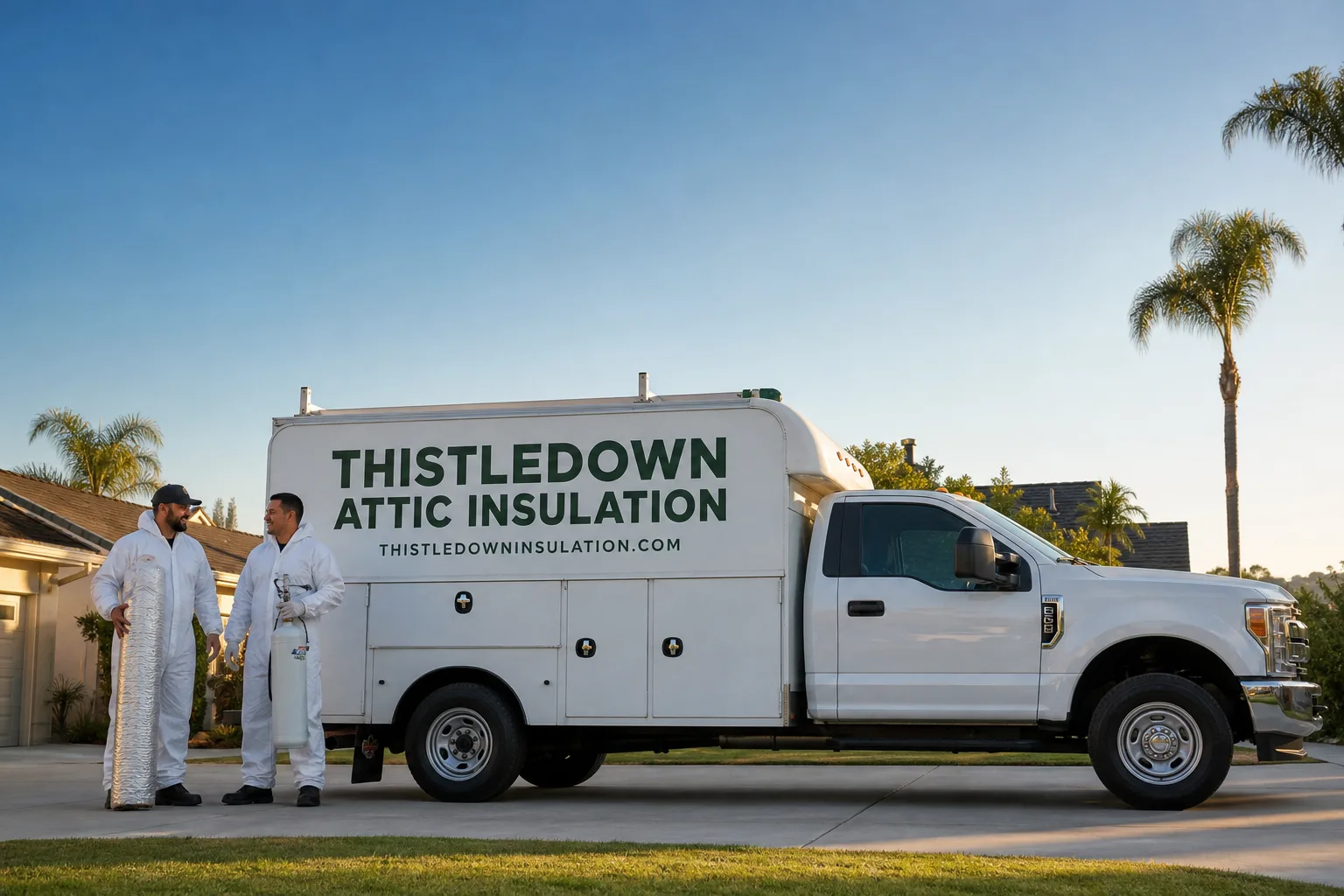
Fast, Reliable Attic Insulation Across Los Angeles
Attic insulation in Los Angeles isn’t one job. It’s a different job in Reseda than it is in Santa Monica, because LA spans California Energy Commission Climate Zones 6 through 10 inside a single metro. A 1963 stucco-clad ranch on Valerio Street in Reseda needs a target R-value that a coastal bungalow near the marine layer doesn’t. Thistledown Attic Insulation has been doing attic work across Los Angeles since 2003, and we’ve learned to match the insulation to the neighborhood, not to a generic city-wide spec. If your attic is under-insulated and your upstairs rooms run hot, call (909) 768-6501. We answer live, 24/7.
Why Thistledown Attic Insulation Is Los Angeles’s Preferred Attic Insulation Company
Los Angeles homeowners keep calling us back because we put the price in writing before anyone picks up a tool. No ranges that balloon later, no “we’ll see when we get up there.” You get a written number. Then the crew shows up in uniform, background-checked, wearing shoe covers from the front door to the attic hatch and laying drop cloths across your hallway.
Our Attic Insulation team works in Los Angeles attics every week, from South LA bungalows to San Fernando Valley tract homes. We know what a 1960s blown-fiberglass attic looks like when it has settled to four inches of dust. We know which stucco-clad mid-century homes need drill-and-fill wall work to actually solve the heat problem. Every job is backed by our 365-Day Done Right Promise: if it’s not done right, we make it right. No debate, no fine print.
Neil Barron leads the Thistledown team, and the name itself says how we work. Thistledown is the soft fluff of the thistle, one of nature’s lightest insulators. It’s a promise about how carefully we move through your home.
Attic Ventilation in Los Angeles
Attic Ventilation in Los Angeles is the difference between an attic that traps 140°F air and one that breathes, which matters most in the San Fernando Valley where summer heat sits on your roof for months. Without proper intake and exhaust airflow through baffles and vents, even a well-insulated attic cooks the rooms below it. A ventilation job typically involves installing or repairing baffles at the eaves so blown-in material doesn’t block airflow, adding or upgrading ridge or gable vents, and confirming the balance between intake and exhaust.
Los Angeles homeowners in Reseda, Canoga Park, and Sylmar feel the need first, because their attics hit temperatures that make insulation alone insufficient. A standard attic ventilation upgrade in Los Angeles runs $450 to $1,200 depending on attic size and vent configuration. When paired with new insulation, it usually adds a day or less to the job.
Baffles and Eave Preparation
Older Los Angeles attics, especially 1940s to 1970s ranch homes, often have no baffles at all. Blown-in insulation shoved into the eaves blocks the only air path, and the attic stagnates. We install baffles before any blow-in job as a matter of course, not as a line item upsell.
When Ventilation Alone Isn’t Enough
If your attic has working ventilation but upstairs rooms still run 10°F hotter than downstairs, the problem is usually insulation depth, not airflow. We’ll check both before recommending a scope, because selling ventilation to a home that needs R-38 insulation is a waste of your money.
Radiant Barrier in Los Angeles
Radiant Barrier in Los Angeles is a foil-faced material stapled to the underside of roof rafters that reflects radiant heat back out of the attic instead of letting it soak into the insulation below. In Los Angeles, where cooling loads drive the energy bill, a radiant barrier can reduce attic temperatures by 20°F to 30°F on a summer afternoon. It works best in the San Fernando Valley and San Gabriel Valley, where the sun pounds flat or low-slope roofs for hours.
A radiant barrier installation in Los Angeles typically runs $1,500 to $3,200 for a standard single-story home, depending on attic size and rafter configuration. It’s often paired with a top-up of blown-in insulation, because the barrier handles radiant heat while the insulation slows conductive heat transfer. Both have to be right.
Radiant Barrier Plus Insulation Top-Up
Homes in Reseda and Sylmar with settled original fiberglass get the biggest combined benefit. A radiant barrier alone won’t fix an attic that has only R-11 of settled material under it. We quote the barrier and the top-up as one scope when both are needed, so you see the full number up front.
When Radiant Barrier Makes Less Sense
Coastal attics in Santa Monica or El Segundo rarely justify a radiant barrier. The marine layer keeps roof surfaces cooler, and the payback stretches out long enough that the money is better spent elsewhere. We’ll tell you that plainly, because selling something you don’t need is how attics get over-scoped in this city.
Trusted Brands We Service in Los Angeles
Thistledown installs attic insulation using products from eight brands, including Owens Corning, Johns Manville, Knauf, and GreenFiber. The right product depends on your home: Owens Corning blown fiberglass is our standard for San Fernando Valley top-ups where existing material has settled, while GreenFiber is a strong choice for Los Angeles homeowners who want a recycled-content, pet-safe option where a choice exists. Because we stock and service locally for Los Angeles customers, we don’t wait on distant supply chains. The material is on the truck when we arrive.
Common Attic Insulation Problems We See in Los Angeles Homes
- Settled 1960s blown fiberglass. In north San Fernando Valley tract homes, original blown fiberglass has typically settled to under R-11, less than a third of California Title 24’s current R-38 minimum for Zone 10. A routine attic job here means adding 10 to 12 inches of new material on top.
- Stucco-clad mid-century walls with no insulation. Across South LA and the San Gabriel Valley, homes built between the 1940s and 1970s often have empty wall cavities. Attic insulation alone won’t fix the heat load; drill-and-fill blown-in insulation through the stucco is the cost-effective retrofit.
- Blocked or missing attic baffles. Many older Los Angeles attics were insulated without any eave protection, so blown-in material blocks the intake vents. The attic stagnates and the rooms below never cool off.
- Post-wildfire rebuilds with stricter requirements. Homeowners rebuilding in Altadena and Pacific Palisades face Very High Fire Hazard Severity Zone codes that favor non-combustible mineral wool like Rockwool. The insulation choices are different, and the permit path changes.
Pricing for Attic Insulation in Los Angeles, CA
A blown-in attic insulation top-up in Los Angeles typically runs $1,800 to $3,400 for a standard 1,200 to 1,800 square foot attic, depending on current depth and target R-value. Full attic insulation replacement in Los Angeles runs $3,500 to $6,500. Attic batt insulation for accessible attics runs $2,200 to $4,800. Radiant barrier adds $1,500 to $3,200. Attic baffle installation and ventilation prep runs $450 to $1,200. These are honest ranges based on what we see across Los Angeles attics every week. You’ll get your exact written number before any work starts. Call (909) 768-6501 for a free estimate.
We Also Serve Cities Near Los Angeles
Thistledown’s Los Angeles crews regularly work in Huntington Park, South Gate, Bell, and Maywood, where the housing stock mirrors South LA’s stucco-clad bungalows and ranch homes. If you’re in one of those cities, the same Attic Insulation in Los Angeles standards apply: written price first, clean floors always, and a live person on the phone any hour you call.
Serving Los Angeles, CA - Our Local Coverage Area
We’re based in the Los Angeles area and know this community well. Use the map below to see our service coverage - if you’re nearby, we can almost certainly help.
FAQs About Attic Insulation in Los Angeles
Almost certainly not. Original blown fiberglass in 1960s San Fernando Valley tract homes has settled to roughly four inches of depth, which is under R-11. You’d need to add 10 to 12 inches of new material to reach the R-38 minimum for CEC Climate Zone 10. Call (909) 768-6501 and we’ll inspect your attic and measure the actual depth before quoting anything.
In most Santa Monica homes, the ROI on heavy attic insulation is marginal because the marine layer keeps indoor temperatures moderate. What often matters more on the coast is sealing duct leaks and making sure ventilation works, not oversizing R-value. We’ll scope it honestly rather than selling you R-60 because that’s what the book says for Los Angeles.
Because your stucco-clad mid-century walls were likely built with empty cavities, and attic insulation alone won’t stop the heat coming through those walls. Drill-and-fill blows insulation into the wall cavities through small exterior holes, which are then patched. It’s the only cost-effective retrofit short of cutting open the stucco, which is prohibitively expensive.
Yes, for most Los Angeles attics. Title 24’s current minimum for CEC Climate Zones 9 and 10, which cover the San Fernando Valley and San Gabriel Valley, is R-38. Coastal zones in Los Angeles have different requirements. A Los Angeles attic that hasn’t been touched since the 1960s is almost always well below the current standard.
Yes. Rebuilding in a Very High Fire Hazard Severity Zone means your insulation choices shift toward non-combustible products like Rockwool mineral wool, and the permit process has additional fire-safety requirements for the attic assembly. We supply Rockwool and work with Los Angeles rebuild projects regularly. Call (909) 768-6501 and we’ll walk you through the options.
Written by Neil Barron, Owner at Thistledown Attic Insulation, serving Los Angeles since 2003.