
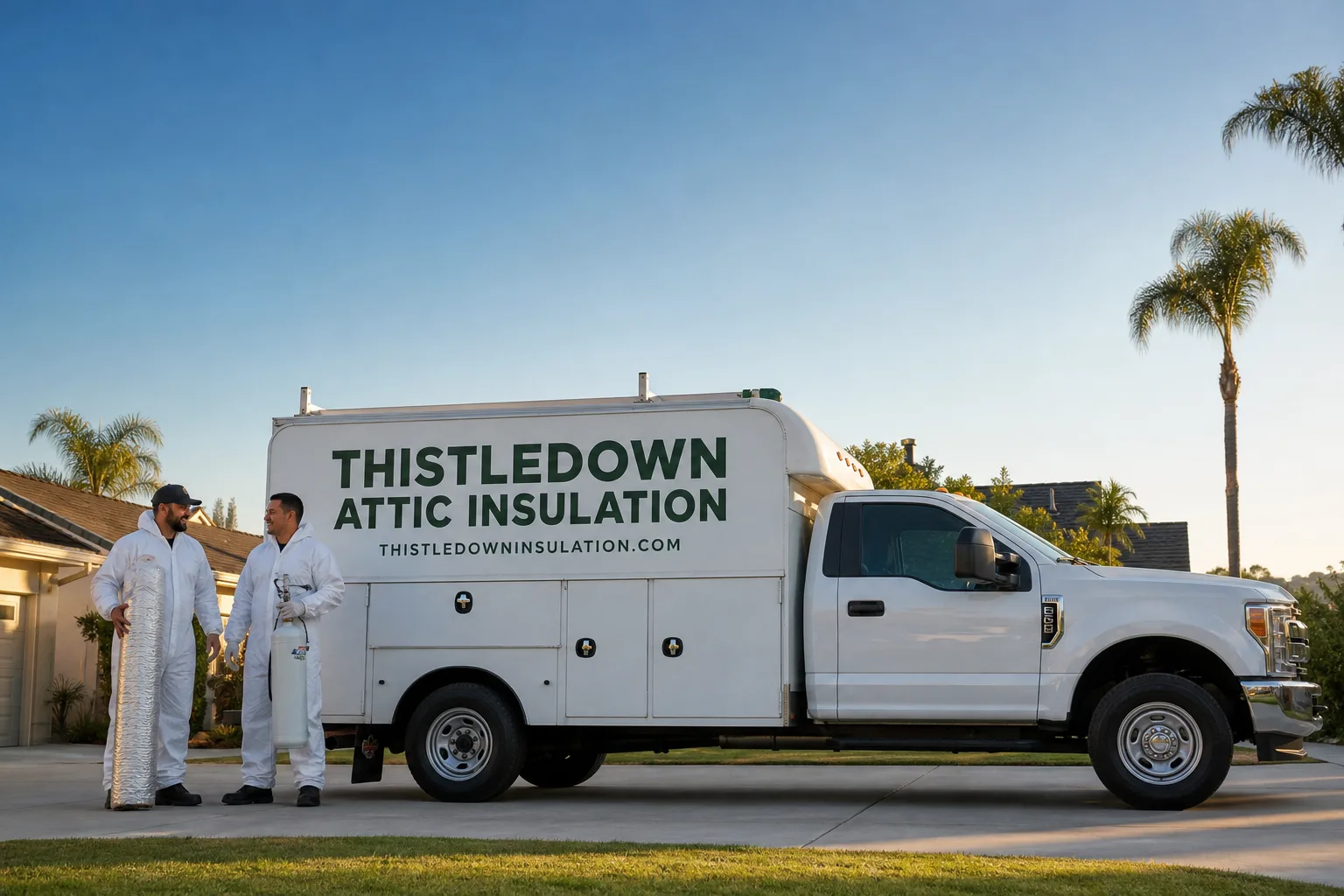
Fast, Reliable Attic Insulation Across Sonoma
Attic insulation in Sonoma costs between $1,800 and $6,200 for a typical single-family home, with most projects landing around $2,900 to $4,400 for full attic air-sealing plus new blown-in fiberglass or cellulose. Every job gets a written price before we touch a rafter, and our crews reach most Sonoma neighborhoods the same day you call. If you live near the Plaza, up in the valley edge, or out toward Boyes Hot Springs, we know these houses and we know what their attics do in August and January. Call (909) 768-6501 and a live person answers, 24 hours a day.
Why Thistledown Attic Insulation Is Sonoma’s Preferred Attic Insulation Company
We are a Cedarwell-family company, founded in 2003, and we build every Sonoma job around the same Cedarwell Care Promise: shoe covers on at the door, drop cloths across the hallway, a photo of the clean-up before we pull away. Neil Barron, who leads our crews, made that promise the spine of how we work before phrases like “trust signals” ever became marketing talk. Around the Plaza, where driveways are short and neighbors are close, our technicians park tight, work quiet, and leave the property looking the way they found it.
Sonoma homeowners keep calling us for one reason that has nothing to do with advertising: the written price. Before anyone opens a hatch or hauls a hose up the ladder, you know your number. No ranges that inflate mid-job. No “we need to add a vent we didn’t mention.” The 365-Day Done Right Promise backs the work itself: if it’s not done right, we make it right. No debate, no fine print.
Our response time to Sonoma from our San Francisco Bay Area dispatch office runs under 90 minutes for most callouts. That matters when you’ve got a cold snap rolling down the valley and an attic with the original 1950s batts doing almost nothing. We send background-checked, uniformed technicians, not subcontractors we’ve never met. You’ll know exactly who is walking through your front door.
Radiant Barrier in Sonoma
Radiant barrier in Sonoma is a reflective foil or spray-applied radiant coating installed on the underside of your roof deck, and it earns its keep during those August afternoons when Petaluma Gap fog burns off by 10 a.m. and attic temperatures spike past 140°F. In Sonoma’s climate, radiant barrier costs between $1,200 and $3,400 depending on attic size and access, and it works by reflecting radiant heat back out before it saturates your insulation below.
Here’s why Sonoma attics respond so well to this: your daily temperature swing runs 30 to 40°F, sometimes more. In the morning, marine air off the bay keeps the underside of your roof deck cool and damp. By 4 p.m., that same deck is baking. Radiant barrier cuts the peak heat load, which keeps your existing insulation drier and your upstairs rooms noticeably cooler by evening. In older craftsman bungalows near the Plaza with original venting still working, the difference is easiest to feel in bedrooms that face west.
We install radiant barrier in Sonoma as a supplement to insulation, not a replacement. The foil goes up against the rafters with a small air gap, and we detail the vents carefully. Given the fog that flows through this valley every morning, a vent that isn’t detailed for daily condensation cycles will grow mildew inside a year. That’s not a Sonoma problem you solve with a generic roof job.
Foil-Faced Radiant Barrier Installation
We staple or fasten perforated foil across the underside of the roof deck, leaving the air gap that makes it work. Perforation matters more in Sonoma than in drier inland markets because trapped moisture against the deck will condense into droplets on cold marine mornings.
After the foil runs go up, we check every soffit and ridge vent for unrestricted airflow. A radiant barrier without breathing room becomes a moisture trap. We fix the ventilation path before we call the job done.
Spray-Applied Radiant Coating
In attics with angles too tight for foil, we apply a spray-on radiant coating directly to the deck. Sonoma’s older Victorian and craftsman roofs often have irregular rafter spacing, and spray coating follows every contour without seams.
This option costs slightly more per square foot than foil but performs better in barrel-ceiling attics and converted agricultural structures where the deck line isn’t standard.
Attic Cleaning Services in Sonoma
Attic cleaning services in Sonoma run between $450 and $1,800 depending on attic size, access difficulty, and what’s actually living up there, and we’d never press you into a cleaning without first telling you what we’ll remove and why. In Sonoma specifically, the job usually involves more than just rodent droppings and old newspaper. Two decades of bay-sourced fog does a number on old insulation: original fiberglass batts hold dampness, compress under their own weight, and grow mildew in the corners where the roofline meets the knee walls.
We bag the contaminated material, wipe down the deck and joists with a mild antimicrobial solution, and prep the space for new insulation. If you’ve been hearing small feet in the ceiling around 3 a.m., we’ll find the entry points and seal them before we insulate. You can’t blow new fiberglass over an active rodent run and expect it to stay clean.
Contaminated Insulation Removal
Our crew hauls out wet, compressed, or pest-soiled batts and bags them for disposal on site. In the older homes along Sonoma’s grid streets near the Plaza, we often find the original kraft-faced batts fused to the deck from decades of condensation.
We don’t charge extra for the cleanup photo. You’ll get one before we leave, showing the bare deck, the sealed penetrations, and the empty space where the bad material used to be.
Attic Air-Sealing Prep
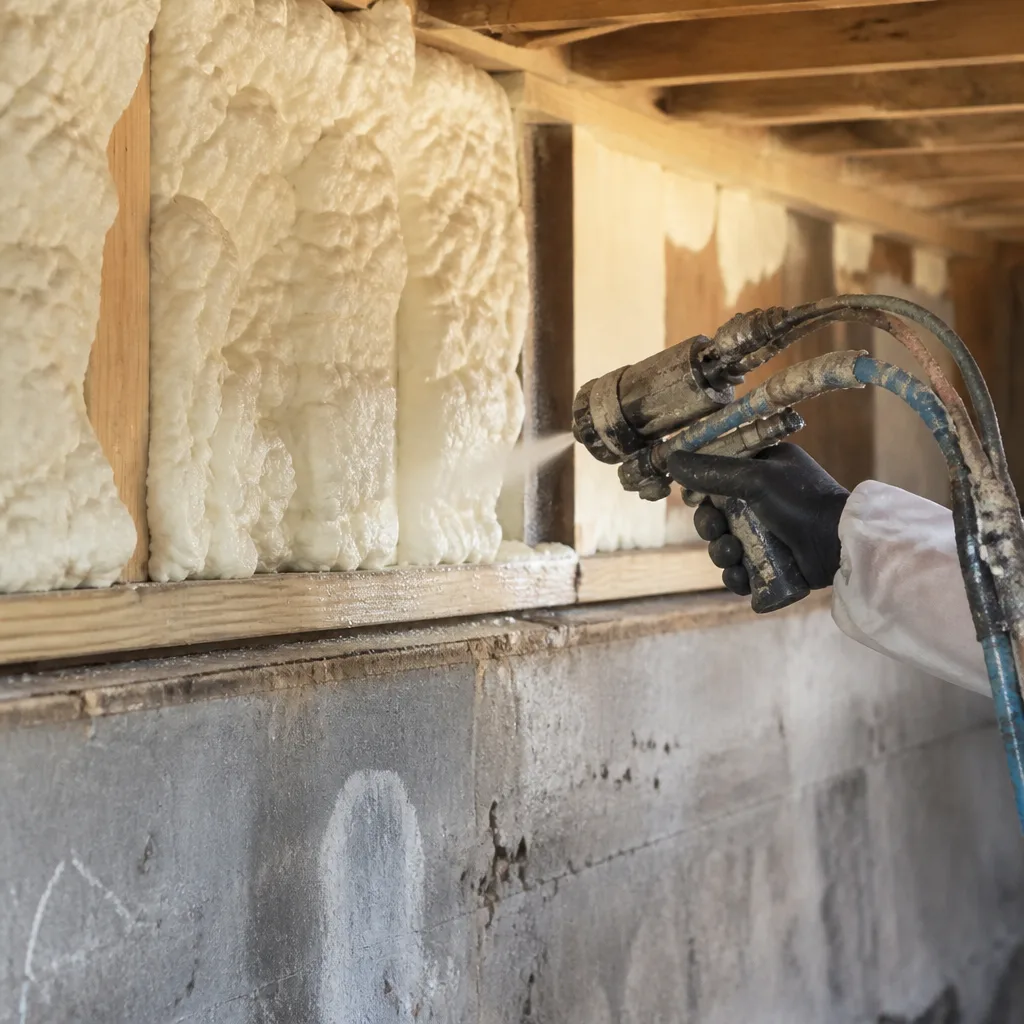
Once the attic is emptied, we seal top plates, wire penetrations, can lights, and the attic hatch. In a Sonoma summer, unsealed gaps let radiant-heated attic air pour into the living space. In winter, they do the reverse and pull warm air out.
Air sealing in Sonoma is the single highest-value prep step before new insulation goes in. We wouldn’t skip it, and we’ll show you why with photos of the gaps we closed.
What happens when you call
- 1
A real person answersNo phone trees - you reach a local pro.
- 2
You get an upfront price rangeHonest numbers before anyone is dispatched.
- 3
A background-checked tech heads outLicensed & insured, dispatched right away.
- 4
You approve before work beginsNothing starts until you say go.
Trusted Brands We Service in Sonoma
Our Attic Insulation team works with Owens Corning, Johns Manville, Knauf, Rockwool, CertainTeed, Icynene, Demilec, and GreenFiber. For Sonoma’s older homes, we most often reach for GreenFiber dense-pack cellulose when we’re filling wall cavities from the inside, and Owens Corning fiberglass when we’re blowing fresh coverage across an attic floor. We stock the materials our Sonoma customers ask for by name, and we match the product to your roof pitch, venting, and whether anyone in the house has a pet with respiratory sensitivities. When a choice exists, we choose pet-safe. That’s not an upsell, it’s just how we spec the job.
Common Attic Insulation Problems We See in Sonoma Homes
If you own a house within walking distance of the historic Plaza, you’re likely dealing with at least one of these. We see all four every single week.
- Damp and compressed original batt insulation. Pre-1960s bungalows around the Plaza were built with thin fiberglass batts that have spent sixty years absorbing winter fog and rain humidity. They sit in the joist bays like wet felt, which cuts their R-value to almost nothing and encourages mildew growth along the decking.
- Unsealed top plates and can lights dumping heat into bedrooms. When Petaluma Gap fog clears and afternoon temps push into the 90s, every unsealed gap between the attic and the living space becomes a channel for superheated attic air. Sonoma’s 30 to 40 degree daily swings make these leaks feel worse than they do in steadier climates.
- Corroded attic hardware and fasteners on the marine-air side of town. The same bay fog that keeps Sonoma’s mornings cool carries salt and moisture that pits exposed metal. Attic hatch hinges, fastener heads, and any exposed garage-door spring assemblies rust years faster on the west and south edges of town than they do inland.
- Non-standard cavities in converted agricultural buildings. Valley edge properties often include old barns, barrel rooms, and worker cottages converted into living space. Their framing doesn’t match modern codes, and standard batt widths don’t fit. Dense-pack cellulose and injection foam solve the cavity problem without demolishing the character.
Pricing for Attic Insulation in Sonoma, CA
Here are the real numbers for Sonoma, not generic California figures. Full attic air-sealing plus new blown-in insulation typically runs $2,900 to $4,400 for a 1,200 to 1,800 square foot home. Blown-in fiberglass alone falls between $1,800 and $3,200. Dense-pack cellulose for existing wall cavities near the Plaza runs $3,500 to $6,200 depending on how many exterior walls we’re filling. An attic top-up over existing insulation costs $900 to $1,800 when we’re adding six to ten inches. Radiant barrier runs $1,200 to $3,400. Attic cleaning lands between $450 and $1,800. You’ll get a written price before any work begins, and that number is your number. Call (909) 768-6501 for a free estimate.
We Also Serve Cities Near Sonoma
Beyond Sonoma proper, our crews work throughout Boyes Hot Springs, Petaluma, Novato, and Cotati. The marine-air corrosion pattern we see on Sonoma’s west side follows us into Novato, and the older housing stock around Petaluma and Cotati presents the same wall-cavity retrofit challenges we handle daily in Sonoma. If you’re anywhere in the valley corridor or along the Marin-Sonoma county line, we’re close.
Serving Sonoma, CA - Our Local Coverage Area
We’re based in the Sonoma area and know this community well. Use the map below to see our service coverage - if you’re nearby, we can almost certainly help.
FAQs About Attic Insulation in Sonoma
The Petaluma Gap fog matters for Sonoma attic insulation because it drives a daily 30 to 40 degree temperature swing and introduces persistent moisture into attic assemblies, which compresses fiberglass batts and corrodes exposed metal hardware. The fog rolls in overnight, cools the roof deck, and condenses into the insulation. By afternoon, the same attic is an oven. That cycling degrades insulation and fasteners faster than either condition would on its own. Our installs in Sonoma account for both: we air-seal aggressively, we choose insulation that tolerates moisture cycles, and we use galvanized or stainless hardware on hatches and vents. Call (909) 768-6501 and we’ll walk your attic and explain what your house is actually doing.
In most cases, no. Properties inside Sonoma’s historic overlay district around the Plaza cannot receive exterior rigid foam without design review approval, and that approval rarely comes through for visible facade changes. The workaround local contractors default to is dense-pack cellulose or injection foam installed from the inside into existing wall and attic cavities. We do that work regularly in Sonoma, and it achieves the same thermal barrier without altering the exterior appearance. If you’re outside the overlay, exterior foam may be an option, and we’ll tell you honestly which path fits your house. Call (909) 768-6501 for an on-site look.
In most Plaza-area craftsman bungalows, yes. Original fiberglass batts in Sonoma have typically absorbed enough bay-sourced fog and winter rain over the decades to compress into damp mats that score around R-5 to R-9 instead of their original R-19 or R-30 rating. Mildew is usually present where the batts meet the deck. We recommend removal and disposal, followed by air-sealing and fresh blown-in insulation. If your attic is dry and the batts are only mildly compressed, a top-up may be enough, but we won’t know until we open the hatch and look. Call (909) 768-6501 and we’ll inspect it.
The difference is marine air. Sonoma sits at the mouth of the Sonoma Valley where Petaluma Gap fog rolls in most mornings, and that fog carries salt and moisture. Springs, hinges, rollers, opener chains, and even the fasteners on attic hatches corrode years faster on the marine-air side of Sonoma than they do inland in Santa Rosa. We see it on nearly every property we visit in the flats east of the Plaza. The fix is straightforward: galvanized or stainless springs and hardware, nylon rollers instead of steel, and a corrosion-check every few years. When we’re in your attic for insulation, we’ll look at the garage door hardware too. Call (909) 768-6501 and have us check while we’re there.
Converted barns, barrel rooms, and worker cottages along Sonoma’s valley edge present non-standard insulation challenges because their framing doesn’t match modern dimensional lumber. Stud spacing varies, roof decks run at odd angles, and existing cavities may be partially filled with materials that predate building codes. We approach these jobs with dense-pack cellulose and injection foam, which fill irregular cavities without requiring demolition. We also check for the same air-sealing gaps we see in period homes around the Plaza. Every such property gets a written scope and price before work begins. Call (909) 768-6501 and we’ll walk the structure with you.
Written by Neil Barron, owner at Thistledown Attic Insulation, serving Sonoma since 2003 as part of the Cedarwell family of independently owned insulation companies.