
5 Mistakes to Avoid With Attic Insulation
The five most expensive attic insulation mistakes in Los Angeles are not about choosing the wrong R-value. They’re about ignoring the air-sealing step that makes any R-value meaningless, a problem uniquely acute in LA’s older housing stock where attic bypasses outnumber insulation gaps three to one. Skip the sealing, and you’re paying to condition air that leaks straight through your ceiling all summer.
Adding R-38 blown fiberglass on top of unsealed recessed lights and top-plate gaps can save a homeowner exactly zero dollars on cooling bills. Because convective heat loops through every penetration and carries conditioned air straight into the attic all summer long. The insulation never gets a chance to do its job. If you’d rather not sort this out yourself, call us at (909) 768-6501 and we’ll walk you through what your attic actually needs.
Here are the five mistakes we see most often in Los Angeles homes, and what to do instead.
Mistake #1: Skipping Air Sealing Before Adding Insulation
Most Los Angeles homes built before 1980 have attics with dozens of unsealed penetrations. Recessed lights, bathroom fan housings, top plates where drywall meets framing, plumbing stacks, and electrical wire runs all create vertical channels connecting your living space to the attic.
Here’s the science that most insulation quotes never mention: warm air rises. In a single-story LA ranch with a low-slope or flat roof, the stack effect pulls conditioned air up through every one of those penetrations. In August, when your AC is working hard, that cool air is being siphoned into a 130-degree attic. You’re not losing a little efficiency. You’re losing a lot.
We’ve measured attic bypasses in Los Angeles homes where the combined gap area was equivalent to leaving a bedroom window open year-round. Blowing insulation over those holes doesn’t stop the air movement. It just filters it, same as a coffee filter doesn’t stop water from dripping through.
The fix is straightforward: seal before you insulate. Foam-seal around recessed light housings (with the right rated cans), caulk top plates, seal around flues and plumbing vents with materials rated for the temperature. Then add insulation. This is standard practice on every job we do, because without it the insulation is decoration, not performance.
Mistake #2: Covering Soffit Vents With Blown Insulation
Every attic in Los Angeles with a vented roof assembly depends on soffit vents to breathe. Air enters at the eaves, rises, and exits through ridge vents or gable vents. That convection current is what keeps attic temperatures from climbing past 140 degrees in July and protects your roofing materials from premature failure.
When a crew blows insulation without installing baffles first, the insulation settles and blocks those soffit vents. The attic stops ventilating. It becomes a heat trap. Your roof deck bakes from underneath, shingles age faster, and roofing manufacturers will void warranties when they find soffit-vent blockage contributed to the failure.
The solution is vent baffles or rafter vents, installed at every soffit opening before insulation goes in. They’re inexpensive pieces of foam or plastic that create a protected airway from the eave to the attic. We install them on every vented attic we insulate in Los Angeles. No exceptions.
If you’re adding insulation to a home that already has blown material, check whether baffles were installed originally. Many LA homes from the 1950s through the 1970s had insulation added in the 1980s without baffles, and the soffit vents have been buried for decades.
Mistake #3: Hiring a Crew That Doesn’t Pull a Permit
Not every attic insulation job in Los Angeles requires a permit. But many do, and skipping it creates problems that surface years later when you try to sell the house or file an insurance claim.
Here’s the practical guidance: if you’re adding insulation to an existing attic without changing the building envelope, Los Angeles Department of Building and Safety typically does not require a permit. But if the work involves cutting into the structure, modifying framing, adding an attic access where none existed, or installing spray foam that changes the roof assembly’s vapor characteristics, you may need one. Certain spray foam applications in Los Angeles trigger permit requirements because they affect fire rating and ventilation.
The right contractor knows which jobs need permits and handles the paperwork without asking you to figure it out. A crew that waves off the permit question with “don’t worry about it” is one you should worry about. Inspections, when required, verify that the work meets energy code and fire safety standards. That’s not bureaucracy. That’s protection.
We pull permits on every Los Angeles job that requires one, and we’ll tell you up front whether yours does. If a contractor quote seems suspiciously low, ask whether the price includes permits and inspections. Often the answer explains the gap.
Mistake #4: Ignoring Damaged or Compressed Insulation Underneath New Layers
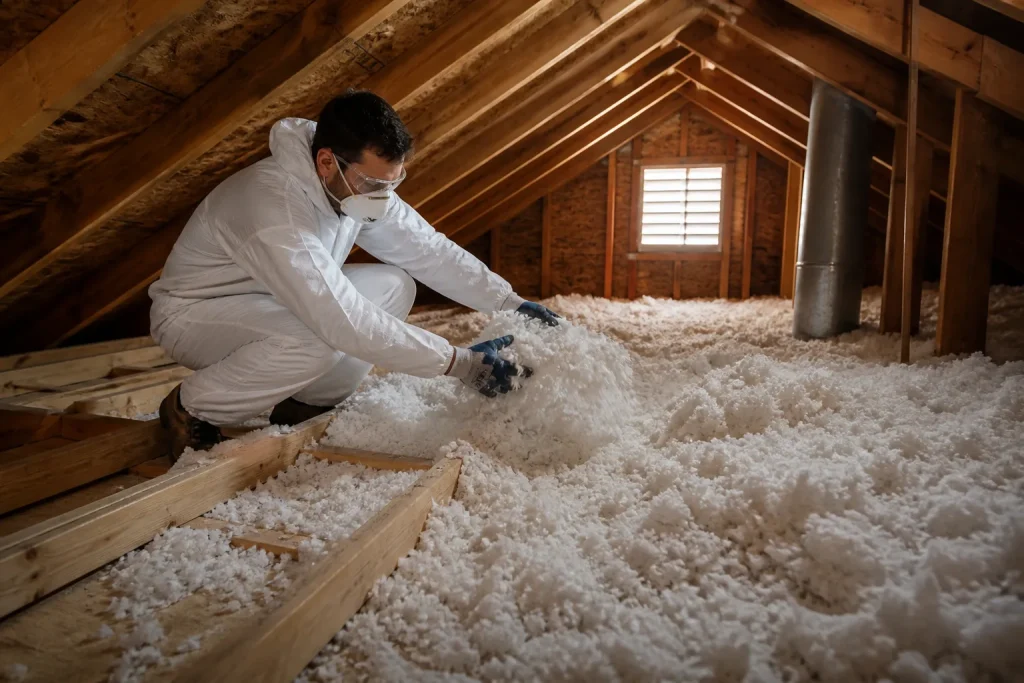
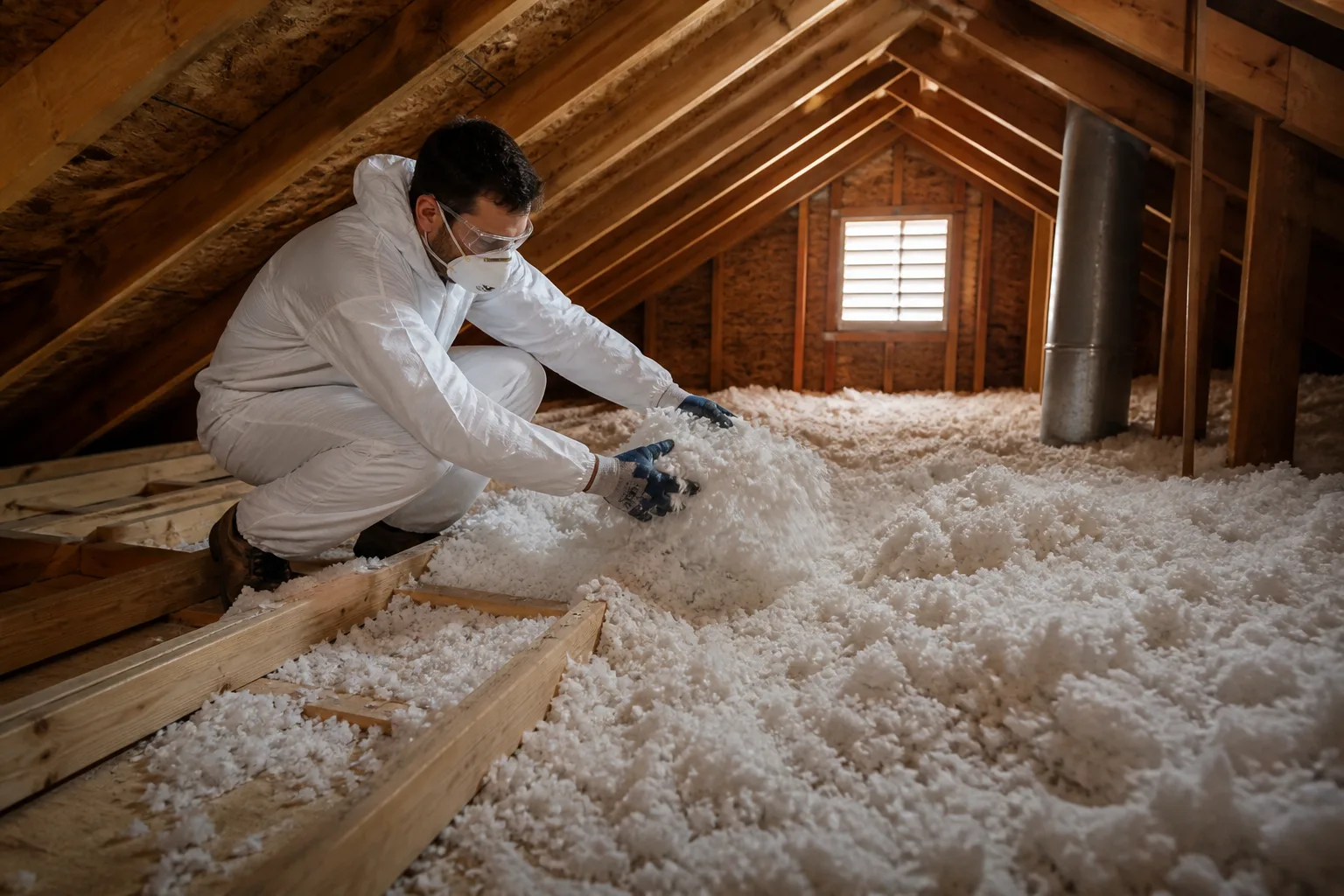
A lot of Los Angeles attics already have insulation. Some of it is in decent shape. Some of it is not. Water staining from a roof leak five years ago, rodent nesting, compression from decades of storage boxes, or old fiberglass matting that’s been walked on repeatedly all create dead air pockets where insulation performance drops toward zero.
Near the coast, in neighborhoods like Playa del Rey or San Pedro, the marine layer condenses in attics overnight. If there’s compressed or water-damaged insulation holding that moisture against drywall, you get mold growth inside the insulation cavity. You won’t see it from the living room. You’ll smell it eventually.
Blowing new insulation over the top doesn’t fix what’s underneath. The damaged material keeps trapping moisture, the mold keeps growing, and your new insulation gets contaminated from below. The correct approach is to remove the compromised material first, address the moisture source, and then install new insulation.
We inspect the existing attic thoroughly before any new material goes in. If the old insulation is clean and dry, we can often add on top of it. If it’s not, it comes out first. That’s a judgment call that should be made by someone who actually looks at the attic, not someone working from a satellite photo.
Mistake #5: Getting a Price “Range” Instead of a Written Line-Item Quote
The classic insulation sales pitch in Los Angeles goes like this: “Attic insulation typically costs between $2,500 and $6,000 depending on scope.” Then the crew arrives, finds surprises, and the invoice lands somewhere in the upper half of that range. Or beyond it.
That’s not a quote. That’s a guess with a billing department attached.
A real written estimate itemizes what you’re paying for. It tells you the square footage to be insulated, the material being installed, the R-value target, whether air sealing is included, whether baffles are included, whether removal of old material is included, and what the total price is. Not a range. A number.
Every Thistledown job starts with that written number. Before any work begins, you know exactly what the attic will look like when we’re done and exactly what the invoice will say. The price doesn’t change because we found a surprise in the attic. We account for likely conditions during the estimate, not after the truck is parked in your driveway.
If a contractor won’t put a line-item price in writing, that’s not a scheduling inconvenience. That’s how you end up financing someone else’s optimistic assumptions.
When to Call a Professional
Air sealing involves working around electrical wiring, recessed light housings, and sometimes gas flues. That’s not a weekend project for a homeowner with a caulk gun and good intentions. Sealing the wrong thing, or using the wrong sealant next to a heat source, creates fire risk. If you’re unsure whether a penetration is safe to seal, call someone who does this every week.
For Los Angeles homeowners, attic insulation in Los Angeles is one of the highest-return upgrades you can make, but only if the preparation is done right. And if you’re considering spray foam insulation in Los Angeles, the air-sealing step is built into the product, but the venting and permit considerations are different. We can explain both approaches and help you choose.
The Bottom Line
The five mistakes that cost Los Angeles homeowners the most are all avoidable with a little knowledge and the right contractor:
- Insulating without air sealing means your conditioned air still leaks through the ceiling.
- Covering soffit vents turns your attic into an oven and voids roofing warranties.
- Skipping permits on qualifying work creates problems when you sell or file a claim.
- Leaving damaged insulation under new material invites mold in LA’s coastal microclimates.
- Accepting a price range instead of a written line-item quote leaves you paying for surprises.
If you’re in Los Angeles and want someone to look at your attic before you spend money on insulation, call (909) 768-6501. We’ll walk through what’s up there, what it needs, and what it will cost, in writing, before any work begins. And if you just have questions, we’re glad to answer those too. No pressure, no surprises, just a clear picture of your attic.
Frequently Asked Questions
Attic insulation jobs in Los Angeles typically fall between $2,800 and $6,500 depending on the square footage, material choice, whether air sealing and baffles are included, and whether old insulation needs removal. You’ll have an exact written number from us before we touch a rafter, not a range with fine print. Call (909) 768-6501 for a free estimate specific to your attic.
Yes, if you want the insulation to actually reduce your cooling costs. Unsealed penetrations like recessed lights, top plates, and plumbing vents let conditioned air escape into the attic regardless of how much insulation sits on top. We air seal on every job we do, because skipping it means paying for insulation that can’t perform.
Only if the old insulation is clean, dry, and uncompressed. Water-damaged, moldy, or rodent-contaminated insulation should be removed before new material goes in. Near the coast, compressed insulation traps marine-layer moisture and creates mold conditions that new insulation on top won’t fix.
It depends on the scope. Adding insulation to an existing attic often doesn’t require a permit, but spray foam applications or structural modifications may. A reputable contractor will tell you up front whether your job needs one and handle the paperwork. If a crew dismisses the permit question, ask again in writing.
Written by Neil Barron, Owner at Thistledown Attic Insulation, serving Los Angeles since 2003.
Need Insulation Help?
Call Thistledown Attic Insulation - licensed & insured, here with fast after-hours help in Los Angeles.
(909) 768-6501