
Attic Insulation: Repair or Replace? How Los Angeles Homeowners Decide
The decision comes down to two questions, not the age of your insulation. Is the existing material contaminated? And can it physically hold new insulation on top without compressing the R-value you already have? If the answer to either is yes-or-maybe, you need removal before anything new goes in. If you’d rather skip the detective work, call (909) 768-6501 and we’ll walk your attic with you.
We pulled open an attic hatch in a 1947 bungalow in Eagle Rock last spring where the homeowner had been told by another company to “just blow R-30 over what’s there.” What was there: fiberglass batts from the Reagan administration, soaked along the north slope, with a rodent nest the size of a loaf of bread tucked into the corner. Blowing new insulation over that would have sealed the problem in for another thirty years. Let’s talk about how to avoid that same mistake.
Most Los Angeles attics we step into are holding insulation that was installed decades ago, under building codes that no longer exist, by crews who were paid by the square foot and moved fast. That doesn’t automatically mean replacement. It means the material needs a real assessment against two specific conditions before anyone writes a quote.
The Two-Question Test: Repair, Top-Up, or Replace?
Forget the age of the material. Age matters only to the extent that older products break down into dust or were never installed to a meaningful R-value in the first place. What actually drives the repair-versus-replace decision in a Los Angeles attic is this:
Question one: Is the existing insulation contaminated? Contamination means moisture, mold, rodent urine or feces, fire residue from an older home’s history, or vermiculite loose fill (a potential asbestos source in pre-1990 LA houses). If any of these are present, the material has to come out. You cannot clean fiberglass or cellulose in place, and you can’t bury a biological problem under new insulation. The moisture stays, the mold keeps growing, and the rodent smell actually gets stronger once fresh material traps it against the ceiling below.
Question two: Can the existing material hold new insulation without compressing? Insulation works by trapping air in tiny pockets. Compress fiberglass batts and you squeeze the air out, which drops the effective R-value. If the existing batts are still fluffy, dry, and sitting at R-11 or higher, they can often accept a blown-in top-up of cellulose or fiberglass on top. If they’re matted down to a quarter of their original thickness, they’re contributing almost nothing and adding more on top won’t restore what’s already lost.
Here’s the routing:
- Clean, dry, structurally sound batts at R-11 or above: top-up with blown-in insulation is appropriate.
- Clean but compressed or degraded below R-11: full removal and replacement is the honest scope, because a top-up over dead material wastes the new R-value.
- Any contamination present: full removal first, air sealing of the attic floor, then new installation. No exceptions, regardless of what any contractor tells you.
This two-question test is the same one we run on every attic insulation project in Los Angeles, and it’s what lets us write a real number instead of a vague range.
What “Top-Up” Actually Means vs. Replacement
Top-up means adding blown-in insulation over existing, healthy batts to bring the total R-value up to current standards. Replacement means removing everything down to the attic floor and starting fresh. They are not interchangeable, and a good contractor should be able to explain exactly why your attic qualifies for one or the other.
California’s Title 24 energy code calls for R-30 to R-38 in Los Angeles attics, depending on your climate zone. Most attic floors built before 2000 in this city are holding R-11 to R-19, which means they’re roughly half of what current code expects. If those batts are clean and uncompressed, the math for a top-up is straightforward: measure the depth, convert to current R-value, and add enough blown-in material to reach the target.
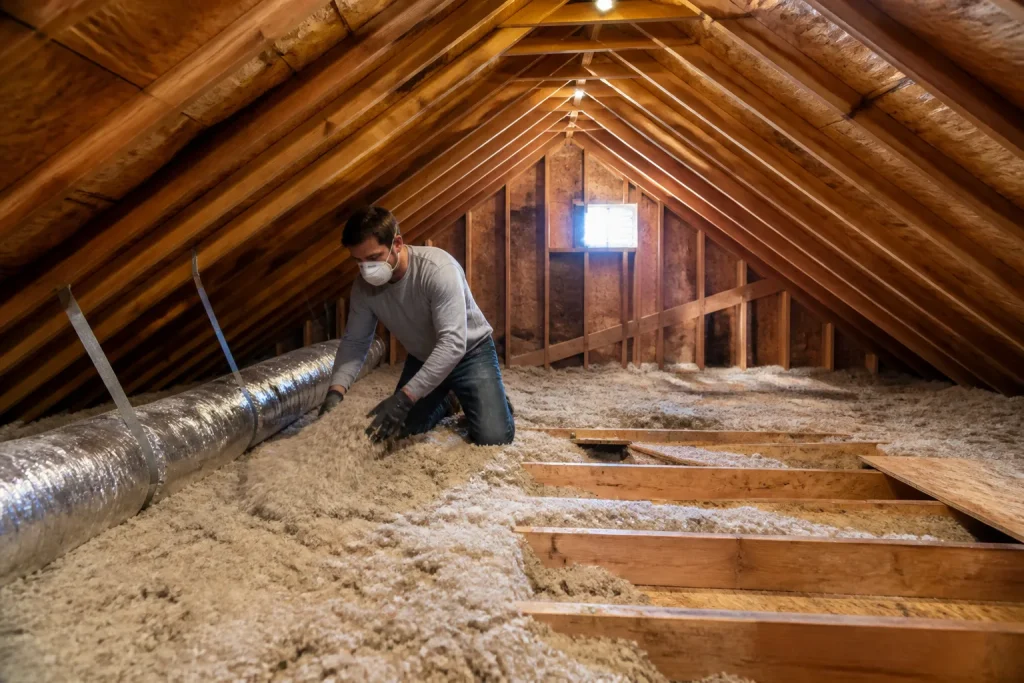
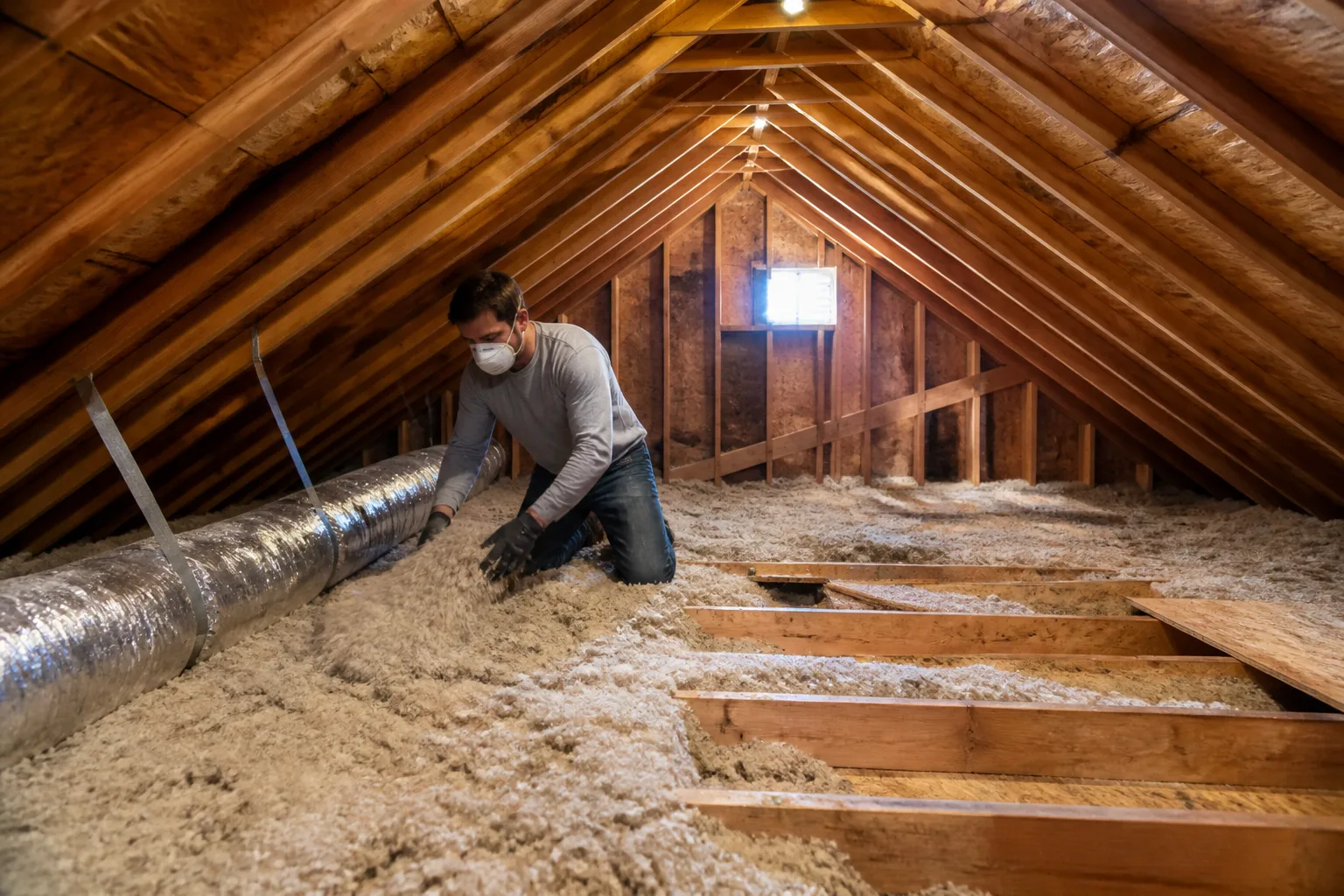
Here’s a practical example from a Silver Lake attic we assessed in January. The homeowner had 6 inches of fiberglass batts, clean and dry, giving them roughly R-19. They needed R-38 total. We added 6 to 7 more inches of blown-in GreenFiber cellulose on top, which brought the assembly to R-38 without touching the existing material. The job took four hours. Their written quote showed a single line item: “Blown-in cellulose top-up, 1,200 square feet to R-38.”
Now the flip side. If those same batts had been 3 inches deep, matted, and gray with dust, a top-up would be dishonest. The existing R-9 or R-10 is already compromised, and new material on top won’t un-compress it. That attic needs full removal and replacement. We’d write it as two line items: removal and disposal of existing insulation, then new blown-in installation to R-38. You should see both scopes in writing before anyone opens the hatch.
The point: top-up is a money-saver only when the existing material is genuinely still working. A contractor who quotes a top-up without first confirming the condition of what’s underneath is guessing, not assessing.
The Three Contamination Types That Always Require Full Removal
Some things cannot be fixed by adding more insulation on top. In Los Angeles attics, we see three contamination types more than any others, and all three demand full removal before new material goes in.
Rodent urine saturation. Rats and mice move through Los Angeles attics year-round, but especially during the dry months when they follow water lines and roof edges. Their urine soaks into fiberglass and cellulose and does not dissipate. The ammonia smell lingers, gets worse in heat, and can trigger asthma in kids and adults. New insulation on top traps the odor against your ceiling. Removal, sanitizing, and new material is the only real fix, and you should also ask about sealing the entry points while the attic is empty.
Water damage with visible mold. Los Angeles gets fewer rainy days than other cities, but the storms we do get arrive fast and hard. A roof leak, a cracked vent boot, or a bathroom fan vented into the attic instead of outside will soak insulation and grow mold within days. Once mold has a foothold in fiberglass or cellulose, you cannot kill it in place. The material comes out, the wood deck gets treated, and new installation happens only after the leak is fixed.
Vermiculite loose fill. Homes built before 1990 in Los Angeles sometimes have vermiculite insulation, which may contain asbestos depending on the mine it came from. Most of the vermiculite sold in the United States came from Libby, Montana, and that mine’s product is known to contain asbestos fibers. You should not disturb vermiculite yourself. The material needs testing first, and if it tests positive, removal requires a licensed abatement contractor, not a standard insulation crew. We flag it the moment we see it and pause the job until testing comes back.
The common thread: contamination is a substrate problem. The insulation isn’t just dirty, it’s actively damaging the air in your home. Anything other than full removal is a temporary bandage on a structural issue.
How to Get a Straight Answer from a Contractor
Here’s what a repair-oriented assessment looks like: the contractor climbs into the attic, moves material in several spots, photographs what’s there, measures depth in at least three locations, checks for moisture with a meter, and comes down with a specific recommendation. They should be able to say exactly why your existing insulation qualifies or doesn’t, and they should show you the photos.
A replace-everything upsell looks different. The contractor glances up through the hatch from a ladder, maybe pokes one corner with a stick, and announces that all of it has to go because it’s “old” or “probably not doing anything.” No measurements. No moisture reading. No photos. Just a big number and a handshake.
The one question that separates honest assessors from salespeople is simple: “What specifically disqualifies the existing material?” An honest contractor will either name the disqualifier (moisture, compression, contamination) or admit that nothing disqualifies it and a top-up is fine. A salesperson will dodge, repeat the age of the material, or shift to vague claims about “modern standards.” If they can’t name the specific disqualifier, they haven’t found one.
In our experience, the same logic applies to partial repairs. A 1950s ranch in Van Nuys might have a dry, healthy west half of the attic and a water-damaged east half under a valley where the flashing failed. That attic doesn’t need full replacement. It needs removal on the east side, treatment of the deck, new insulation on that section, and a top-up on the west side. A written quote should show both scopes as separate line items: “Remove and replace insulation, east 400 square feet” and “Top-up existing batts to R-38, west 800 square feet.” If a contractor blends both into one number with no breakdown, you cannot tell which work you’re actually paying for, or whether the honest partial scope is getting lost inside a replacement-sized price. Ask for the line items. If they won’t provide them, that’s your answer.
Related services in Los Angeles
If your attic needs more than insulation, like air sealing or a switch to spray foam insulation in Los Angeles, we handle that too, with the same written-price standard. And if you’re still trying to figure out what kind of home you have and what it needs, the Thistledown Attic Insulation home page has a plain-English overview. When in doubt, call us. We answer the phone.
What happens when you call
- 1
A real person answersNo phone trees - you reach a local pro.
- 2
You get an upfront price rangeHonest numbers before anyone is dispatched.
- 3
A background-checked tech heads outLicensed & insured, dispatched right away.
- 4
You approve before work beginsNothing starts until you say go.
The Bottom Line
The repair-or-replace decision is a two-question test: is the existing insulation contaminated, and can it physically hold new material without compressing? Clean, dry, healthy batts at R-11 or above can usually take a blown-in top-up to reach current Los Angeles R-30 to R-38 code. Contaminated, water-damaged, or compressed material has to come out, and no amount of new insulation on top will fix what’s underneath.
If you’re in Los Angeles and want a straight answer about your attic, Thistledown Attic Insulation offers free estimates with a written price before any work begins. Call (909) 768-6501 and one of our team will walk your attic with you, take real measurements, and tell you honestly whether you need a top-up, a partial removal, or a full replacement.
Frequently Asked Questions
How much does attic insulation repair or replacement cost in Los Angeles?
A blown-in top-up over existing healthy batts typically costs less than full removal and replacement, because you’re buying less material and paying for less labor. Full replacement runs higher because it includes removal, disposal, air sealing, and new installation. The exact number depends on square footage, the R-value target, and whether any contamination requires special handling. Every Thistledown quote comes as a written number before work starts, with line items for each scope.
Can you add new insulation over old rodent-damaged insulation?
No. Rodent urine soaks into fiberglass and cellulose and the odor does not dissipate, even after the animals are gone. New insulation on top traps the smell against your ceiling and does nothing to remove the contamination. The damaged material has to come out first, followed by sanitizing and sealing entry points, then new insulation.
Is vermiculite insulation dangerous in Los Angeles homes?
Vermiculite from the Libby, Montana mine, which supplied most of the U.S. market, contains asbestos. Pre-1990 Los Angeles homes may have vermiculite loose fill in the attic, and it should never be disturbed without testing. If testing confirms asbestos, removal requires a licensed abatement contractor. If you see pebbly, gray-brown loose fill, call us before touching it and we’ll guide you through the testing step.
How do I know if my attic insulation needs a top-up or full replacement?
Check the condition of the existing material. Clean, dry, fluffy batts at R-11 or above can usually take a blown-in top-up. Matting, moisture stains, rodent activity, or vermiculite all point to removal. If you’re not sure what you’re looking at, call (909) 768-6501 and we’ll assess it with you, with photos and measurements so you can see exactly what we’re seeing.
Written by Neil Barron, Owner at Thistledown Attic Insulation, serving Los Angeles since 2003.
Need Insulation Help?
Call Thistledown Attic Insulation - licensed & insured, here with fast after-hours help in Los Angeles.
(909) 768-6501