
Johns Manville Attic Insulation in Los Angeles: A Homeowner’s Guide
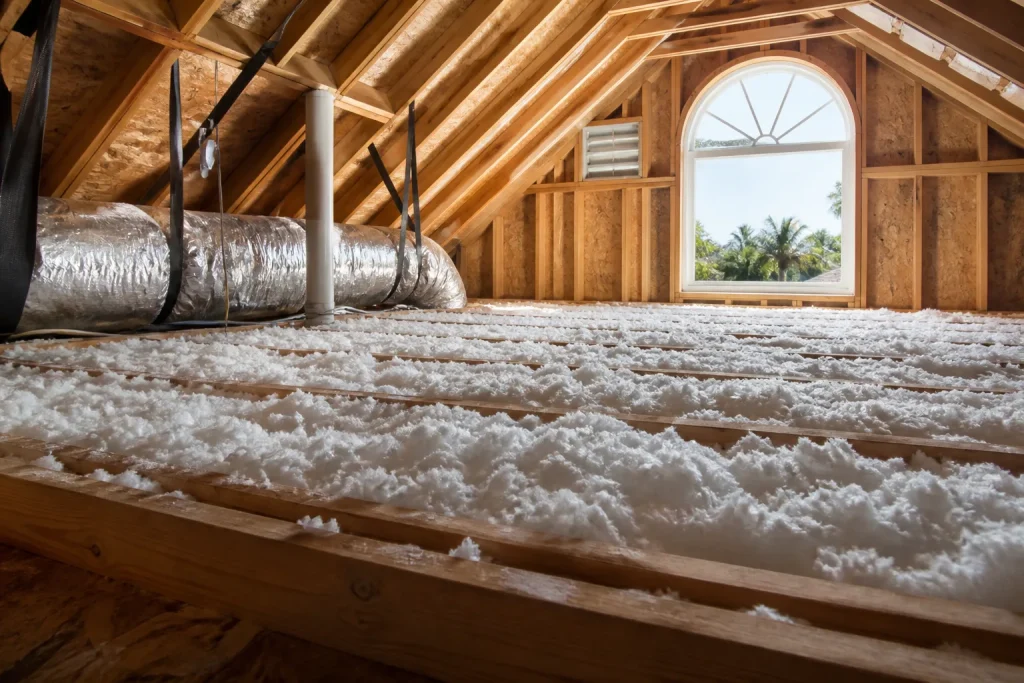
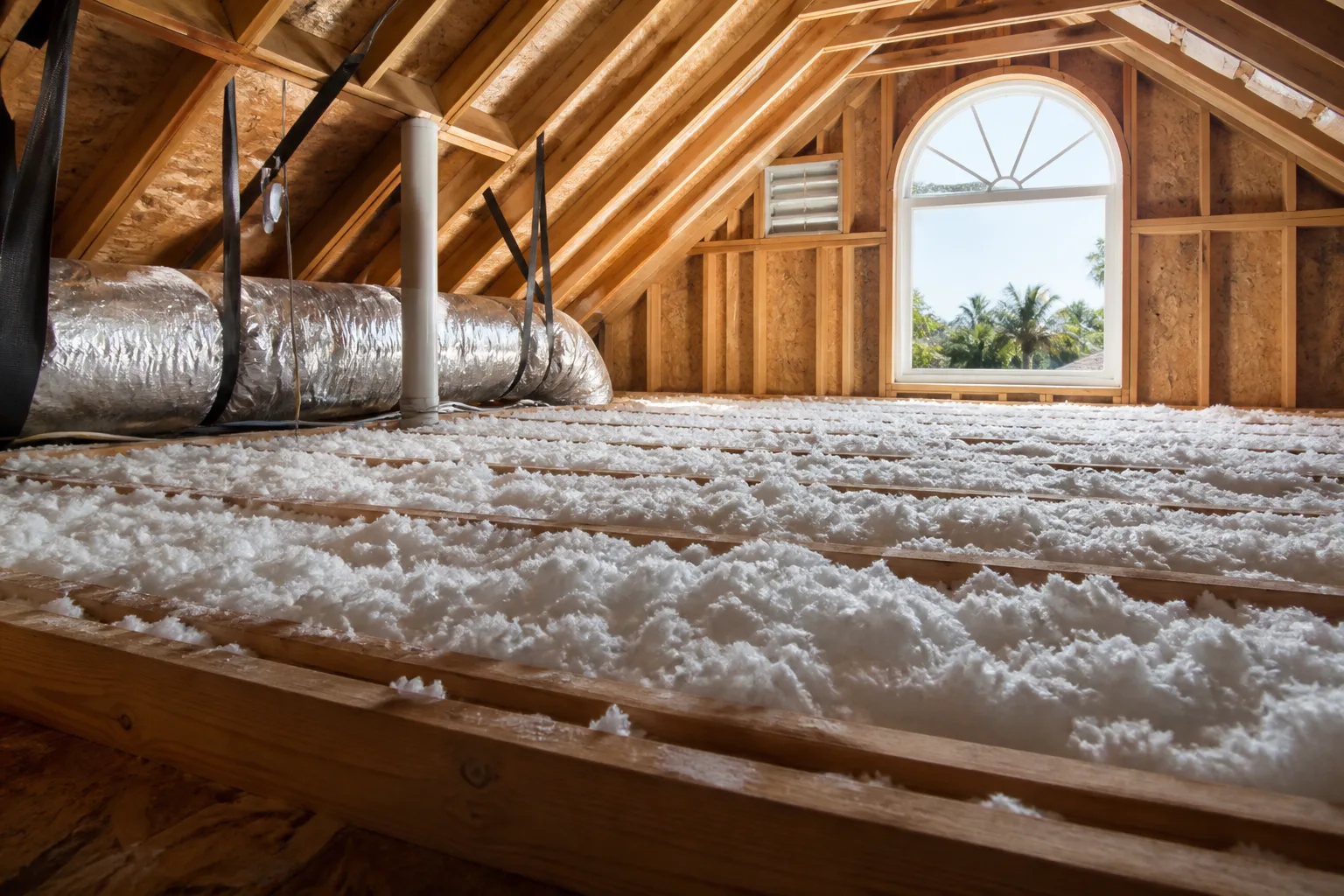
Johns Manville attic insulation in Los Angeles is a smart choice for homes that need consistent thermal performance through long, hot summers. JM’s Climate Pro blown-in fiberglass and Comfort Therm batts are among the most frequently specified products by LA energy auditors, but the brand only performs to its published R-value when the installer follows JM’s own coverage charts, which most crews never pull out on the job. If you’d rather skip the homework and get a written price from a team that works from the charts every time, call (909) 768-6501.
Here’s the thing most homeowners in Los Angeles never learn: Johns Manville publishes a coverage chart for every blown-in product that tells the installer exactly how many bags per 1,000 square feet are required at each R-value. A homeowner who doesn’t know this chart exists has no way to catch an underfill until their energy bill tells them six months later.
JM Climate Pro vs. Comfort Therm: Which Goes Where in an LA Attic
Johns Manville makes two product lines that matter for Los Angeles attics, and they serve different purposes. Climate Pro is a blown-in fiberglass insulation designed for open attic floors where you need deep, even coverage across joists. Comfort Therm is a batt product, either faced or unfaced, that fits between framing cavities and is more common on attic knee walls, cathedral ceilings, or roof deck applications.
For a typical single-family Los Angeles home with a vented attic, Climate Pro blown-in fiberglass on the attic floor is the workhorse. It settles to a predictable depth, covers irregular joist spacing without gaps, and is fast to install correctly when the installer follows the bag count. Comfort Therm batts come into play when you have a finished attic space, a vaulted ceiling with no attic, or a roof deck that needs insulation directly against the sheathing. In those cases, R-30 or R-38 batts are common specs for LA roof assemblies.
Title 24 energy code for climate zone 9, which covers Los Angeles, sets minimum attic insulation at R-30 for most retrofit scenarios, with new construction often requiring R-38 or higher depending on the project. A homeowner asking for “some insulation” without a target R-value is how attics end up with R-19 and a summer bedroom that never cools down.
How to Use the JM Coverage Chart Yourself: The Three Numbers That Catch an Underfill
Johns Manville’s coverage chart for Climate Pro is public and printed on every bag, but most Los Angeles homeowners never see it. Here’s how you use it, step by step.
First, you need your attic’s square footage, not your home’s square footage. Measure the attic floor area. If your home is 1,800 square feet with an attached garage that’s unconditioned, your attic is probably close to 1,800 square feet, but the only way to know is to measure from inside the attic or use the home’s footprint. Second, you need your target R-value. For Los Angeles, that’s R-30 minimum for compliance, and we routinely recommend R-38 or R-49 if you have an older home with shallow joists or a dark roof that absorbs heavy sun. Third, you need the bag count.
Here’s the actual math. At R-30, Climate Pro covers roughly 27 square feet per bag. So an 1,800-square-foot attic at R-30 needs about 67 bags. At R-38, you’re looking at roughly 21 square feet per bag, or about 86 bags for that same attic. At R-49, coverage drops to around 16 square feet per bag, meaning about 113 bags.
- Attic square footage: measured, not guessed, from inside the attic
- Target R-value: R-30 minimum in LA, R-38 or R-49 for real summer comfort
- Bags installed: the number written on your invoice, which should match the chart for your attic size and R-value
If the installer can’t tell you how many bags went in, or the bag count doesn’t match the chart math for your square footage and R-value, that’s your signal that you got an underfill. In our experience serving Los Angeles attics since 2003, underfill is the single most common insulation failure we find when a homeowner calls us to investigate a room that won’t hold temperature.
The Depth Ruler Test: What JM Includes and Why Most Installers Skip It
Every Johns Manville blown-in product ships with depth rulers, small cardboard or plastic cards printed with R-value markings that you staple vertically to roof trusses or joists throughout the attic. Their entire job is to tell the installer, and later the homeowner, whether the blown material actually reaches the depth required for the specified R-value.
Here’s how they’re supposed to work. The installer places depth rulers at regular intervals across the attic, typically every 100 square feet or so, and in corners and around the attic hatch where coverage tends to thin out. Then the blowing begins. The installer watches the rulers fill and stops when the material reaches the mark for the target R-value: R-30, R-38, R-49, whichever is specified. If the rulers read short anywhere in the attic, the low spots get topped off before the crew leaves.
An installer who skips depth rulers is guessing at thickness, and guessing is how attics end up with R-30 paid for and R-19 performed. We pulled a job over in Silver Lake last summer where a homeowner had paid for R-38 a few years earlier, but the attic measured between R-17 and R-24 depending on where you stood. No depth rulers had been left behind, and the bag count on the original invoice didn’t come close to the chart. The fix was a top-off to R-38 and a lesson in why documentation matters.
When we install Johns Manville attic insulation in Los Angeles, the depth rulers are part of the job, not an optional step. We leave them in place so the homeowner can see exactly what was installed, and we note the bag count on the invoice.
What happens when you call
- 1
A real person answersNo phone trees - you reach a local pro.
- 2
You get an upfront price rangeHonest numbers before anyone is dispatched.
- 3
A background-checked tech heads outLicensed & insured, dispatched right away.
- 4
You approve before work beginsNothing starts until you say go.
JM Warranty Terms: What Voids Them and What Paperwork to Keep
Johns Manville stands behind its products, but the warranty only works if the installation meets the terms. The three most common warranty voids we see in Los Angeles attics are compression, moisture exposure, and improper coverage.
Compression happens when someone installs R-38 batts in a 2×8 joist cavity and then shoves a piece of plywood on top for storage. Once a batt is compressed, its R-value drops fast, and JM’s published performance numbers no longer apply. A compressed R-38 batt stuffed into a 7.25-inch cavity may perform like R-22 or worse. Moisture exposure from a roof leak, a bathroom vent that terminates in the attic instead of outside, or a dryer vent that’s come loose will void coverage on any affected product. Fiberglass doesn’t grow mold, but it holds water, and wet fiberglass loses thermal performance and becomes a magnet for other problems. Improper coverage means installed depth below the chart spec, which is the underfill issue we covered above.
For a valid warranty claim, keep the original invoice with the product name, R-value, and bag count listed, plus photos of the installed depth rulers if you have them. Products like Knauf and CertainTeed have structurally similar warranty terms, so this advice carries over if you’re comparing brands. JM’s warranty follows the original purchaser and covers the material, not the labor, so the real protection is making sure the install is right the first time.
Johns Manville vs. Owens Corning vs. Cellulose in Los Angeles Conditions
Los Angeles attics punish insulation in specific ways: long heat cycles that bake the attic for months, low humidity, occasional marine layer moisture in coastal neighborhoods, and rodent pressure that varies block by block. Here’s how the main blown-in options compare under those conditions.
Johns Manville Climate Pro and Owens Corning AttiCat are both blown-in fiberglass, and they perform similarly on paper. Both are non-combustible, both resist settling when installed to the chart depth, and both hold up through repeated heat cycles without losing structure. The practical difference for LA homeowners is rarely the product itself and almost always the installer’s discipline with the coverage chart. A blown-in fiberglass product that’s underfilled by 30 percent performs worse than a cheaper product installed correctly.
Cellulose, usually made from recycled paper treated with borates, has one advantage in Los Angeles: it costs less per installed R-value up front. The trade-offs are settling, which can drop R-value over the first couple of years if it’s not dense-packed or blown slightly over depth, and a higher profile for dust when air moves through the attic. Cellulose also holds moisture longer than fiberglass, which matters in any Los Angeles home where a roof leak goes unnoticed for a season.
For pest resistance, fiberglass wins by default. It’s inorganic, so rodents don’t nest in it the way they will in cellulose, though in our experience the bigger pest variable in Los Angeles is whether the installer seals the gaps and entry points before insulating, which most crews skip entirely. Insulation is not pest control, but choosing a product that doesn’t invite nesting is a step in the right direction.
After the first LA summer heat cycle, both JM and Owens Corning fiberglass will have settled slightly and stabilized. The reason we default to Johns Manville for open attic floors is simple: the coverage charts are clear, the depth rulers come standard, and a homeowner who knows how to read them can verify the job without climbing up there twice.
When to Call a Pro in Los Angeles
If any of this sounds like work you’d rather not do from a ladder, that’s a reasonable position. Attic insulation means working in a space that hits 130 degrees by mid-morning in July, navigating joists over finished rooms, and avoiding wiring, recessed light housings, and bathroom vent ducts along the way. A wrong step lands in the living room below. For blown-in fiberglass, the equipment and the coverage chart discipline make it a job that rewards experience.
The C.A.R.E. values shape how our crew handles every Los Angeles job: clean up like it’s our own home, ask before we move or touch anything, respect the family’s time and quiet hours, and explain the price before the work. We lay drop cloths across your hallway and wear shoe covers from the front door to the attic hatch. We bring quiet tools when children are sleeping. And when the attic is done, we leave depth rulers in place and a photo of the clean-up before the van pulls away.
If you want to explore other product options for your attic, we also install Spray Foam Insulation in Los Angeles where the roof deck or a hard-to-vent space calls for it, and you can see the full range of what we do at our Attic Insulation in Los Angeles page. For the broad picture of who we are and the standards we work under, start at Thistledown Attic Insulation home.
The Bottom Line
Johns Manville attic insulation is a strong choice for Los Angeles homes precisely because the brand’s product line pairs clear performance specs with installer-facing tools like coverage charts and depth rulers. A homeowner who knows those tools exist can verify the job instead of trusting a verbal price and a handshake. The three numbers to know are your attic square footage, your target R-value, and your installed bag count. If those three don’t reconcile with the chart, you’ve found an underfill before the first heat wave, not after.
If you’re in Los Angeles and want a written price before any work starts, with a crew that works from the charts and leaves proof behind, Thistledown Attic Insulation offers free estimates. Call (909) 768-6501 and a live person answers, 24/7. No voicemail tree, no next-business-day callback.
Frequently Asked Questions
Title 24 energy code for climate zone 9, which covers Los Angeles, sets R-30 as the minimum for most attic insulation retrofits. We recommend R-38 or R-49 for older homes, dark roof colors, or any household where the upstairs bedrooms run hot in summer. The exact number for your attic depends on its size, your ductwork, and whether the space is vented, so call (909) 768-6501 for a free estimate with a written price.
Both are blown-in fiberglass products with similar thermal performance and fire resistance. In Los Angeles, the difference that matters is installer discipline with the coverage chart and depth rulers, not the brand on the bag. Johns Manville’s coverage charts are detailed and the depth rulers ship standard, which makes it easier for a homeowner to verify the install after the crew leaves.
At R-38, Climate Pro covers about 21 square feet per bag. For a 1,500-square-foot attic, that’s roughly 72 bags. For 2,000 square feet, about 95 bags. If your installer’s bag count doesn’t align with your attic size and target R-value, ask to see the coverage chart and the depth rulers before you pay the final invoice.
Same-day installation is possible when the attic is accessible and the scope is straightforward, and we carry JM products on our trucks throughout the Los Angeles area. Call (909) 768-6501 and a live person will give you an honest timeline and a written price before anyone picks up a tool.
Written by Neil Barron, Owner at Thistledown Attic Insulation, serving Los Angeles since 2003.
Need Insulation Help?
Call Thistledown Attic Insulation - licensed & insured, here with fast after-hours help in Los Angeles.
(909) 768-6501