
Owens Corning Attic Insulation in Los Angeles: A Homeowner’s Guide
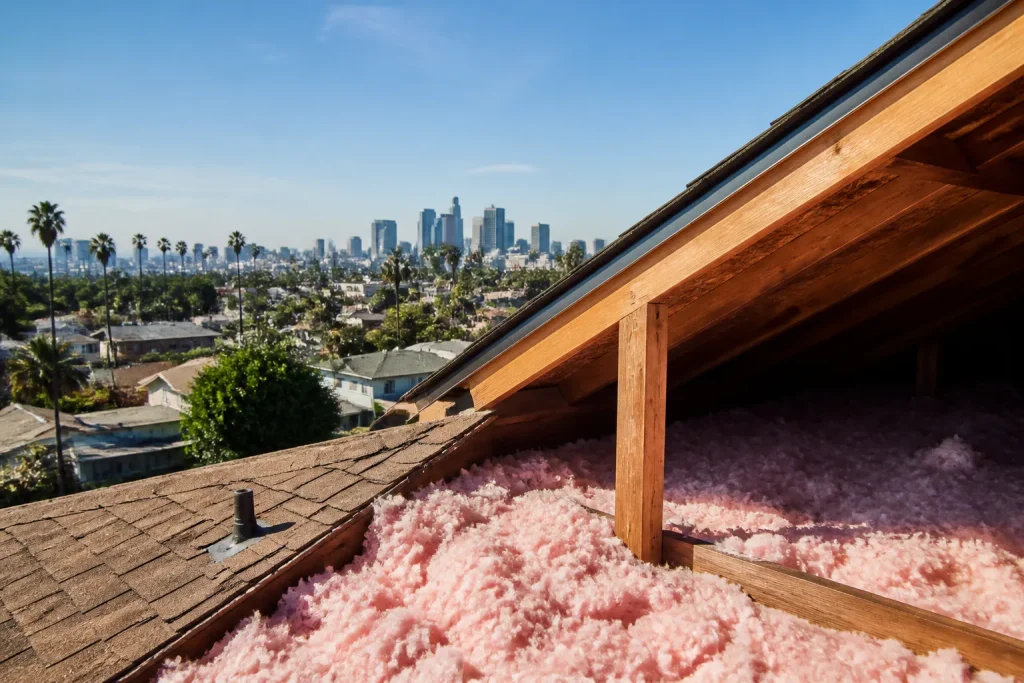
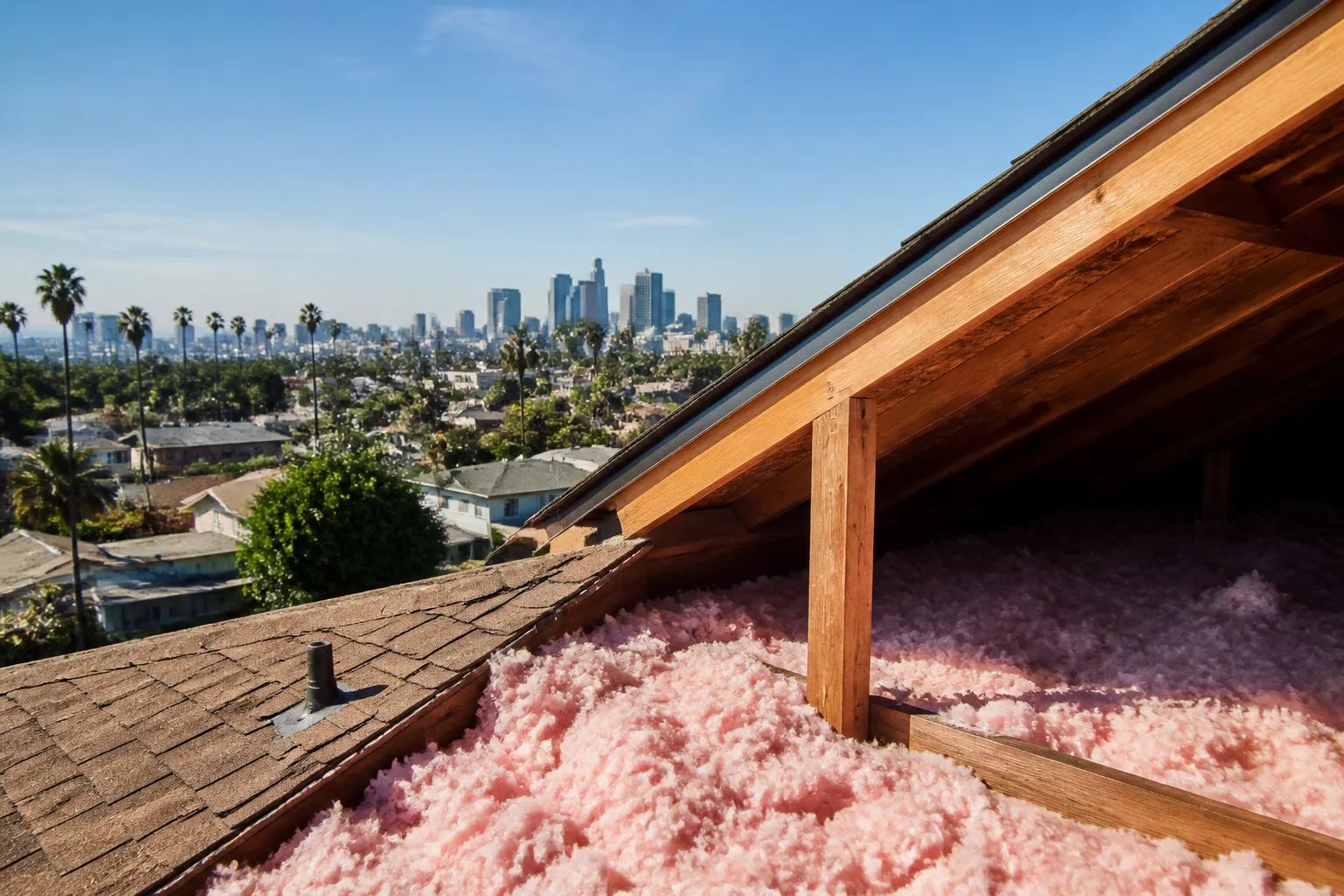
Owens Corning attic insulation in Los Angeles is a solid choice, but the product only performs as well as the installation. A correctly installed R-38 batt in a properly vented LA attic will hold its R-value for decades. Compress that same batt into a 2×4 cavity and you’re paying for R-38 while getting something closer to R-25. If you’d rather skip the research and just have someone who knows this stuff handle it, call (909) 768-6501 for a free estimate.
Here’s the thing most guides miss: Owens Corning makes several different product lines, and they are not interchangeable. The pink batt you see at the home center is not the same as what a professional installer gets from a supply house. In Los Angeles, where we deal with Title 24 energy code requirements, hot attics that can hit 140 degrees in August, and older homes with framing quirks, picking the right Owens Corning product and installing it correctly matters more than the brand name on the bag.
Which Owens Corning Products Actually Work in Los Angeles
Los Angeles sits in climate zone 9 under California’s Title 24 energy code. For most vented attics here, you need R-38 on the attic floor, though older homes built before the 1980s often have R-11 or R-19, which doesn’t come close. Owens Corning makes three products we use regularly in LA attics, and each has a specific role.
EcoTouch batts are the pink fiberglass batts most people recognize. They come in R-30 and R-38, which are the two values LA homeowners need most for attic floors. The R-38 batt is 12 inches thick. That thickness matters because it means the batt only delivers its rated R-value where there’s actually 12 inches of space, and not every spot in an older Los Angeles attic has that clearance. The R-30 batt is 9.5 inches thick and fits spaces where an HVAC duct or a low roof line eats up headroom.
ProPink L77 blown-in fiberglass is loose-fill insulation that gets blown across the attic floor with a machine. It’s the same pink fiberglass as EcoTouch, but in loose form. For attics with irregular joist spacing, cross-bracing, or lots of electrical and plumbing penetrations, blown-in gets into the corners and around obstacles better than batts. In LA’s older neighborhoods like West Adams, Silver Lake, and the San Fernando Valley, where attics were framed before standardized truss spacing, L77 is often the better product.
AttiCat is Owens Corning’s expanding blown-in system. The insulation is compressed inside bags, and the blowing machine expands it as it feeds the hose. AttiCat goes in faster than traditional blown-in and reaches deeper coverage with less settling. For a standard Los Angeles attic floor, an AttiCat install targeting R-38 uses roughly 12 to 13 inches of blown material.
EcoTouch vs. ProPink L77 vs. AttiCat: Matching Product to Situation
- EcoTouch R-38 batts work well in LA attics with uniform joist spacing and easy access across the whole floor.
- ProPink L77 blown-in is the better call for older Los Angeles attics with tight spots, odd framing, or lots of recessed light housings and junction boxes.
- AttiCat is our go-to when a homeowner wants a full re-cover of an existing under-insulated floor, and speed of installation matters because babies nap and dogs bark.
Why Compression Is the Real Problem in LA Attics
Fiberglass insulation works by trapping air. The tiny glass fibers create millions of air pockets that slow heat transfer. When you squeeze a 12-inch R-38 batt down to fit a 9-inch cavity, you’re crushing those air pockets. The result is less trapped air and less thermal resistance. A batt intended for a 12-inch space, jammed into an 8-inch space, can drop from R-38 to somewhere around R-25. In Los Angeles summer heat, that difference shows up as a hotter house and a harder-working air conditioner.
LA’s older homes are full of compression traps. Many were framed with 2×4 or 2×6 rafters, not 2×10 or 2×12 ceiling joists. When an installer shoves a thick batt between undersized rafters, compression happens. Same thing when an HVAC contractor runs a duct across the attic floor and the insulation crew lays batting directly over it. The duct creates a bridge, the batt gets compressed at every contact point, and the thermal barrier breaks.
A correct installer follows a sequence. First, seal air leaks at the attic floor, around top plates, wire penetrations, and recessed light housings. Second, verify the venting path from soffit to ridge is open. Third, install baffles at the eaves so blown-in insulation never blocks airflow. Fourth, lay insulation to full depth without compressing it. In Los Angeles attics where the roof deck is low, that fourth step sometimes means using an R-30 batt where R-38 won’t fit honestly.
Attic Floor vs. Roof Deck: LA’s HVAC-in-Attic Question
Many Los Angeles homes built after 1990 place the furnace and air handler in the attic. When your HVAC equipment lives in unconditioned space, the ductwork is baking in 140-degree summer heat. In those situations, you have two options with Owens Corning products, and the choice changes the entire project.
Option one: insulate the attic floor and accept that the HVAC equipment and ducts sit in a hot attic. This is the traditional LA approach and it’s fine if the ductwork is well-sealed and wrapped. But it means your air handler works harder and any duct leakage wastes conditioned air into an unconditioned space.
Option two: insulate the roof deck and bring the attic into the conditioned envelope. This is what building scientists call an unvented attic assembly. In Los Angeles, this approach is more common than people realize, especially in homes where the owner wants to use the attic for storage or where the air handler keeps freezing up in winter and overworking in summer. For roof deck applications, Owens Corning EcoTouch batts can work between rafters, but only with careful attention to air sealing behind the batt. Our sister company’s Spray Foam Insulation in Los Angeles work handles roof deck air sealing more reliably, because foam is the air barrier and insulation in one. For a floor batt job, EcoTouch or AttiCat on the joist tops remains the standard.
What a Correctly Documented Owens Corning Install Looks Like
We pulled a job in Echo Park last month where a homeowner had paid another crew to blow in R-38 two years earlier. The receipt said R-38. The home felt hot all summer. When we got into the attic, we found roughly 6 inches of material in most spots and less near the eaves. The homeowner had no documentation beyond the invoice, and the installer had long since stopped answering the phone.
A proper Owens Corning install in Los Angeles includes documentation you keep with the house. That means a photo of the product label on the bag, showing the manufacturer, product line, and R-value print. It means a coverage chart showing how many bags were installed over how many square feet, and the math that produces the target R-value. It means a written R-value certification from the installer stating exactly what was installed, where, and to what depth. If you ever sell the house, that paperwork tells the next owner what’s up there. If you ever have a warranty claim, Owens Corning asks for exactly this documentation.
It also means you should be able to see the material before it’s covered. If a crew blows in insulation and you never lay eyes on the bags, you don’t know what went in. The bag says Owens Corning on it. The batt face should carry the R-value. Counterfeit substitution is rare in Los Angeles but not unheard of, and the simplest protection is asking to see the label before the job starts.
How to Verify Your Installer Is Using Genuine Owens Corning
Three things to check, in order.
- The bag label. Owens Corning products carry a clear label with the product name, R-value, and a manufacturer code. If the crew unloads unbranded bags or says they’re using a “mix,” that’s a red flag.
- The batt face. EcoTouch batts have the R-value printed on the kraft facing. If someone installs unfaced batts and tells you they’re Owens Corning, you shouldn’t be able to see no marking at all. Always confirm before it’s unrolled.
- The warranty paper. Owens Corning L77 and AttiCat carry manufacturer warranties. The installer should provide documentation showing the product batch and installed depth. If they can’t produce a warranty card, ask why.
Some Los Angeles homeowners are told that all pink fiberglass is the same and that any product will do. It isn’t and it won’t. The Owens Corning name matters because the manufacturer stands behind the product. If an installer substitutes a no-name material, the warranty is whatever the installer feels like honoring, which is often nothing.
When to Call a Pro (and When Not to)
Some attic insulation work in Los Angeles is genuinely doable by a careful homeowner. Rolling out EcoTouch batts over a clean, accessible attic floor is straightforward. But blown-in insulation requires a machine, and blowing machines rented from home centers are underpowered compared to what professional crews use. AttiCat specifically needs the right equipment to expand the material properly. You also want to be careful in older LA attics where vermiculite insulation is present, because disturbing it can release asbestos fibers.
If the job involves working around recessed light fixtures, electrical junctions, knob-and-tube wiring, or anything that’s been in that attic since the Coolidge administration, a pro is the right call. We’ve worked in Los Angeles homes where the original 1920s wiring was still live and hidden under decades of old batting. Those attics need someone who knows what they’re looking at before they lay a single batt.
For more on how attic insulation works in this city’s climate, see our Attic Insulation in Los Angeles page. And if you’re weighing fiberglass against other materials, we also install Rockwool and CertainTeed products where they make more sense for a particular home, and we carry Thistledown Attic Insulation home standards on every job: drop cloths in the hallway, shoe covers from front door to attic hatch, and a photo of the clean-up before we pull out of the driveway.
The Bottom Line
Owens Corning makes excellent insulation, and three of its product lines, EcoTouch, ProPink L77, and AttiCat, are all legitimate choices for Los Angeles attics depending on framing, access, and whether your HVAC lives up there. The product won’t save you if the install is sloppy. Compression kills R-value. Missing air sealing lets conditioned air leak into the attic no matter how much insulation sits on the floor. And undocumented work means no warranty claim when something goes wrong.
If you’re in Los Angeles and want Owens Corning installed correctly the first time, with a written price before any work starts and a 365-Day Done Right Promise behind it, Thistledown Attic Insulation offers free estimates. Call (909) 768-6501 and a live person will pick up.
Frequently Asked Questions
Attic insulation projects in Los Angeles typically range from $1,800 to $4,500 depending on product type, attic size, and whether old insulation needs removal first. Blown-in AttiCat or ProPink L77 generally runs less than batt installation because it goes in faster. You should have a written price before any work starts. Call (909) 768-6501 for an exact quote. Estimates are free.
For fiberglass products, Owens Corning, Johns Manville, and CertainTeed all produce insulation that meets the same R-value standards. The differences are mostly in product form, availability, and installer familiarity. The right question is which product fits your specific Los Angeles attic configuration, and that’s a call a good installer makes by looking at the space.
Yes, if the attic is clean, accessible, and framed with standard joist spacing. You need to maintain the full batt depth without compression and keep insulation clear of recessed light housings unless they’re rated for insulation contact. If you’re unsure about any of it, a pro inspection costs nothing when you use a company that offers free estimates.
Fiberglass batts don’t settle if they’re installed to their rated depth without compression. Blown-in fiberglass like ProPink L77 can settle slightly in the first year, which is why professional coverage charts factor in a small over-blow allowance to hit the target R-value after settling. Batts that are compressed from day one never recover their rated R-value.
Written by Neil Barron, Owner at Thistledown Attic Insulation, serving Los Angeles since 2003.
Need Insulation Help?
Call Thistledown Attic Insulation - licensed & insured, here with fast after-hours help in Los Angeles.
(909) 768-6501