
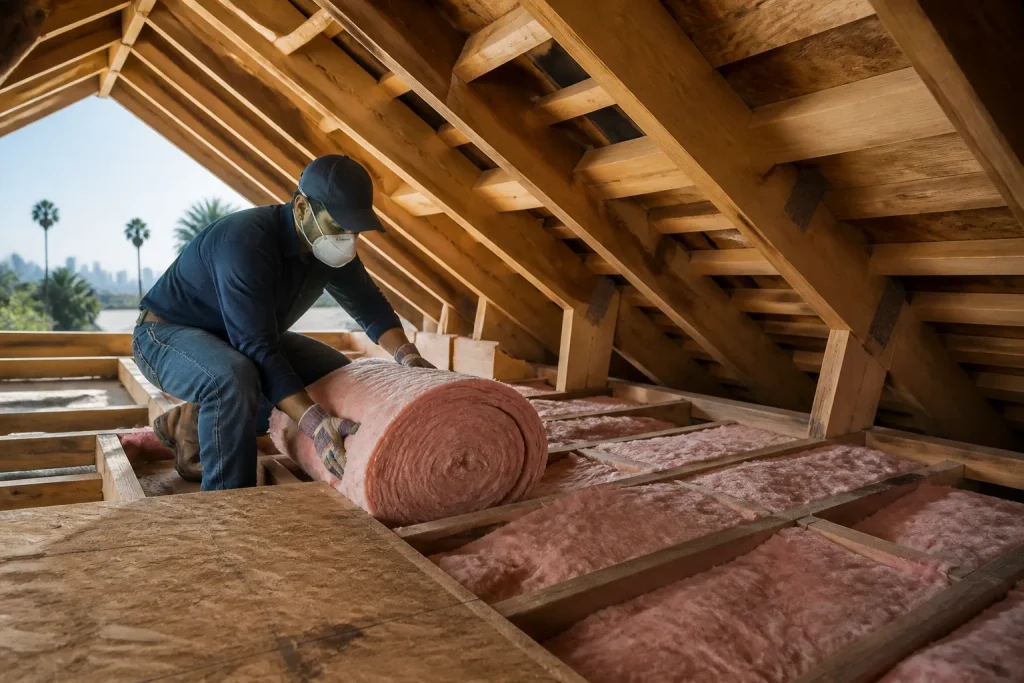
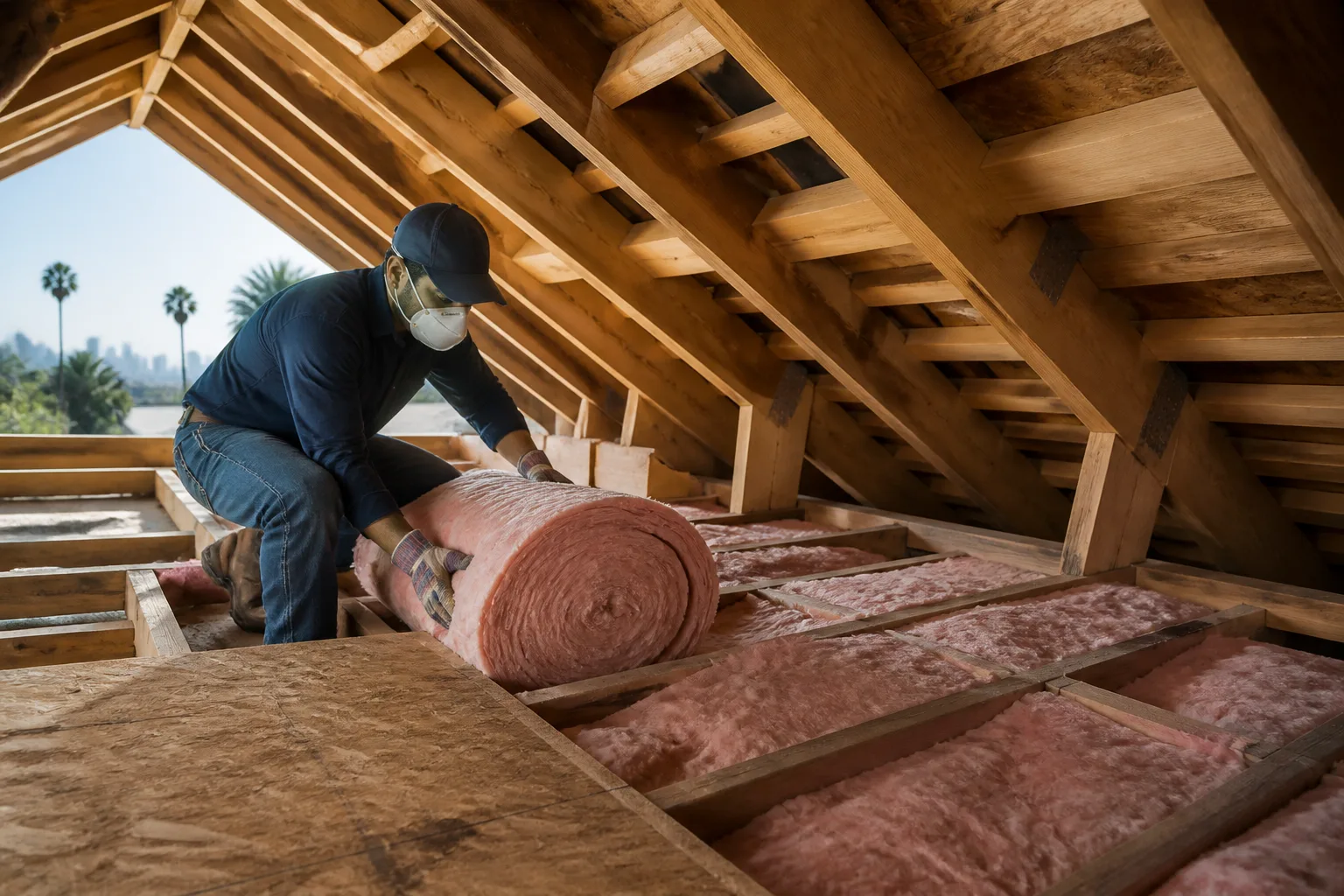
Preparing Your Home’s Insulation for Winter in Los Angeles
Prepping your Los Angeles attic for winter starts with checking your insulation depth and sealing bypass leaks around attic hatches, recessed lights, and top plates. Most LA homes built before 1990 carry R-19 or less, while the U.S. Department of Energy recommends R-30 to R-38 for our climate zone. Even in a mild-winter city, an under-insulated attic costs real money. If you’d rather not climb the ladder, call us at (909) 768-6501 and we’ll take a look for free.
We pulled a 14-pound rockwool batt out of an attic over in Eagle Rock last December. The homeowner had been chasing a draft for two winters. The batt had settled to about two inches thick along the north slope, and every cold night, air was pouring right through it. She thought she had a furnace problem. The furnace was fine.
The LA Winter Problem Most People Ignore
Los Angeles may not get snow in the basin, but the daily temperature swing does more work than people realize. In Pasadena, December overnight lows average 44°F while afternoon highs sit near 68°F. That’s a 24-degree flip every single day. Your attic rides that cycle twice: all night, warm air leaks into the cold attic and escapes. All afternoon, the sun bakes your roof and the attic becomes a heat trap that pushes back down into your living space. The result is a furnace cycling more than it should at night and a house that feels stuffy by 3 p.m.
- Coastal zones like Santa Monica and Redondo Beach rarely dip below 48°F at night, but the marine layer carries moisture that settles in attic insulation and reduces its R-value over time.
- Inland valleys like the San Fernando Valley and San Gabriel Valley see the sharpest swings, sometimes 30°F between midnight and noon. That daily expansion and contraction pulls air through gaps in the attic floor continuously.
- Foothill areas like Altadena and La Crescenta sit high enough to catch cold canyon air flowing downhill after sunset. Anecdotally and on thermometers, these attics run 5-8°F colder than the valley floor.
This is why attic insulation in Los Angeles is less about defending against a brutal winter and more about stabilizing an attic that cycles hot and cold twice a day for four straight months. That cycling is what wears insulation out long before it looks bad.
The Real Culprit: Bypass Leaks, Not Thin Insulation
Here’s a point competitors tend to skip. In a mild-winter city like Los Angeles, the temperature difference between your living room and your attic is only 20 to 30 degrees. Small by Chicago standards. But the air volume movement through bypass leaks is continuous. Recessed lights, plumbing penetrations, attic hatches, and the top plates where interior walls meet the attic floor all create direct channels between conditioned space and the outdoors. Air flows through them all day and all night. It doesn’t need to be freezing to cost you money. It just needs to be moving.
In our experience, a home with R-19 insulation and big bypass leaks will lose more heat than a home with R-30 and properly sealed penetrations. The leaks matter more than the fluffy stuff. A 10-minute visual check will tell you what’s going on up there.
10-Minute Attic Hatch Inspection for LA Homeowners
If you can access your attic hatch without moving furniture or risking a fall, you can diagnose most winter insulation problems before calling anyone. Here’s exactly what to look for:
- Check the hatch itself. Is the attic hatch panel insulated? Most LA homes have a bare plywood hatch. You should see batt insulation attached to the top side. If you don’t, air is pouring through the hatch 24 hours a day.
- Look for daylight around the hatch opening. With the attic light on and the hatch closed, kneel below and look for light leaking around the perimeter. Any light means air can pass. Weatherstripping or a hatch seal fixes this.
- Peek at the insulation surface. If you can lift the hatch safely, shine a flashlight across the attic. You’re looking for even, fluffy coverage. Damaged insulation looks matted, torn, or discolored with dark gray streaks. Settled insulation looks thin and compressed, often half its original thickness.
- Look at the perimeter. Check the outer 24 inches of the attic, especially near the eaves. Insulation should not be packed into the soffit vents. If it is, airflow is blocked and winter moisture has nowhere to go.
- Look for dark spots in the insulation. Dark or discolored areas are air leak indicators. Air carries dust, and over time it leaves a telltale mark where it’s been moving through the insulation.
If you see any of that, the fix is straightforward for a professional. It’s not a DIY job to move blown-in insulation away from a recessed light that isn’t IC-rated. That one detail keeps the fire danger low and your family safe.
What a Proper Pre-Winter Inspection Includes
When we do a pre-winter inspection in Los Angeles, we’re doing more than poking a flashlight through the hatch. Here’s what a complete visit from Thistledown Attic Insulation home covers:
- Thermal scan of the ceiling plane from inside the home that shows us exactly where heat loss is concentrated, especially around recessed lights and bathroom fans.
- Insulation depth measurement at multiple points across the attic, because coverage varies in ways you’d never guess. We found a home in Sherman Oaks last month with R-38 in the center and bare plywood behind a dormer wall.
- Soffit vent check to confirm the intake airflow path is unobstructed. Winter attic moisture in Los Angeles comes from warm air meeting cold sheathing overnight. Proper soffit-to-ridge airflow is what keeps sheathing dry.
- Bypass inspection around every penetration in the attic floor, including the top plates of interior walls, which are the most overlooked gap in LA construction.
After any inspection, you should leave with a written summary that states current insulation depths, R-value, condition notes, and specific recommendations with dollar amounts. Not a vague “you could use more.” A written number. Every Thistledown visit ends with a written price for any recommended work before anything is scheduled. No exceptions.
What happens when you call
- 1
A real person answersNo phone trees - you reach a local pro.
- 2
You get an upfront price rangeHonest numbers before anyone is dispatched.
- 3
A background-checked tech heads outLicensed & insured, dispatched right away.
- 4
You approve before work beginsNothing starts until you say go.
Rebates and Program Deadlines That Matter in Los Angeles
Both LA DWP and SoCalGas run attic insulation rebate programs, and the program year cutoff matters. Most program years close December 31. If you complete work after the cutoff, you’re rolling into the next program year with whatever funding is left after the state adjusts budgets. For LADWP customers, current rebates for attic insulation run up to $300 depending on the project and product. SoCalGas typically offers up to $0.25 per square foot for qualifying insulation upgrades. The exact amounts shift year to year, so call the program office or ask us to verify your eligibility before deciding.
This is one area where using an insulation contractor who does Los Angeles rebate paperwork every week saves you real time. We know which forms the DWP requires, what documentation SoCalGas wants, and how to sequence a partial attic air sealing job so it qualifies as a covered measure. Not everything does.
Choosing the Right Insulation for Your LA Attic
Not all insulation is the same, and the right product depends on your attic, your home’s age, and who lives there. We work with eight product lines to give every household the right fit. Three that work especially well in Los Angeles attics:
- Knauf blown-in fiberglass is a strong general-purpose material for attics with standard framing and even joist spacing. It’s affordable, installs quickly, and settles predictably.
- Rockwool batts handle moisture well, which matters in Santa Monica, Venice, and anywhere else the marine layer sits over the attic all night. It also has excellent sound performance, a benefit if your attic sits above a nursery or home office.
- CertainTeed options offer solid thermal performance and wide availability, which helps when you need a partial replacement to match existing coverage.
For homeowners with pets and kids, spray foam insulation in Los Angeles creates a continuous air seal that stops bypass leaks cold. Closed-cell foam also doubles as a vapor barrier in coastal attics. We discuss product options clearly before any work begins, including pet-safe choices where a choice exists. If the dog is staying home during the job, we’ll tell you exactly which product is going in and why it’s the right one for a home with animals.
Why We’re Picky About How the Job Looks
Thistledown is the soft fluff of the thistle, one of nature’s lightest insulators. The name is a promise about how carefully we work. We lay drop cloths across your hallway and wear shoe covers from the front door to the attic hatch. We ask before we move or touch anything. We respect the family’s time and quiet hours, including using quiet tools when children are sleeping. Before we pull the van away, we take a photo of the clean-up so you can see what we left behind without climbing the ladder.
Every job we complete, from a Pasadena attic air seal to a Manhattan Beach spray foam retrofit, carries our 365-Day Done Right Promise. If something isn’t right, we make it right. No debate, no fine print. That’s the standard since 2003 and it’s been tested plenty of times.
The Bottom Line
Los Angeles winters are mild, but daily temperature swings between 44°F and 68°F do more to an attic than a single cold snap ever could. The house doesn’t need arctic-rated insulation. It needs the right depth, a sealed attic floor, and soffit ventilation that works. Start with a 10-minute hatch check. If you see daylight, dark streaks, or bare plywood, it’s time to look closer. If you’d rather not deal with it, Thistledown Attic Insulation offers free estimates and a written price before any work begins. Call (909) 768-6501 and we’ll schedule a visit.
Frequently Asked Questions
Most Los Angeles attic insulation projects run between $1,500 and $4,500 depending on attic size, current insulation level, and access difficulty. You’ll have an exact written price before any work starts when you work with Thistledown.
The U.S. Department of Energy recommends R-30 to R-38 for attics in Los Angeles. Homes built before 1990 often have R-19 or less, which means they’re costing their owners money every winter night.
In many cases, yes. A standard attic insulation upgrade in Los Angeles takes 4 to 6 hours. If you need a quicker timeline, call (909) 768-6501 and we’ll tell you honestly what’s possible.
If insulation is wet, moldy, or severely settled, replacement is usually cheaper in the long run than trying to fluff and redistribute what’s there. If the insulation is simply low in certain spots, topping up is often all that’s needed. A free inspection will give you a definitive answer. Call (909) 768-6501 to schedule one.
Written by Neil Barron, Owner at Thistledown Attic Insulation, serving Los Angeles since 2003.
Need Insulation Help?
Call Thistledown Attic Insulation - licensed & insured, here with fast after-hours help in Los Angeles.
(909) 768-6501