
Top Signs You Need Insulation Service – Don’t Ignore These
Most Los Angeles homeowners don’t notice their attic insulation failing until the comfort problems are already expensive. High summer energy bills and bedrooms that won’t cool down are late-stage symptoms. The earlier signals are quieter: a ceiling that feels warm at 10 in the morning, joists you can see above the insulation, daylight peeking through the eaves. Catching those early means a smaller fix now instead of a larger one after the AC has been straining for another full cooling season.
The Ceiling-Touch Test: What Your Hand Knows Before Your Thermostat Does
Here’s a check you can do this week, no ladder required. Walk upstairs on a summer morning around 10 a.m., before the day really heats up. Place the flat of your hand on the ceiling of a second-floor room, especially one facing west or south. If that ceiling feels warm to the touch at 10 a.m., not just neutral but actually warm, you’re feeling radiant heat transfer from the attic above. That heat is moving through your ceiling in real time.
What does that predict? In homes we’ve inspected across Los Angeles, a warm-to-the-touch ceiling at 10 a.m. typically correlates with an R-value deficit of 40% or more below current building code recommendations for our climate zone. That doesn’t mean the insulation was installed wrong originally. It means it’s settled, compressed, or was never deep enough for how hot Los Angeles attics actually get. A Los Angeles attic in July can reach 140°F. If your ceiling is the only thing between that and your living space, the physics is working against you.
The reason this matters before you notice the room temperature: radiant heat transfers differently than air temperature. Your AC can be cooling the air to 74°F while your ceiling is radiating 85°F down at you, and the room will never feel comfortable. Homeowners often blame the HVAC system first, replace a perfectly good unit, and still have the same problem a year later.
Attic-Visible Signs You Can Safely Check Yourself
If you’re willing to pop your head up through the attic hatch, there are three specific things worth looking at before you call anyone. These are visual checks, not DIY work, so there’s no safety concern as long as you stay on the ladder and don’t walk out onto the ceiling joists.
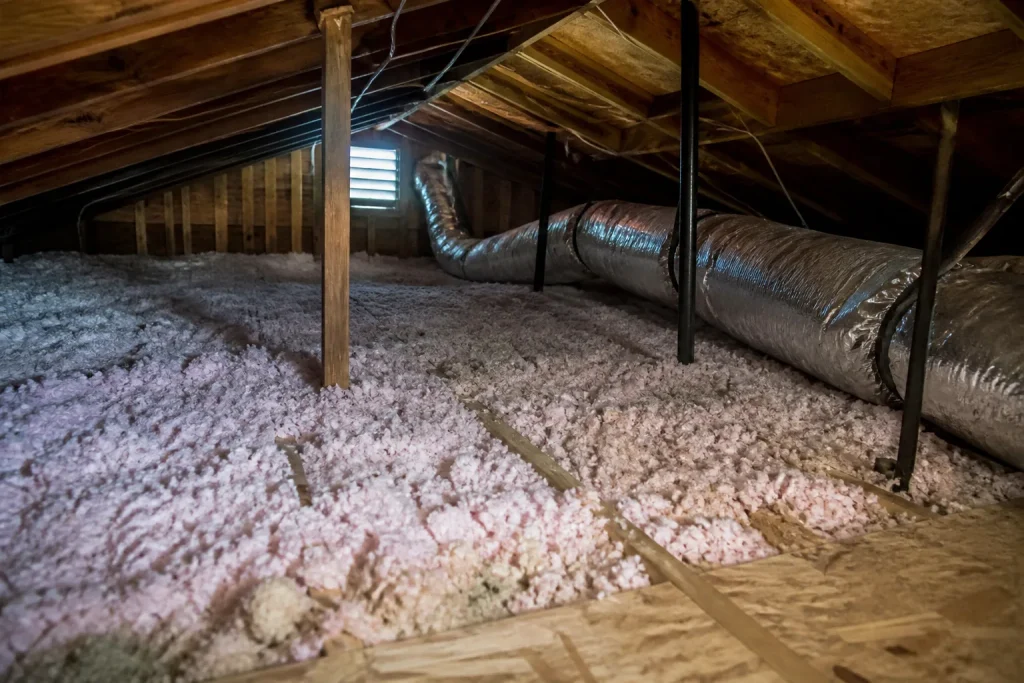
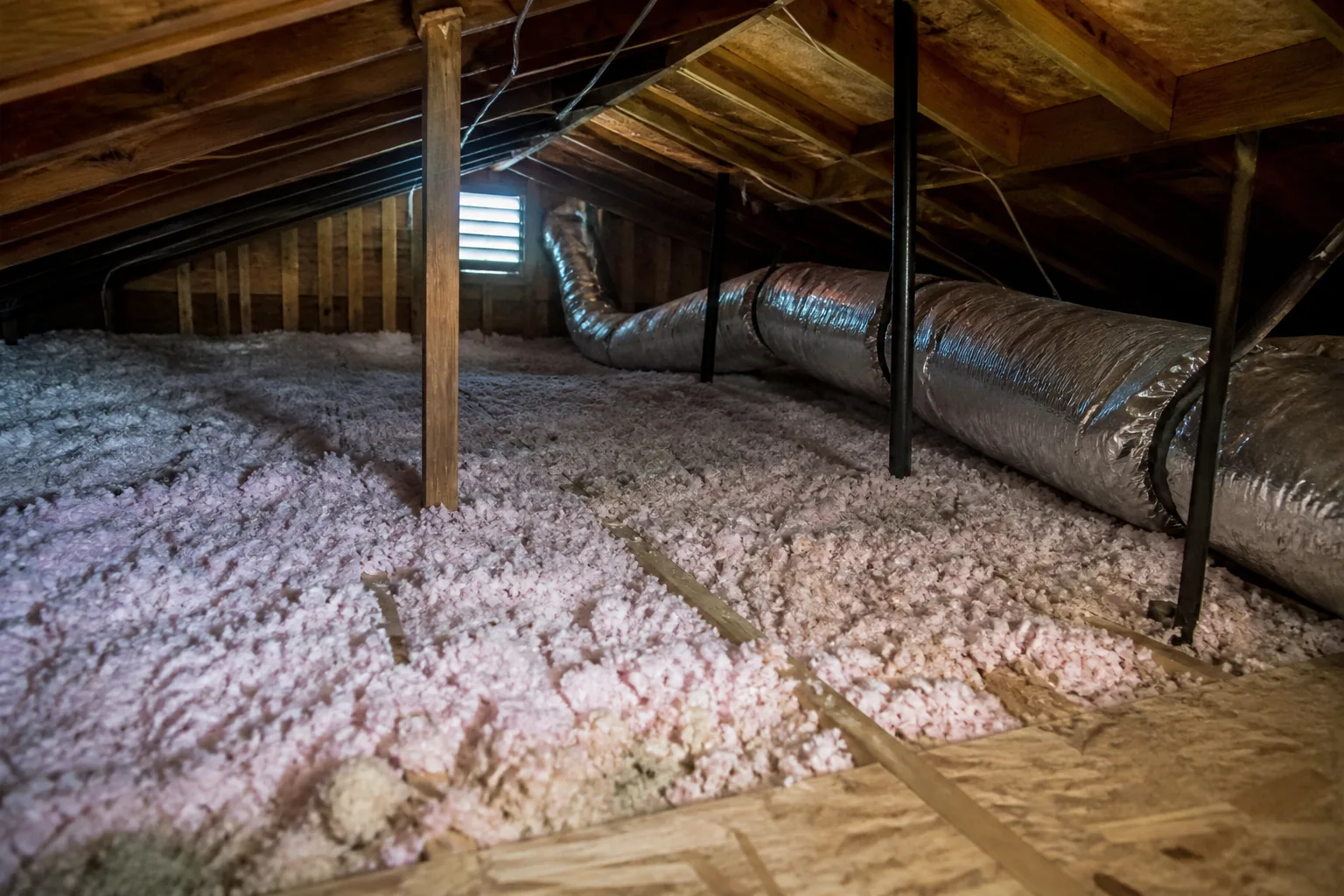
1. Joists visible above the insulation surface. Look across the attic floor. If you can see the tops of the wooden joists standing proud above the insulation, that’s the clearest sign the insulation is too shallow. In Los Angeles, the recommended attic insulation level for most homes is R-38, which for blown-in fiberglass or cellulose generally means 10 to 14 inches, depending on the material. If the joists (typically 2×6 or 2×8, meaning 5.5 to 7.25 inches tall) are visible, you’re sitting at roughly R-19 or less. Half of what your home wants.
2. Daylight visible at the eaves. This one surprises people. Stand in the attic with the lights off and let your eyes adjust for a minute. Look toward the edges where the roof meets the walls. If you see daylight sneaking through, that’s an air leak. Air is moving between your conditioned living space and the attic. Insulation slows heat transfer, but it does not stop air movement. Any daylight at the eave line in a Los Angeles home means your cooled air is escaping, and attic air is being pulled into the house. This is an air-sealing issue, and it’s exactly why older homes need an insulation-plus-air-sealing assessment rather than just more insulation piled on top.
3. Compressed or matted batts. If your attic has fiberglass batt insulation (the pink or yellow rolls), look for areas where the batts look flattened, water-stained, or torn. Compression kills R-value. A batt that was installed at R-30 but got compressed to half its loft can perform closer to R-15. Matted batts with dark staining along the edges are also telling you something important: air has been moving through them, filtering dust the way a furnace filter does. That staining is dirt deposited by air leakage, and it means insulation alone won’t fix the problem.
Pest and Moisture Evidence: What Else Is Happening Up There
Your attic insulation is also a record of who else has been in your attic. Rodents love blown-in insulation. It’s warm, soft, and easy to tunnel through. What does that tunneling look like? In blown-in fiberglass or cellulose, you’ll see shallow channels worn through the surface, often with the insulation pressed down in narrow paths that lead from the eaves toward the interior. The surface won’t be even. Think of it like narrow trails through snow, but the snow is gray and fibrous.
In batt insulation, rodent activity looks different. You’ll see tufts of insulation pulled out and piled, nesting areas where the batt appears shredded, and sometimes small voids where the batt has been hollowed out beneath the paper facing. Rodent droppings are often visible near the nesting area. Here’s the practical point: after a pest-control professional handles the rodents, the insulation has to be assessed. A rodent colony that’s lived in your insulation for any length of time has contaminated it. Compressed, urine-soaked, or nesting-damaged insulation isn’t doing its job, and it’s not something you want your family breathing near. In Los Angeles, where rats and mice find attics through roof vents, eave gaps, and even the plumbing stack, this is one of the most common insulation failure signals we see.
Moisture is the other silent signal. Dark staining on batt edges, as mentioned above, points to air leakage condensation. But actual water staining, sagging drywall, or insulation that feels damp to the touch under the roof deck points to a roof leak or a ventilation problem. In our Los Angeles climate, moisture in the attic is less common than in humid regions, but it does happen, especially in older homes with original roof sheathing. The fix order matters here: solve the moisture source first, then replace the compromised insulation. Replacing insulation before fixing a leak is throwing money away.
Reading Your Utility Bill: The 12-Month Pattern That Points to Insulation
Plenty of things can make a Los Angeles energy bill spike: an aging AC unit, a pool pump running too long, a kid who just discovered the thermostat. So how do you isolate insulation as the variable? Look at 12 months of billing data, not just this month’s bill.
Insulation problems have a signature pattern. Your bill will be disproportionately high during the hottest months (July through October in Los Angeles) compared to your neighbors, but relatively normal during mild months when the AC isn’t running. If your AC system were the problem, you’d likely see higher-than-normal bills across a longer stretch of the cooling season, but not the dramatic summer spike. Attic insulation problems show up as a summer bill that climbs much higher than the temperature increase would explain.
The second pattern: the gap between your first-floor and second-floor comfort. In a Los Angeles home with adequate attic insulation and air sealing, the upstairs might run 2 to 4°F warmer than downstairs in the late afternoon. When you’re seeing a consistent 8 to 12°F difference, especially in rooms directly under the attic, your attic isn’t doing its job. Your AC is running longer to compensate, which means more wear on the compressor. That extra strain typically adds $300 to $600 in wear per cooling season, shortening the life of a system that costs $8,000 to $15,000 to replace in Los Angeles. The insulation fix is cheaper than an AC replacement every single time.
Why Older Los Angeles Homes Need Air Sealing, Not Just More Insulation
Homes built before 1978 represent a huge share of Los Angeles’ housing stock, and they share a common trait: they were built before modern energy codes required continuous air barriers. Attic insulation in these homes was often minimal, but the bigger problem today is air leakage. Gaps around recessed lights, plumbing penetrations, electrical boxes, and the top plates of interior walls all let conditioned air escape into the attic.
Adding more insulation on top of unsealed penetrations helps somewhat, but it’s like adding a heavier coat over a leaky zipper. The air still moves through, and moving air carries heat with it regardless of insulation depth. A pre-1978 Los Angeles home almost always needs air sealing first, then insulation. The two work together.
One question to ask any inspector before they go up into your attic: “Will you check for air leakage at the ceiling plane and show me what you find?” If the answer is a vague “we’ll do a visual inspection,” push for specifics. A visual inspection of insulation depth is easy. A real diagnostic check for air leakage takes longer and requires looking at every penetration, not just the big open areas. The answer tells you whether you’re getting an insulation estimate or an insulation-plus-air-sealing assessment. The second one is what an older Los Angeles home actually needs.
When to Call a Pro
If you’ve done the ceiling-touch test and felt warmth at 10 a.m., or you’ve looked up into that attic and seen joists poking through the insulation, you’ve already gathered the most useful information a pro will need. The next step is an inspection. We’d recommend it any time you see the signs above, but especially if your home is pre-1978, if you’ve had rodents in the attic, or if your upstairs rooms run 8°F warmer than downstairs on a Los Angeles summer afternoon.
For homeowners who want a closer look at what proper attic insulation looks like in our climate, we’ve written about Attic Insulation in Los Angeles in more depth. And if you’re considering spray foam for a hard-to-reach attic or a room-over-garage, our Spray Foam Insulation in Los Angeles page explains the trade-offs honestly, including where it makes sense and where it doesn’t.
The Bottom Line
Insulation failure in Los Angeles announces itself early if you know what to look for. A ceiling that’s warm at 10 a.m. Radiant heat moving through the ceiling plane before the room temperature climbs. Joists visible above the insulation in the attic. Daylight at the eaves. Rodent tunnels or compressed batts. A summer utility bill that spikes far beyond the temperature increase. None of these are dramatic. All of them are specific.
The most important takeaway: insulation and air sealing work together. Adding R-value without addressing air leakage is a half-fix, particularly in older Los Angeles homes. The second takeaway: catching these signs early means a smaller scope of work. Wait until you’re running a portable AC in the upstairs bedroom just to sleep, and the problem has compounded to include AC wear, comfort loss, and a more expensive repair.
If you’re in Los Angeles and want an honest assessment of what’s happening in your attic, Thistledown Attic Insulation offers free estimates. Call (909) 768-6501 and a live person will answer, any hour of the day. We’ll walk the attic with you over the phone if you want, talk through what we’d recommend, and give you a written price before any work starts.
Frequently Asked Questions
If the existing insulation is dry, uncompressed, and free of pest damage, topping up is often sufficient in Los Angeles. If you see moisture staining, rodent nesting, or matted batts, those areas need removal and replacement first, then new insulation can be added to reach the recommended depth.
Current recommendations for Los Angeles attics call for R-38, which translates to roughly 10 to 14 inches of blown-in insulation depending on the material. If your joists are visible above the insulation surface, you’re likely at half that or less.
Partially. The ceiling-touch test on a summer morning is a useful first signal. In Los Angeles, you can also look at your roof on a cool morning after a hot day and see if your roof seems to dry faster than your neighbors’, which can indicate heat escaping. But a full assessment requires a look inside the attic.
Attic insulation projects in Los Angeles typically range from $1,500 to $4,500 depending on attic size, access difficulty, and whether air sealing is included. Call (909) 768-6501 for an exact quote, we provide a written price before any work begins, and estimates are free.
Written by Neil Barron, Owner at Thistledown Attic Insulation, serving Los Angeles since 2003.
Need Insulation Help?
Call Thistledown Attic Insulation - licensed & insured, here with fast after-hours help in Los Angeles.
(909) 768-6501