
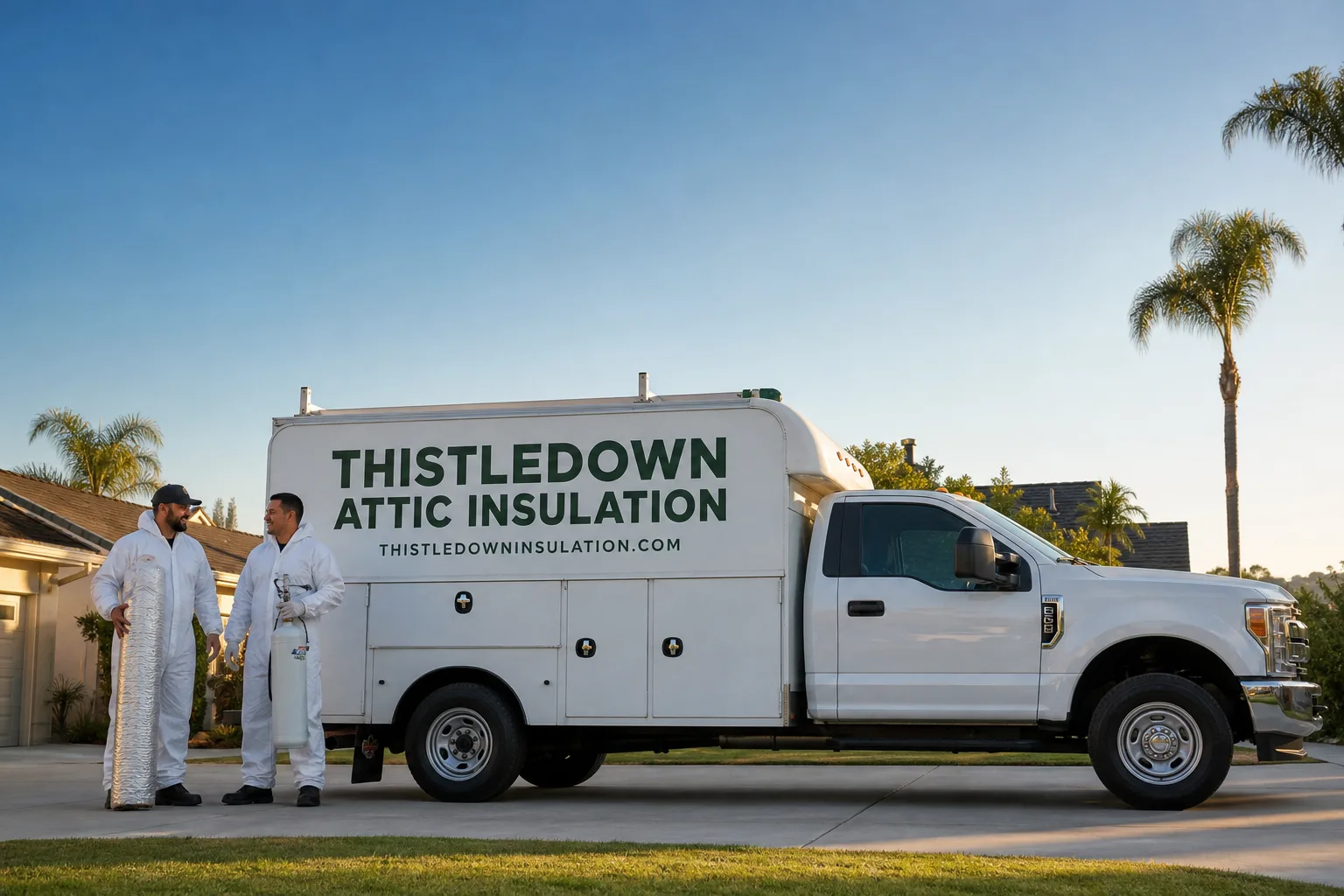
Fast, Reliable Attic Insulation Across Chino Hills
Attic insulation in Chino Hills usually means one of two things: either your 1990s builder-grade batts have finally given up, or you’re tired of paying Inland Empire cooling bills for a house insulated to standards written three decades ago. Most Chino Hills homes were built between 1985 and 2005 with R-30 attic insulation, roughly half of what California requires today. That means your attic is likely doing about half the job it should. We fix that. Call (909) 768-6501 and we’ll give you a written price before anyone touches a rafter.
Why Thistledown Attic Insulation Is Chino Hills’s Preferred Attic Insulation Company
Our crews know Chino Hills because we work here constantly. We know the tract home layouts off Butterfield Ranch Road, the hillside grading behind Carbon Canyon, and the vaulted ceilings that make attic access tight. When a homeowner in Los Serranos calls about a hot second floor, we already know what we’re likely to find before we open the hatch: compressed batts from the original build, gaps along the top plates, and a crawl space open to outdoor air.
Every Thistledown technician is background-checked and uniformed. We answer calls with a live person, 24 hours a day, 7 days a week. You will never sit through a voicemail tree when you call about Attic Insulation work. Before any job starts, you receive a written price. Not a range. Not an estimate that drifts. A number, on paper, before we unroll a single batt.
Thistledown is a Cedarwell-family company, independently owned and held to the Cedarwell Care Promise on every visit. Shoe covers at the front door. Drop cloths across your hallway and stairs. A photo of the cleaned-up attic before the van leaves. And the 365-Day Done Right Promise backs every job: if it’s not right, we make it right. No debate, no fine print.
Neil Barron leads our crew with a simple standard: explain the price before the work, respect the family’s time, and clean up like it’s our own home. That’s why Chino Hills homeowners keep calling us back for Attic Insulation in Chino Hills upgrades and repairs.
Radiant Barrier in Chino Hills
Radiant Barrier in Chino Hills is not a coastal luxury, it’s an Inland Empire answer to a specific problem: attic temperatures that sit between 140 and 150 degrees all summer. The Puente Hills ridge blocks the marine layer that cools cities 15 miles west, so Chino Hills attics cook. A radiant barrier, typically stapled to the underside of your roof deck, reflects a large share of that radiant heat before it ever reaches your insulation or your living space. In Chino Hills, this is one of the highest-ROI upgrades you can make alongside new blown-in insulation.
How a radiant barrier works in Chino Hills heat
Radiant heat moves through open attic air by radiation, not conduction. When your roof deck hits 150 degrees, it radiates heat down onto whatever sits below it, including your insulation and the ductwork running through your attic. A properly installed radiant barrier on the roof deck reduces that heat transfer substantially. In Chino Hills, where west- and south-facing slopes get hammered by afternoon sun, this matters even more. Homes along the ridgelines above Carbon Canyon see some of the most intense solar gain in the city.
What to expect on cost
Radiant barrier installation in Chino Hills typically runs $1,800 to $3,800 depending on roof geometry and square footage. Vaulted and cathedral ceilings complicate access, and so do the complex hip rooflines common in 1990s hillside tracts. We’ll give you a written price for the exact work before any materials arrive.
Attic Cleaning Services in Chino Hills
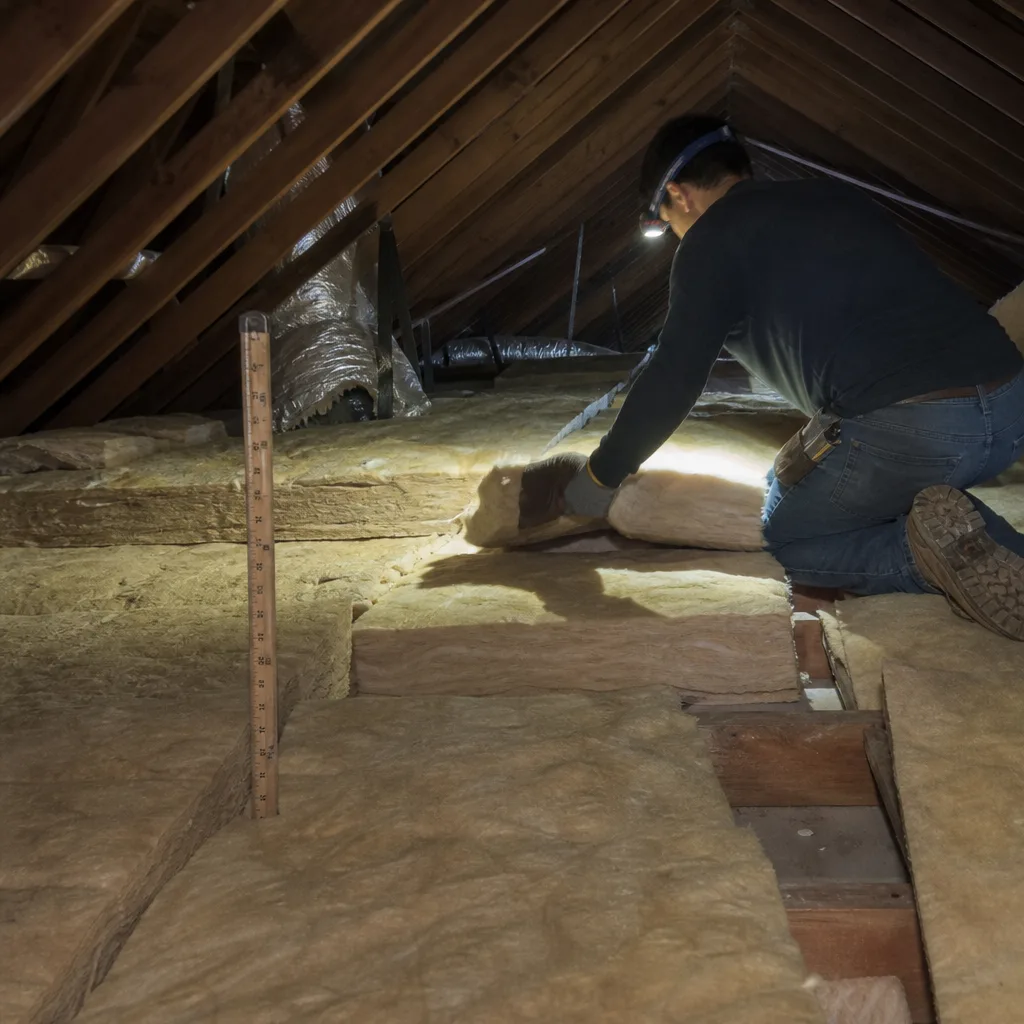
Attic Cleaning Services in Chino Hills, we’ve learned, usually precede insulation upgrades on houses built between 1985 and 2005. That’s because the original batts have degraded into dust, dust, and fiberglass particles, while the kraft facing has delaminated from years of 140-degree attic heat. We don’t blow new insulation over dead material. We remove it first with a commercial vacuum rig, then we inspect what’s underneath. Clean, old insulation out. Clean, new insulation in. That’s the order that works in Chino Hills.
Why cleaning before insulating matters
Old fiberglass batts that have been flattened to half their original thickness don’t just underperform, they also trap dust, old rodent debris, and mold spores that you don’t want sealed into your attic. Removing them gives us a clear view of your top plates, can light housings, and any gaps that need air sealing before new material goes down. That’s what we did for a homeowner off Peyton Drive whose west-facing bonus room hit 96 degrees while the thermostat read 78. The original R-30 Johns Manville batts had compressed to roughly R-12 in the middle of the run, and a four-inch gap along the top plate had never been sealed. Vacuum out, seal up, blow in R-49, insulate the exposed crawl space under the same room. The room finally tracked within a few degrees of the rest of the house.
Cost and timing
A full attic cleaning before an insulation project in Chino Hills generally adds $1,200 to $2,500 depending on attic size and debris condition. Most jobs are done in a single day. You’ll have the exact written number before we send a crew.
What happens when you call
- 1
A real person answersNo phone trees - you reach a local pro.
- 2
You get an upfront price rangeHonest numbers before anyone is dispatched.
- 3
A background-checked tech heads outLicensed & insured, dispatched right away.
- 4
You approve before work beginsNothing starts until you say go.
Trusted Brands We Service in Chino Hills
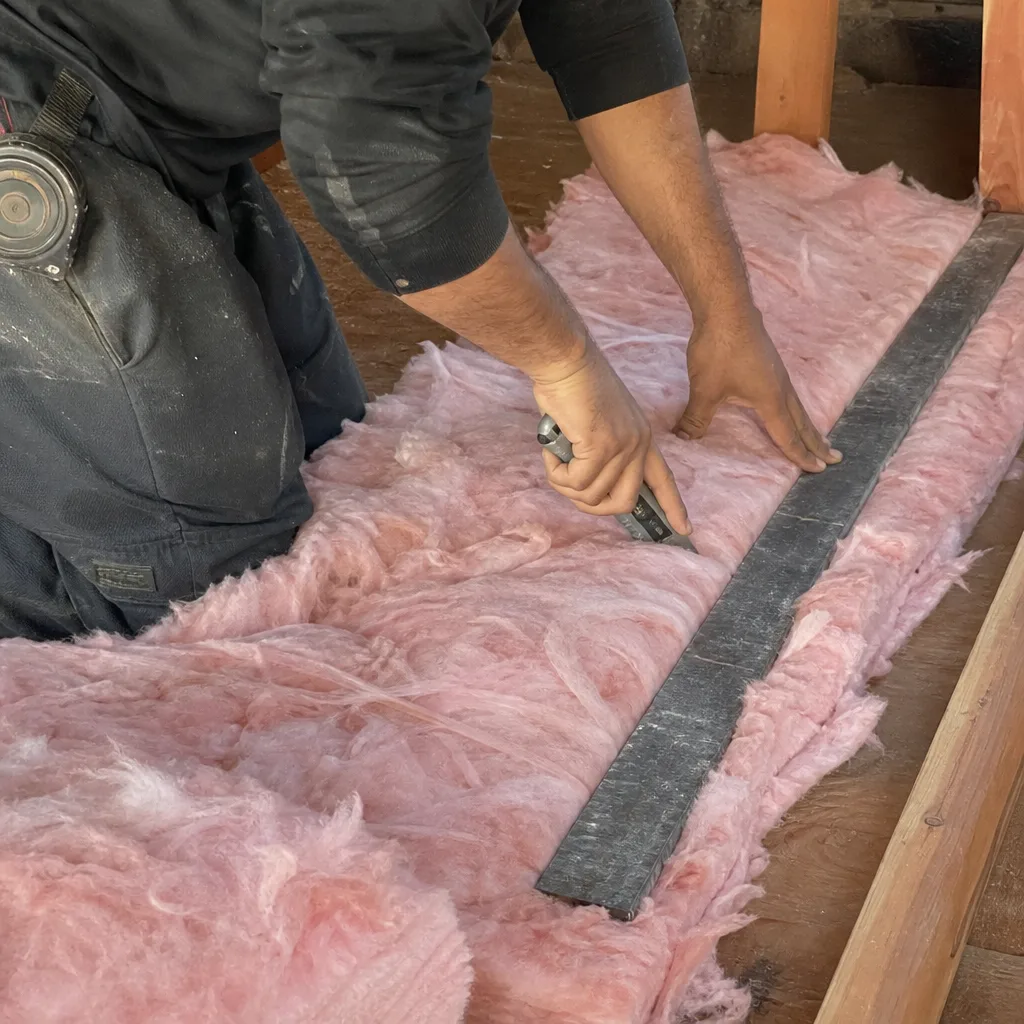
We install eight brand lines, including Owens Corning, Johns Manville, Knauf, GreenFiber, and CertainTeed. Different attics call for different products. A vaulted-ceiling tract home off Grand Avenue may need dense-packed blown-in insulation that fills odd cavities thoroughly. A flat-ceiling ranch in Village Crossing may do fine with fresh batt insulation. Where a choice exists, we can select pet-safe products, so your dog can stay home during the job. We stock materials in the Inland Empire office and coordinate Chino Hills scheduling directly from there, which keeps turnaround fast and parts available without a two-week backorder.
Common Attic Insulation Problems We See in Chino Hills Homes
- Compressed 1990s builder-grade batts. The original R-30 fiberglass installed in most Chino Hills tract homes has settled and compressed to roughly R-12 in the mid-span of long runs over vaulted ceilings. That’s less than half of the original R-value, and less than a third of what California requires today.
- Delaminated kraft facing from 140-degree attic summers. The paper vapor retarder on 1990s batts turns brittle and tears over repeated heat cycles. Once it’s torn, it stops doing its job: it no longer blocks moisture migration, and it no longer blocks radiant heat from entering the living space.
- Uninsulated stepped foundations and exposed crawl spaces. Many Chino Hills homes were cut into hillsides, leaving the subfloor and crawl space fully open to outdoor air with zero insulation. Heat loss through the floor quietly offsets whatever the attic upgrade is supposed to save.
- Unsealed top plates and can light housings. Builders in the 1990s rarely air-sealed the junction where attic framing meets the drywall. Air leaks through those gaps and through recessed light fixtures push hot attic air into the home every summer afternoon, and pull conditioned air out every winter night.
Pricing for Attic Insulation in Chino Hills, CA
Most attic insulation projects in Chino Hills run between $2,200 and $6,800. A straightforward blown-in attic upgrade on a 1,500-square-foot single-story tract home typically falls in the $2,200 to $3,800 range. Top-up jobs over existing marginal insulation run lower, often $1,200 to $2,000. Full replacement, including attic cleaning, air sealing, and new R-49 blown-in coverage, tends to land between $3,500 and $6,800 depending on square footage, roof geometry, and whether we’re adding floor insulation in an exposed crawl space. You get the exact number in writing before any work begins. Call (909) 768-6501 for a free estimate.
We Also Serve Cities Near Chino Hills
Our crews work throughout the Inland Empire, including Pomona, Diamond Bar, Chino, and Montclair. If you’re in a neighboring community, the same written-price policy and 365-Day Done Right Promise apply every time. We’re proud to serve all of Chino Hills and its surrounding foothills neighborhoods.
Serving Chino Hills, CA - Our Local Coverage Area
We’re based in the Chino Hills area and know this community well. Use the map below to see our service coverage - if you’re nearby, we can almost certainly help.
FAQs About Attic Insulation in Chino Hills
Yes, if you want your attic to meet California’s current energy code and your cooling bills to reflect actual efficiency. A 1993 Chino Hills home almost always left the builder with R-30 batts, and after 30 years of compression and heat degradation, those batts are performing closer to R-12 or R-15. Going to R-49 means roughly tripling the thermal resistance in your attic, and it’s the single most cost-effective upgrade you can make to a 1990s tract home. Call (909) 768-6501 for a written quote on exactly what R-49 will cost for your roofline.
Because the marine layer that cools cities on the other side of the Puente Hills ridge rarely clears it. Chino Hills sits inland and elevated exactly where that coastal fog stalls and burns off. Your attic in August hits 140 to 150 degrees while houses 15 miles west sit 15 to 20 degrees cooler overhead. That’s why radiant barrier and R-49 upgrades matter more here than they do in coastal communities. Your west-facing slope and your exposed crawl space are also working against you in specific ways that a coastal neighbor’s flat, air conditioned lot doesn’t face.
We run a commercial vacuum rig up to your attic hatch, remove all the old insulation down to the drywall, bag it, and haul it out. Then we inspect the top plates, can lights, and any recessed areas for air leaks, then seal those before blowing in new insulation. The process takes a few hours for most Chino Hills homes, and you’ll see a photo of the cleaned attic before we leave. We wear shoe covers the entire time, with drop cloths laid out across your hallway and stairs.
Usually, yes, with dense-packed blown-in insulation. Many Chino Hills homes built in the 1980s and 1990s use vaulted or cathedral ceilings to work with the hillside lots and complex hip rooflines. Those narrow, angled ceiling bays are difficult to access with batts, but dense-packed blown-in insulation can fill them tightly without tearing out drywall. The existing batts come out first with the vacuum rig, the cavity gets air-sealed, and new material gets blown in at the right density. Call (909) 768-6501 and we’ll tell you exactly how your roof type will handle the upgrade.
It’s not just a coastal thing. It’s an Inland Empire thing. Chino Hills attics routinely sit at 140 to 150 degrees through July and August, and that heat radiates down onto whatever sits in the attic, including your ductwork. A radiant barrier stapled to the roof deck reflects a meaningful share of that heat before it touches anything else. In Chino Hills, particularly on west- and south-facing slopes along the Carbon Canyon and Butterfield Ranch corridors, a radiant barrier is one of the highest-return upgrades we offer. We’ll show you the numbers for your specific roof before you commit to anything.
Written by Neil Barron, Owner at Thistledown Attic Insulation, serving Chino Hills since 2003.