
Fast, Reliable Attic Insulation Across Running Springs
Attic insulation in Running Springs is a different job than it is down the mountain. At 6,000 feet, snow sits on your roof for weeks, and that snow drives moisture into attics in ways homeowners in San Bernardino or Redlands never see. We work in these cabins every week, and we know what a 1960s summer cabin needs to hold heat through a real alpine winter. If your attic is under-insulated or the old material has gone flat, call (909) 768-6501. We’ll give you a written price before any work starts.
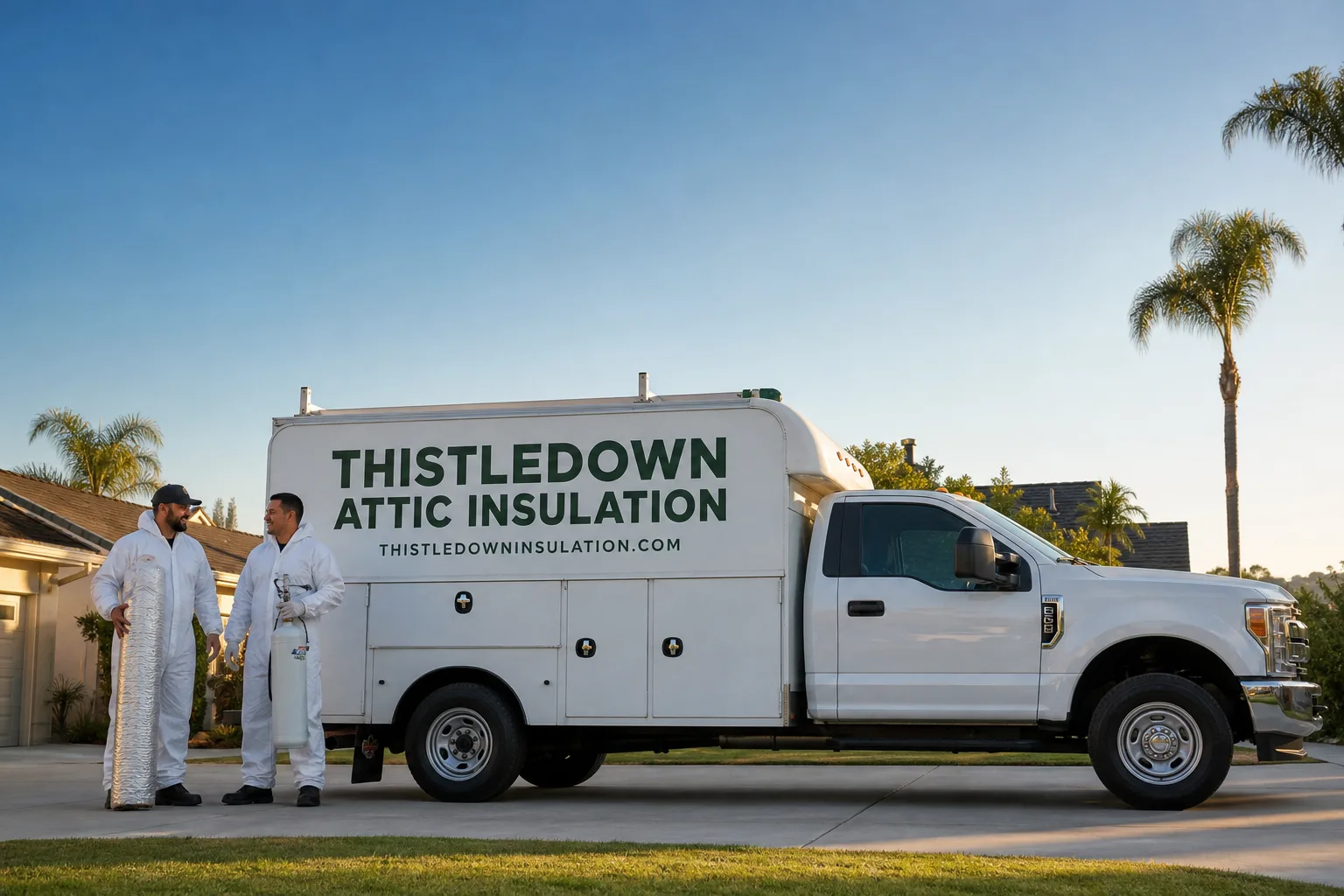
Thistledown Attic Insulation has served the Running Springs area since 2003 as an independently owned Cedarwell-family company. Our Attic Insulation crews understand Rim of the World construction: wood-frame cabins on pier foundations, single-pane windows, and attics that were never designed for year-round heat. We lay drop cloths from the front door to the attic hatch, wear shoe covers the whole time, and send you a photo of the clean-up before we leave. That’s the Cedarwell Care Promise.
Why Thistledown Attic Insulation Is Running Springs’s Preferred Attic Insulation Company
Running Springs homeowners call us because we explain the job before we start it. Neil Barron, who leads the company, built our process around a simple rule: the price goes in writing before anyone picks up a tool. No ranges that balloon later, no surprise line items. The number you see is the number you pay, and if it’s not done right, our 365-Day Done Right Promise means we make it right. No debate, no fine print.
Our technicians are background-checked and uniformed. You’ll know exactly who’s walking through your door, which matters when kids are upstairs doing homework or the dog is watching every stranger who walks in. We answer the phone with a live person 24/7 – no voicemail trees, no callback roulette. And we stock equipment and materials suited to mountain conditions, so we’re not guessing when we arrive at your cabin in Arrowbear Lake or along Highway 18.
We also know Running Springs homes specifically. Most of them were built between the 1950s and 1970s as summer cabins. The attics were an afterthought. We’ve opened enough of them to know exactly what we’ll find before we climb the ladder, and that local knowledge is why homeowners across Running Springs trust us with the job.
Radiant Barrier in Running Springs
Radiant Barrier in Running Springs addresses a specific part of mountain heat loss: radiant heat transfer from the roof deck into the attic air. In summer, the sun beats on a snow-free roof at 6,000 feet and superheats the plywood. In winter, the underside of a snow-covered roof stays cold while the heated interior air radiates upward. A radiant barrier – a reflective foil layer installed on the underside of the rafters – reflects that heat back where it came from. In a Running Springs cabin, it’s almost always paired with insulation, not used alone.
How Radiant Barrier Works With Existing Insulation
We usually install radiant barrier as part of an attic upgrade, not as a standalone fix. The foil has no R-value by itself. What it does is reduce the heat load that reaches your insulation, which helps the insulation do its job. In a 1960s cabin with knee walls and a low-pitch roof, the radiant barrier sits on the rafter faces and the insulation stays below it on the attic floor.
When We Recommend It
If your attic gets brutal in summer – the upstairs rooms bake, the ceiling is hot to the touch – a radiant barrier can lower that ceiling temperature by a real margin. In Running Springs, we also see it help in winter when the snowpack is deep and the attic air is fighting a 50-degree temperature difference. It’s not for every home, and we’ll tell you honestly if your cabin would benefit or if your money is better spent on air-sealing and more insulation. Expect a radiant barrier installation in Running Springs to run $800 to $2,400 depending on attic size and access, always with a written price first.
Attic Cleaning Services in Running Springs
Attic Cleaning Services in Running Springs are not a luxury – they’re often a prerequisite. Before we can install new insulation, the old material, rodent droppings, and decades of mountain dust have to come out. In these older cabins, we regularly find squirrel nests in the eave gaps, pine needles blown in through missing baffles, and old fiberglass batts so degraded they’re more powder than batt. You can’t just cover that up. Installation over debris leaves voids, traps moisture, and invites the next generation of rodents.
What the Cleaning Process Involves
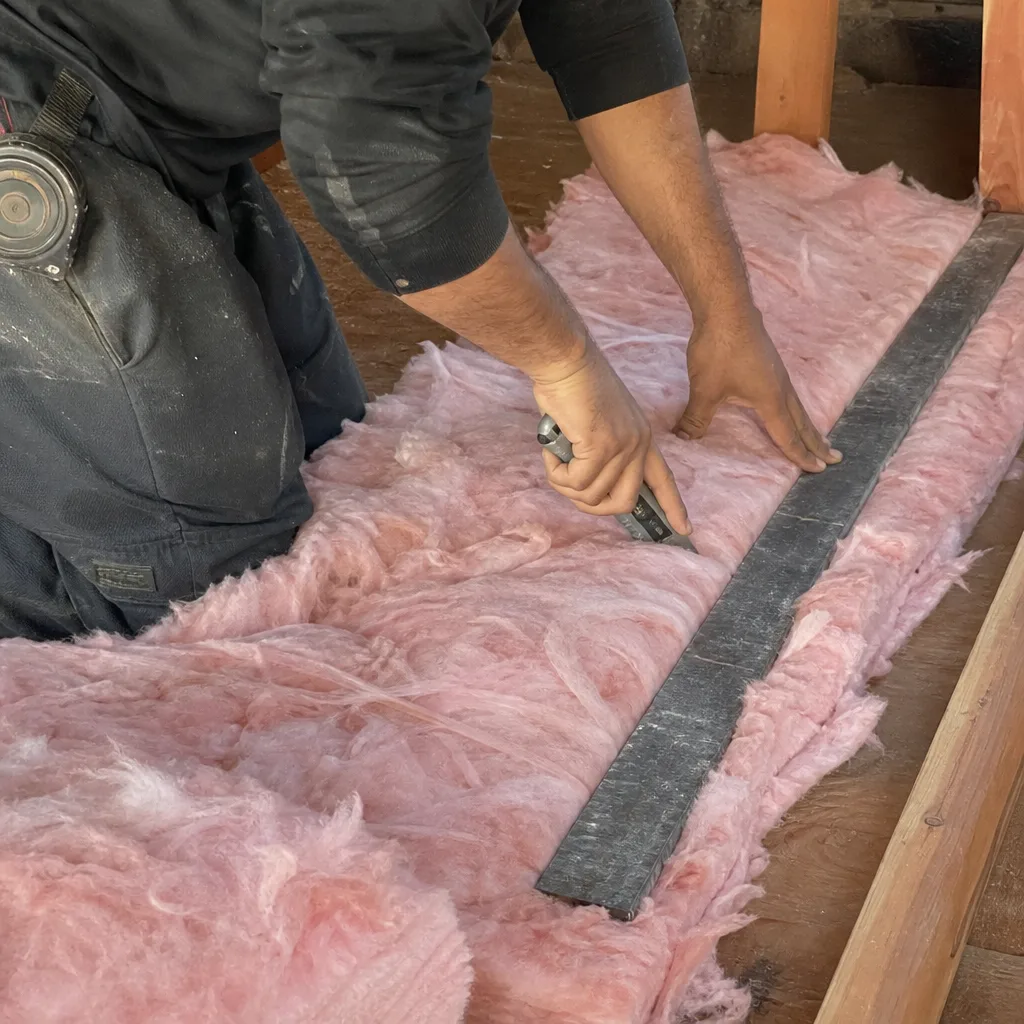
We vacuum out the old insulation using commercial HEPA-filtered equipment, bag everything, and carry it down through the hatch on drop-cloth-protected paths. We inspect the top plates, knee walls, and eave gaps while the attic is empty, then document what we find with photos you’ll see before we quote any repairs. Attic cleaning in Running Springs typically runs $1,200 to $3,000 depending on attic size and how much material has come out.
Why Older Cabins Need It Before New Insulation
If your cabin dates to the 1960s or 1970s, the existing fiberglass batts have likely absorbed condensation from decades of freeze-thaw cycles. That moisture has compressed them and reduced their R-value to a fraction of the label. Leaving them in place means the new insulation sits on top of a wet, failing layer. We recommend full removal for most pre-1980 attics up here, and we’ll show you exactly why with photos from your own attic.
What happens when you call
- 1
A real person answersNo phone trees - you reach a local pro.
- 2
You get an upfront price rangeHonest numbers before anyone is dispatched.
- 3
A background-checked tech heads outLicensed & insured, dispatched right away.
- 4
You approve before work beginsNothing starts until you say go.
Trusted Brands We Service in Running Springs
We install insulation from Owens Corning, Johns Manville, Knauf, and Rockwool, among the eight brands we carry. That matters in Running Springs because different cabins need different materials. A low-pitch A-frame with open eave gaps might call for dense-packed GreenFiber cellulose; a cathedral ceiling with limited depth might take Rockwool batts for their higher R-value per inch. We stock the materials suited to mountain construction, so you’re not waiting a week for a special order to come up the hill. We also carry pet-safe product options where a choice exists, so the dog can stay home during the job.
Common Attic Insulation Problems We See in Running Springs Homes
- Snow-driven moisture compressing legacy batts. Original 1960s fiberglass batts in cabin attics have absorbed condensation from decades of freeze-thaw and compressed from R-11 or R-13 down to two or three inches of dense, ineffective material. They look intact. They aren’t.
- Open crawl spaces and balloon-framed walls. Running Springs cabins sit on pier foundations with open, poorly air-sealed crawl spaces. Cold air rises through the floor, travels up balloon-framed wall cavities, and pours out the attic, overwhelming any insulation you add above.
- Blocked or missing attic baffles. Knee-wall and eave gaps in low-pitch A-frame and chalet-style roofs are frequently missing baffles entirely. Without airflow, we see wind-washed insulation and ice-dam melt patterns along the roof edge every winter.
- Ice dams at the roofline. When attic heat leaks through the insulation, it melts the underside of the snowpack. The water runs to the cold eave, refreezes, and backs up under the shingles. Proper air-sealing and insulation depth stop this before it starts.
Pricing for Attic Insulation in Running Springs, CA
Attic insulation projects in Running Springs typically run $1,800 to $6,500 depending on what we find when we open the hatch. A blown-in attic insulation project for a standard 1,200-square-foot cabin usually falls between $2,200 and $4,000. Attic batt insulation runs $1,800 to $3,800. An attic insulation top-up over existing material is $1,200 to $2,800, but only if the existing layer is dry and intact – in most 1960s cabins up here, it isn’t. Attic insulation replacement, including removal of the old material, runs $3,000 to $6,500. Attic baffles and ventilation prep add $400 to $1,200 depending on how many eave bays are blocked. Every quote is written and exact before work begins. Call (909) 768-6501 for a free estimate.
We Also Serve Cities Near Running Springs
If you’re outside Running Springs proper, we run crews to Lake Arrowhead, Highland, Mentone, and Crestline as well. The mountain towns are different from the valley floor, and we treat each job accordingly. One call to (909) 768-6501 covers all of it, and we’ll give you the same written price regardless of which side of the Rim you’re on.
Serving Running Springs, CA - Our Local Coverage Area
We’re based in the Running Springs area and know this community well. Use the map below to see our service coverage - if you’re nearby, we can almost certainly help.
FAQs About Attic Insulation in Running Springs
Usually not. The original fiberglass batts in these cabins have absorbed condensation from decades of freeze-thaw and compressed to two or three inches, and you’d be blowing new insulation over wet, failing material. We recommend full removal for most pre-1980 attics in Running Springs. Call (909) 768-6501 and we’ll inspect yours and show you what we find.
Yes. The snowpack sits on the roof for weeks at a time, driving moisture downward into the attic cavity. That means fiberglass batts without proper ventilation fail here faster than they would in the valley. We often recommend dense-packed cellulose or Rockwool for mountain cabins because both handle moisture better and hold their R-value under compression. The right material depends on your specific roof, and we’ll give you a written recommendation after inspecting it.
Current Title 24 energy code calls for R-49 attic insulation for a full-time mountain residence in this climate zone. Most original 1960s cabins have R-11 at best, and after decades of moisture-driven compression, often far less. Bringing a cabin up to R-49 is the single biggest improvement you can make to winter comfort and heating cost.
Because heat is leaving through paths the attic insulation doesn’t touch. Running Springs cabins sit on open pier foundations with balloon-framed walls, so cold air rises from the crawl space, travels up the wall cavities, and bypasses the attic entirely. Air-sealing the top plates, knee walls, and rim joists is the missing piece in most of these homes. We inspect those pathways on every job because adding attic insulation alone won’t fix a stack-effect draft.
Yes, we do full removal with HEPA-filtered equipment before installing new attic insulation in most pre-1980 Running Springs cabins. The old material is usually wet, compressed, and often contaminated with rodent debris and pine needles. We bag it, remove it through the hatch on protected paths, and document the empty attic with photos before anything new goes in.
Written by Neil Barron, Owner at Thistledown Attic Insulation, serving Running Springs since 2003.