
Last updated October 8, 2026
Choosing the Right Insulation Brand: A Buyer’s Guide for Los Angeles
Two insulation products can both be labeled R-38 and yet perform differently in a 140°F Northridge attic because R-value is measured at 75°F – and at extreme temperatures, some materials lose effective performance faster than others. The spec sheet doesn’t say this. Neither do most buyer’s guides. This guide evaluates the major insulation brands against the conditions your Los Angeles attic actually faces: sustained heat above 130°F, occasional humidity spikes after June gloom or winter rain, and proximity to a wildfire-risk envelope that changes what “safe” means for your family. For a deeper dive, see The Complete Attic Insulation Guide for Los Angeles Homeowners. You’ll learn which products hold their performance when the attic gets brutal, which certifications matter and which are marketing language, and what to ask your contractor before anyone climbs the ladder.
Quick Answer
The best insulation brand for your Los Angeles attic depends on your roof’s exposure, your proximity to wildland-urban interface zones, and whether the space serves bedrooms or a nursery. For most inland LA homes with vented attics, Owens Corning fiberglass or GreenFiber cellulose offer strong temperature-cycle performance at a fair price point. For unvented attics or homes needing air-sealing, Icynene open-cell spray foam is the leading choice. The brand matters less than the installer’s certification, the product’s fire-resistance rating for your zone, and whether the warranty actually applies when a non-certified crew does the work. For broader context on choosing insulation in this market, see The Complete Guide to Insulation in Los Angeles.
Table of Contents
- How R-Value Fails in a Los Angeles Attic
- Fiberglass Brands: What Holds Up in 140°F Heat
- Cellulose Brands: Fire Resistance and Recycled Content
- Spray Foam Brands: Air-Sealing for Wildfire Zones
- Fire Ratings That Actually Matter in LA’s WUI Zones
- VOC Off-Gassing and Recycled Content: What Parents Should Check
- Warranty Fine Print: What ‘Lifetime’ Actually Means
- Questions to Ask Your Insulation Contractor
How R-Value Fails in a Los Angeles Attic
R-value is a laboratory number measured at 75°F with zero air movement. Your Los Angeles attic in August sits between 130°F and 160°F, with thermal radiation baking the underside of the roof deck. That’s a fundamentally different environment, and not every insulation material handles it equally.
Fiberglass batts and blown-in insulation hold their R-value reasonably well under sustained heat, but they perform poorly when air moves through them. In a vented LA attic, wind washing across the top of the insulation can reduce effective performance by 20% to 30%. This is why installation quality matters as much as brand choice. A perfectly rated batt installed with gaps around recessed lights, bathroom fans, and the attic hatch loses far more performance than a mid-tier product installed carefully.
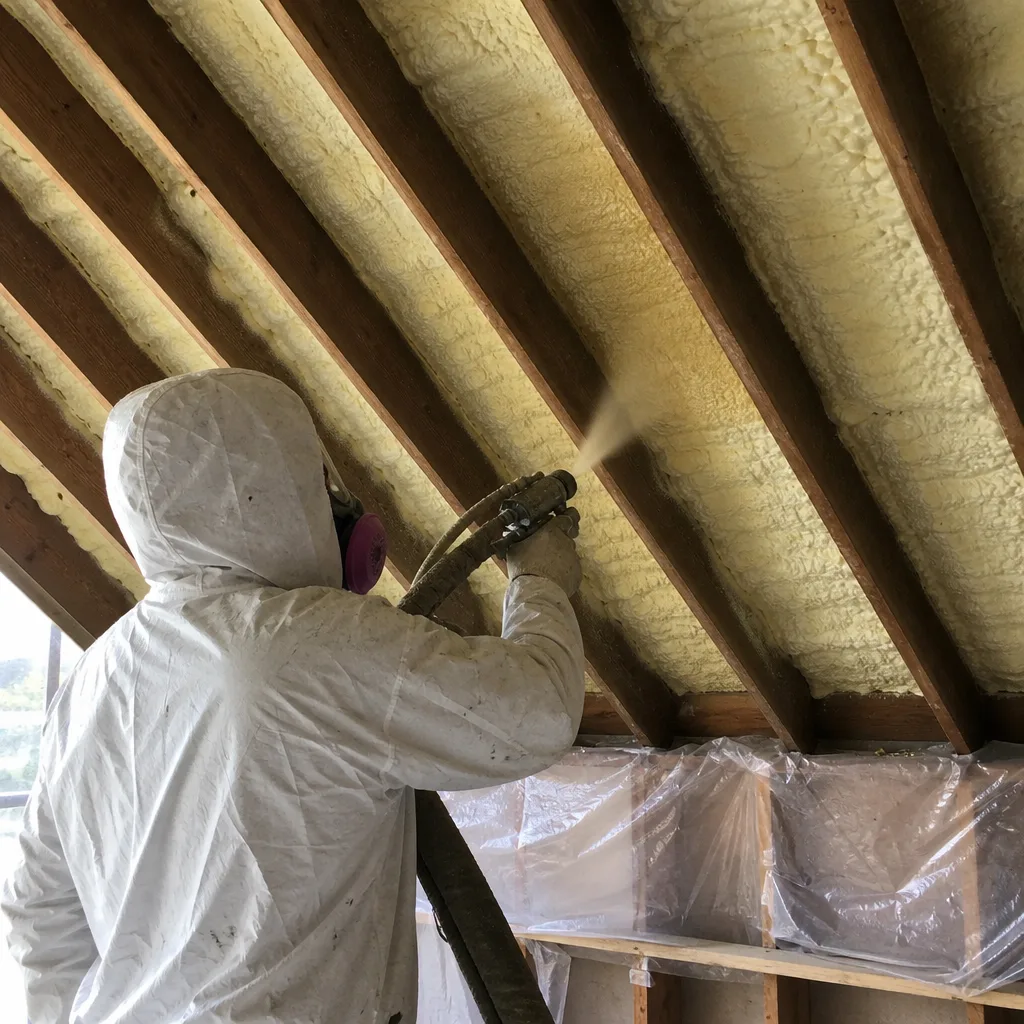
Open-cell spray foam behaves differently. Its R-value per inch is modest – around R-3.7 – but it air-seals as it insulates. In a 140°F attic, an unvented spray foam assembly keeps the attic itself closer to the conditioned temperature of the house, which means the insulation isn’t fighting the same thermal load. In our experience across Los Angeles attics in neighborhoods from Sherman Oaks to Eagle Rock, homes with spray foam under the roof deck see attic temperatures drop by 25°F to 40°F compared to vented attics with fiberglass on the floor.
Cellulose sits between the two. It’s denser than fiberglass, which reduces air movement through the material, and it holds its R-value well at high temperatures. Its real strength in LA is its fire performance, which we’ll get to below.
The takeaway: don’t shop R-value alone. Ask how the product performs at 120°F and above, and whether the installation method controls air movement. A spec sheet at 75°F tells you almost nothing about a July afternoon in the San Fernando Valley.
Fiberglass Brands: What Holds Up in 140°F Heat
Fiberglass is the most common insulation material in Los Angeles attics, and for good reason: it’s affordable, widely available, and when installed correctly, it performs predictably for decades. The three major brands we install – Owens Corning, Johns Manville, and Knauf – all produce quality products, but they differ in density, formaldehyde content, and how they behave under sustained heat.
Owens Corning’s blown-in fiberglass, sold under the AttiCat and ProPink lines, is a staple in LA attics. It’s naturally non-combustible, contains no formaldehyde in its fiberglass insulation lines, and settles less than older fiberglass products. In a 140°F attic, it holds its labeled R-value well, though like all fiberglass, it’s vulnerable to air movement. We’ve pulled open attic hatches in Highland Park and Pasadena where fiberglass had been installed correctly 15 years prior and was still performing at its labeled spec because the original crew had sealed the air leaks first.
Johns Manville offers a formaldehyde-free fiberglass line that’s worth knowing about if your children’s bedrooms sit directly below the attic. Their Climate Pro blown-in product is dense enough to reduce convection within the material, which matters in a hot attic where air wants to rise through the insulation. For homes in inland Los Angeles neighborhoods like Reseda or Canoga Park, where summer attic temperatures regularly exceed 140°F, a denser blown-in product holds its effective performance better than a loose, fluffy fill.
Knauf Insulation’s EcoBatt and Jet Stream products are also formaldehyde-free and perform comparably. Knauf’s key advantage in the LA market is availability through local distributors, which can mean faster jobs when you’re on a tight timeline before a heat wave.
One honest note: the differences between these three fiberglass brands are smaller than the difference between a good install and a sloppy one. A homeowner choosing among them should focus on formaldehyde-free certification, settling rates, and whether the contractor has been trained by the manufacturer. We choose the product that matches the attic’s geometry and the family’s priorities, not the one with the best distributor rebate that month.
Cellulose Brands: Fire Resistance and Recycled Content
Cellulose insulation is made from shredded recycled paper treated with fire retardants, and it’s a quieter, denser alternative to fiberglass. In Los Angeles, where wildfire risk shapes building codes, cellulose deserves a hard look. Its fire performance is among the best of any insulation material, and it’s also one of the highest-recycled-content products available.
GreenFiber is the cellulose brand we install most often, and it brings specific strengths to LA attics. GreenFiber’s Sanctuary and Cocoon lines contain 85% recycled paper content, the highest in the industry, and carry a Class 1 fire rating. That rating isn’t marketing language – it means the product passes ASTM E84 flame spread and smoke development tests, which matter in wildland-urban interface zones where floating embers can enter attic vents.
Cellulose resists convective air movement better than loose fiberglass because it’s denser. In a hot LA attic, that means it holds its effective R-value with less degradation from thermal convection. The tradeoff is weight: cellulose weighs more per square foot than fiberglass, so an older roof deck or vaulted ceiling may need reinforcement. A real conversation with an insulation contractor should include this calculation, not just a product pitch.
For parents choosing insulation near a nursery, cellulose is worth considering for its sound-dampening properties. It reduces airborne noise meaningfully more than fiberglass, which makes a difference when the attic sits directly above a sleeping baby and a plane banks out of LAX or Burbank Airport.
Cellulose is not DIY-friendly. It requires a trained installer who knows how to account for settling and properly dense-pack walls. Installed incorrectly, it can leave voids that cut performance by half. But installed correctly, it’s a legitimate peer to fiberglass and spray foam – and in fire-resistance terms, it often beats both.
Spray Foam Brands: Air-Sealing for Wildfire Zones
The Complete Spray Foam Insulation Guide for Los Angeles Homeowners covers this in depth, but here’s the core point: spray foam is the most technically demanding insulation product we install, and it solves a problem the other materials can’t: air leaks. In a Los Angeles attic, especially an older home in neighborhoods like Silver Lake or Echo Park with original framing and gaps everywhere, air-sealing is often worth more than the insulation itself.
Icynene is the open-cell spray foam brand we reach for in LA attics. Open-cell foam expands to fill cavities completely, air-seals as it cures, and is flexible enough to move with a house through seismic events without cracking. Its R-value per inch is modest – around R-3.7 compared to closed-cell’s R-6.5 – but in an unvented attic assembly, that’s often enough because the foam eliminates the thermal bridging and air movement that plague vented attics.
Demilec is another spray foam manufacturer with strong open-cell products in their Sealection line. Demilec’s formulations meet California’s strict VOC standards, which matter in the LA market where air quality regulations are tighter than almost anywhere in the country.
Spray foam is the most expensive insulation option up front, and it requires a certified installer with specialized equipment. A bad spray foam job – improper mixing, off-ratio application, or installing over a wet deck – can create persistent odor issues and adhesion failures that are expensive to fix. This is exactly the corner where the installer matters more than the brand: Icynene or Demilec foam installed by a manufacturer-certified crew performs beautifully; the same foam installed by an untrained hand is a liability.
For homes in or near wildfire-prone zones in Los Angeles, spray foam has another advantage: it can be installed directly under the roof deck to create an unvented attic, which reduces the number of ember entry points. Fewer vents mean fewer places for wind-driven embers to get inside. This is a real consideration for homeowners in the hills above Glendale, Burbank, and the Westside canyons.
Fire Ratings That Actually Matter in LA’s WUI Zones
Los Angeles spans multiple wildland-urban interface (WUI) zones, and the California Building Code Chapter 7A imposes specific requirements on exterior materials in those zones. Attic insulation falls under interior finish rules, but the fire performance of the material still matters – especially if your vents or soffits can draw embers into the attic.
Here are the certifications to know and what they actually mean:
- Class 1 / Class A Fire Rating (ASTM E84): This is the meaningful one. It measures flame spread and smoke development. Products with a Class 1 rating include GreenFiber cellulose, mineral wool products like Rockwool, and most fiberglass. A Class 1 rating means the material has a flame spread index of 25 or less and a smoke development index of 450 or less.
- CAL 1350 Compliance: This is California’s higher bar for fire performance in insulation installed on the roof deck for exposed applications. It’s not required for all attics, but it’s worth asking about if your contractor proposes spray foam under the roof deck in a WUI zone.
- UL Classification: UL (Underwriters Laboratories) tests insulation for flame spread and smoke, but a UL listing doesn’t mean fireproof – it means the material performed within specific parameters. Ask what the flame spread index was, not just whether it’s “UL listed.”
- Fiberglass “non-combustible” claims: Fiberglass itself won’t burn, but the facing paper or vapor barrier on batts can. Unfaced or blown-in fiberglass is the safest in this regard.
- Borates in cellulose: GreenFiber and other cellulose brands use borate fire retardants that also resist mold and pests. This is a meaningful fire-performance feature, not a marketing bullet.
The key distinction: products marketed as “fire-resistant” without a Class 1 ASTM E84 rating are using loose language. Ask for the test standard and the actual flame spread index. A real answer builds trust; a vague one is a red flag.
VOC Off-Gassing and Recycled Content: What Parents Should Check
If your attic sits above a nursery or children’s bedroom, what’s in the insulation matters. Two things to understand: volatile organic compounds (VOCs) and recycled content. Both are measurable, third-party-verified, and worth asking about before a product goes into your home.
Fiberglass insulation is inert and doesn’t off-gas meaningfully after installation. Older fiberglass products contained formaldehyde in the binding resin, which was a legitimate concern for families. Today, all three major fiberglass brands we install – Owens Corning, Johns Manville, and Knauf – offer formaldehyde-free lines. Look for the GREENGUARD Gold certification, which tests for chemical emissions and is the standard parents should recognize.
Spray foam is different, and the distinction matters. Open-cell spray foam like Icynene and Demilec products cures rapidly and off-gasses at low levels after the first 24 to 48 hours. But installation errors can change that. If the two chemical components aren’t mixed at the correct ratio, the foam may not cure properly and can emit persistent odors. This is a core reason spray foam requires a certified, trained installer – the chemistry is unforgiving. A properly mixed and cured open-cell foam is safe for a nursery below; an off-ratio installation is not.
Recycled content is where cellulose wins outright. GreenFiber’s 85% recycled paper content is the highest in the industry, and it’s a genuine environmental advantage in a city like Los Angeles where sustainability claims are everywhere but verifiable ones are rare. Fiberglass products typically run between 40% and 60% recycled glass content, which is still meaningful. Spray foam has essentially zero recycled content – the polymers are virgin petrochemicals, which is a legitimate consideration if embodied carbon matters to your family.
For pet-owning families in Los Angeles, another practical note: blown-in cellulose and fiberglass both generate dust during installation and removal. We use shoe covers, drop cloths, and containment barriers as standard practice, and we can recommend pet-safe product options where a meaningful choice exists. The dog can stay home during the job; the house stays clean at the end of it.
Warranty Fine Print: What ‘Lifetime’ Actually Means
Manufacturer warranties on insulation look impressive on a brochure, but the fine print reveals meaningful differences – and in Los Angeles, where attic conditions are harsher than the national average, those differences show up sooner.
Here’s how to read what “lifetime” actually covers:
- Who is covered: Most manufacturer warranties – from Owens Corning, Johns Manville, Knauf, and GreenFiber – cover the product only for the original homeowner and only if the insulation is installed by a manufacturer-certified contractor. Install the same product yourself or with an unlicensed crew, and the lifetime warranty evaporates. The product is identical; the coverage is not.
- What is covered: Product warranties typically cover manufacturing defects and, for some fiberglass products, a promise that the product will maintain its R-value if properly installed. They do not cover settling beyond a specified percentage, water damage, pest damage, or improper installation. In a Los Angeles attic, moisture is the enemy – a roof leak that soaks a section of insulation voids the warranty on that section, no matter whose fault the leak was.
- The settling question: Cellulose is denser and settles more predictably than fiberglass. GreenFiber publishes settling charts and trains installers to account for it. If blown-in fiberglass or cellulose is installed at the wrong density, it settles more than the manufacturer allows, and the warranty won’t cover the R-value loss. The fix is an installer who knows the material’s settled density requirements.
- Spray foam warranties are different: Icynene and Demilec offer warranties that require installer certification to be valid, and they typically cover adhesion and long-term thermal performance. An installer who isn’t certified by the manufacturer cannot offer the warranty, regardless of what their bid says.
- Read the installation clause first: This is the sentence that determines whether the warranty is a real promise or a marketing artifact. Look for the phrase “installed by a certified contractor in accordance with manufacturer specifications.” If your contractor can’t produce their certification from the brand they’re quoting, the lifetime warranty is already gone.
Questions to Ask Your Insulation Contractor
Most homeowners choose a contractor first and inherit whatever insulation brand that contractor stocks. Reversing the order – choosing your brand priorities first, then finding a contractor who can install that brand correctly – leads to better outcomes in Los Angeles attics.
Here are the questions that reveal whether your contractor chose their products on merit or on distributor margin:
- “Which brands do you stock, and why did you choose them?” A thoughtful contractor can explain their brand selection in terms of your attic’s specific conditions: roof slope, venting, fire zone, insulation depth. A contractor who lists brands without a reason is selling what their distributor pushed.
- “Are your technicians certified by the manufacturer for this product?” This is the single most revealing question. Manufacturer certification means training, testing, and warranty eligibility. If the answer is no, the lifetime warranty in the brochure is already void. Ask for the certification, not a verbal assurance.
- “What’s the settled R-value, not the installed R-value?” Blown-in products settle. A contractor who can give you the settled R-value calculation knows their product. One who quotes only the initial installed depth doesn’t.
- “Will you air-seal before insulating?” In a Los Angeles attic with recessed lights, ceiling fans, and a drop-down hatch, air leaks can cut effective insulation performance by a quarter or more. If the contractor doesn’t mention air-sealing, they’re selling bags of material, not an insulation system.
- “What does your price include, in writing?” Our standard at Thistledown Attic Insulation is a written price before any work starts – every single time, no exceptions. If a contractor won’t put the number in writing, walk away. In our experience across Los Angeles, the contractors who hesitate on written pricing are the ones who find “unexpected complications” midway through the job.
Common Mistakes to Avoid
- Choosing a brand before understanding the attic. A vented attic in Encino and an unvented vaulted ceiling in Silver Lake need different products and sometimes different brands entirely. Start with your attic’s actual conditions – temperature, ventilation, fire zone – then match the product to the space.
- Believing a “lifetime warranty” applies regardless of installer. As covered above, most warranties require manufacturer certification. An unlicensed crew installing Owens Corning products voids the Owens Corning warranty. The product is the same; your coverage is not.
- Overlooking air-sealing. Insulation without air-sealing is a partial job. In a Los Angeles attic, the air leaks around recessed lights and the attic hatch can undermine more than the insulation brand choice ever could.
- Choosing spray foam as an afterthought. Spray foam is not a product you bolt on casually. If you want Icynene or Demilec, plan for it: it’s a different attic assembly, requires certification, and needs a longer installation window. Treating it as interchangeable with fiberglass is a mistake.
- Falling for “fireproof” language without a test standard. Ask for the ASTM E84 flame spread index. If the contractor can’t provide it, “fire-resistant” was a sales phrase.
- Ignoring the attic’s air quality after a roof leak. Wet insulation loses performance and can harbor mold. In Los Angeles’s winter rain season, check the attic after heavy storms. A saturated section needs replacement, not just drying out.
- Hiring on price alone in the LA market. Los Angeles labor costs vary widely. A bid that’s 40% below market is almost always a crew without certification, insurance, or both. The brand is irrelevant if the installer isn’t qualified to install it.
When to Call a Professional
Insulation installation is not a weekend project when the attic is hot, the access is tight, and the product requires manufacturer certification for its warranty to apply. Call a professional if your attic shows signs of uneven insulation, if you’re planning to convert a vented attic to an unvented assembly, if your home sits in a WUI zone with new Chapter 7A requirements, or if you’re choosing products for a nursery or bedroom directly below the attic.
You should also call before you buy: a professional can tell you which brands fit your attic’s specific conditions and which don’t, saving you from paying for a product that will underperform. Browse our more guides & resources to prepare for that conversation. Thistledown Attic Insulation offers free estimates in Los Angeles – call (909) 768-6501 and you’ll get a written price before any work starts, every single time.
Frequently Asked Questions
For most vented Los Angeles attics, Owens Corning blown-in fiberglass or GreenFiber cellulose offer the best balance of heat performance, fire resistance, and cost. For unvented attics or homes needing air-sealing, Icynene open-cell spray foam is the strongest choice. The installer’s certification matters more than the brand label – call (909) 768-6501 for a free assessment of which product fits your specific attic.
Brand matters in three specific areas: formaldehyde content, fire-resistance ratings, and warranty terms. Owens Corning, Johns Manville, and Knauf all offer formaldehyde-free fiberglass lines, while GreenFiber cellulose carries a Class 1 fire rating that matters in wildfire zones. Beyond these differences, installation quality has a bigger impact on performance than brand choice.
Formaldehyde-free fiberglass or GreenFiber cellulose are the safest choices for a nursery in Los Angeles. Look for GREENGUARD Gold certification on the product label, and confirm with your installer that the product is formaldehyde-free. Cellulose offers better sound dampening, which helps when the bedroom sits directly below the attic and low-flying planes pass overhead.
Attic insulation in Los Angeles typically ranges from $1,800 to $4,500 for a standard 1,500-square-foot attic, depending on material choice, existing insulation removal, and air-sealing work. Spray foam runs higher, typically $4,000 to $9,000 for a full roof deck application. You’ll have an exact written number before any work begins – call (909) 768-6501 for a free estimate.
Open-cell spray foam like Icynene or Demilec is safe when properly mixed, cured, and installed by a certified contractor. It can reduce ember entry points by creating an unvented attic assembly with fewer vents. The fire performance of spray foam depends on the specific formulation and installation, so ask your contractor for the product’s CAL 1350 compliance and their manufacturer certification.
Signs of failing insulation in a Los Angeles attic include uneven room temperatures between floors, visible settling or gaps in the attic, wet or compressed sections after a rainstorm, and higher summer cooling bills than similar homes in your neighborhood. If you’re unsure, schedule a professional inspection – a trained eye can spot issues that aren’t obvious from the attic hatch.
The Bottom Line
The best insulation brand for your Los Angeles attic is the one that matches your specific conditions: roof exposure, ventilation, fire zone, and who sleeps below. Owens Corning, Johns Manville, and Knauf fiberglass offer reliable heat performance with formaldehyde-free options; GreenFiber cellulose brings the strongest fire rating and highest recycled content; Icynene and Demilec spray foam solve air-sealing problems that other materials can’t. What the spec sheet won’t tell you – and your contractor should – is that installation quality and manufacturer certification determine whether the product performs as promised. Get the written price, verify the certification, and choose a crew that treats your attic like part of your home.
Written by Neil Barron, Owner at Thistledown Attic Insulation, serving Los Angeles since 2003.