
Last updated October 8, 2026
Attic Insulation Troubleshooting: Common Problems and How to Fix Them
If one room in your house is consistently hotter than the others, the instinct is to blame the HVAC, but in most cases the real culprit is either a gap in attic insulation directly above that room or a disconnected duct boot that’s been dumping conditioned air into the attic for years. In Los Angeles, where summer attic temperatures routinely climb past 140 degrees, a small insulation failure doesn’t stay small for long. This guide walks you through the household symptoms that point to specific attic problems, how to tell a ventilation issue from an insulation issue, and what you can safely check yourself before calling anyone for Attic Insulation services.
Quick Answer
Most attic insulation problems show up as uneven room temperatures, unexplained utility bill spikes, musty hallway smells, or visible dust trails around ceiling fixtures. In Los Angeles homes, the most common root causes are settled blown-in insulation (especially around eave baffles and the attic hatch), disconnected duct boots, blocked soffit vents, and moisture intrusion from bathroom fans venting into the attic instead of outside.
Table of Contents
- The Room-by-Room Symptom Map
- Ventilation Failure vs. Insulation Failure: Telling Them Apart
- Why Blown-In Insulation Settles Unevenly in LA Attics
- The LA-Specific Moisture Damage Checklist
- Disconnected Duct Boots: The Silent Energy Leak
- What’s Safe to Document vs. What Needs Same-Day Action
- Five Insulation Checks You Can Do Without Entering the Attic
The Room-by-Room Symptom Map
Attic insulation failures rarely announce themselves from inside the attic. They show up as comfort complaints in specific rooms, and each complaint points to a different root cause. Here’s what we’ve learned from thousands of Los Angeles attics: the room directly beneath the problem is almost always the room that tells you what’s wrong.
Bedroom directly under the attic hatch
If the bedroom or hallway nearest your attic access point runs five to eight degrees warmer than the rest of the house in summer, the hatch itself is likely the problem. Attic hatches are rarely insulated to match the surrounding ceiling, and the weatherstripping around them degrades within five to seven years in LA’s dry heat. The fix is usually straightforward: a properly fitted hatch cover or rigid foam board, plus new gasket material around the opening. In our experience, this single fix resolves the temperature complaint in about a third of Los Angeles homes we visit.
Upstairs bedrooms that never cool down
When an upstairs room stays warm even with the AC running, look for two things: insufficient insulation depth over that specific room, or a gap where the insulation stops short of the exterior wall. In many LA homes built before the 1990s, we find insulation that covers the main attic floor but was never extended over the angled sections where the roof meets the top plate. That gap lets heat pour into the room below, and no amount of thermostat adjustment will fix it.
Rooms with recessed lighting
Recessed can lights are effectively holes in your ceiling. If a room with several can lights is noticeably warmer, the housings may not be insulated or air-sealed. This is one symptom where you want a professional involved, because placing insulation against a non-rated can light fixture creates a fire hazard. The fix is either an insulated, IC-rated housing replacement or a sealed, fire-rated cover installed above the fixture.
The baby’s room or nursery
Parents in Los Angeles often tell us the nursery is the hardest room to keep comfortable. That’s usually because nursery windows are often smallest on the floor plan, so less ambient light masks the real issue: an insulation gap above. We take this call seriously at Thistledown Attic Insulation, and choose pet-safe insulation products where a choice exists, so the whole family stays comfortable during the job.
Hallway with a musty smell
A musty hallway smell that comes and goes with the seasons usually points to a bathroom exhaust fan venting into the attic rather than through the roof. That moisture settles into insulation, which then smells and underperforms. In LA’s mostly dry climate, homeowners often misread this smell as a plumbing leak. For related reading, see our post on Attic Insulation Warning Signs Every Homeowner Should Know.
Ventilation Failure vs. Insulation Failure: Telling Them Apart
From inside the house, a ventilation problem and an insulation problem feel identical: rooms get hot, the AC runs longer, and the ceiling feels warm to the touch. But the fixes are completely different, and misdiagnosing one as the other means spending money on the wrong repair. Here’s how to tell them apart before you call anyone.
A ventilation failure means the attic can’t move hot air out and fresh air in. An insulation failure means heat is being conducted directly into your living space. Both raise indoor temperatures, but the patterns differ.
- Insulation failure: Specific rooms are affected, usually directly under the problem area. The rest of the house feels normal. The floor or ceiling above the affected room feels warm in one particular spot.
- Ventilation failure: The entire upstairs feels warmer by late afternoon, regardless of which room you’re in. The attic itself feels suffocatingly hot if you’ve ever popped your head up there, and the problem builds through the day.
- Insulation failure timing: Rooms get hot quickly and stay hot even after the sun goes down.
- Ventilation failure timing: Rooms feel okay in the morning and progressively worsen as the day heats up, then improve somewhat after sunset.
In Los Angeles, where daytime temperatures and nighttime temperatures can swing thirty degrees, this timing difference is the single most reliable diagnostic signal. If your upstairs rooms cool off at night, your insulation is probably doing its job and the problem is ventilation. If they stay hot well into the evening, the insulation itself is the likely culprit.
Why Blown-In Insulation Settles Unevenly in LA Attics
Blown-in fiberglass and cellulose insulation both settle over time, but Los Angeles attics have a particular problem: our dry, warm environment accelerates settling in predictable ways. Most homeowners don’t realize that blown-in insulation loses a percentage of its R-value within the first few years simply because it compresses under its own weight and the weight of foot traffic from HVAC technicians, electricians, and cable installers.
The areas statistically first to fail in LA attics are consistent across hundreds of homes we’ve inspected.
- Eave baffles: The perimeter of the attic where the roof meets the exterior walls is where insulation is shallowest to begin with. Installation crews often underfill this area to keep it from blocking the soffit vents, and what is there settles quickly. The result is a warm band around the edge of your ceiling, which shows up as warm exterior walls and warm window seats.
- The attic hatch perimeter: Access points get walked past, bumped, and disturbed. Insulation around the hatch gets compressed, kicked aside, or never properly replaced after someone goes up to check a leak or run a cable. A one-foot gap around the hatch is common.
- Knee walls: In homes with finished attic spaces or bonus rooms, the short vertical walls that separate conditioned space from unconditioned attic space are often insulated with a single bat that sags or falls out entirely. The room on the other side of that knee wall will never hold its temperature.
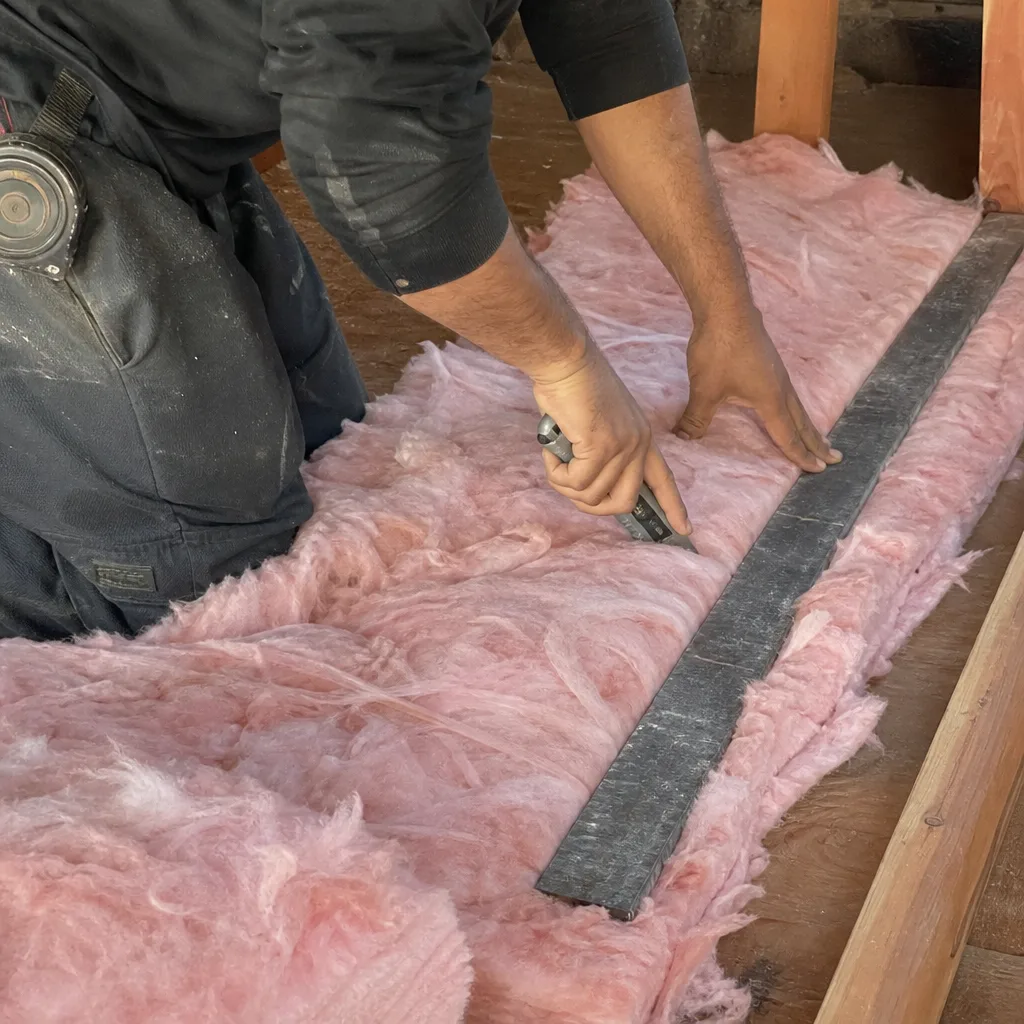
If you have an older blanket of pink or yellow fiberglass over your main attic floor, the general pattern of settling is deepest in the center where foot traffic crosses, and thinnest at the edges where heat enters. A professional thermal assessment can map exactly where depth has dropped below recommended levels, and in Los Angeles, the recommended depth for fiberglass is typically 14 to 16 inches for an R-38 to R-49 attic.
The LA-Specific Moisture Damage Checklist
Los Angeles has a dry climate, which means true mold in an attic is less common than in, say, Florida. But that dry air also means homeowners are less likely to think about moisture problems until they’re significant. Here’s what mold actually looks like in an LA attic versus what gets misidentified, and a checklist for the moisture issues specific to our region.
What real mold looks like in an LA attic
Real mold in a Los Angeles attic typically appears as small, dark spots in discrete patches, not the large green or black blotches homeowners expect from photos of humid-climate attics. In our dry air, mold colonies stay small because they don’t have enough moisture to spread aggressively. They cluster around penetrations: bathroom fan terminations, plumbing vents, recessed light housings, and around the underside of roof sheathing where a small leak drips.
What gets misidentified as mold
In LA attics, we frequently see homeowners mistake one of the following for mold. None of them are mold, but all of them deserve investigation.
- Dust staining: Black dust marks on insulation near vents or the attic hatch. This is just accumulated dirt, but it can look dark and suspicious.
- Roofing cement bleed: Dark, tarry drips that appear on the underside of the sheathing. This is shingle adhesive, not mold.
- Mineral deposits: White, chalky residue where moisture has evaporated. Water was there at some point, but the white deposit is minerals, not mold.
- Insulation discoloration: Fiberglass insulation that gets dirty or compressed turns darker. It’s not mold growth; it’s just dirty fiberglass.
The moisture checklist specific to LA homes
- Stand outside and visually confirm every bathroom fan has a vent cap on the roof or a sidewall termination. In Los Angeles, many older homes run the bathroom fan directly into the attic. This is the most common moisture source we find, and the fix is a ducted vent to the exterior.
- Check for water stains on the attic side of the roof sheathing after every heavy rain. LA rains are infrequent but intense when they come, and a small leak that would be invisible in a daily-rain climate shows up clearly in ours.
- Look for condensation on nails or metal straps during winter mornings. Our cool, damp winters create overnight condensation on exposed metal, and that drip can wet insulation below.
- After running the clothes dryer, check the attic above the laundry room for warmth or dampness. Dryer vents that terminate in the attic are less common than bathroom fans, but we find them in older Los Angeles homes.
Disconnected Duct Boots: The Silent Energy Leak
A disconnected duct boot is exactly what it sounds like: the metal or plastic fitting that connects your flexible duct to the ceiling register has pulled loose, and your conditioned air is pouring into the attic instead of into the room below. This is one of the most overlooked attic problems in Los Angeles, partly because the duct system and the insulation share the same space, and both get blamed for problems that are often specific to one or the other.
Here’s what we find on a regular basis in LA attics: the flexible duct was never strapped securely at the boot connection. Over years of air pressure changes and the natural expansion and contraction of the ductwork, the connection slips. Sometimes it slips an inch. Sometimes the duct separates entirely. Either way, the result is the same: a room that never reaches temperature, an AC system that runs longer, and an attic that stays warmer than it should.
What makes this problem so frustrating for homeowners is that it’s invisible from the living space. The register still blows air, just less of it. The thermostat still reads the temperature it’s set to, because the thermostat isn’t in that room. The only clue is the room itself: warm in summer, cold in winter, and often dustier than other rooms because attic dust gets pulled through the gap and distributed through the register.
This is one of the troubleshooting findings that’s safe to document for a contractor. If you can safely view the ductwork from the attic access without walking on joists, take a photo. Otherwise, leave it to a professional. The fix is usually simple: reconnect the boot, seal it with mastic and a zip tie, and confirm the connection is snug. At Thistledown Attic Insulation, we use Thistledown Attic Insulation home standards on every visit, including a photo of the clean-up before we leave.
What’s Safe to Document vs. What Needs Same-Day Action
Most attic insulation troubleshooting is safe to document with photos and share with a contractor before scheduling a fix. But some findings require same-day action, either because they’re a fire hazard or because they’re actively damaging your home. Here’s the line.
Safe to document and schedule
- Gaps in insulation coverage over specific rooms
- Settled or compressed insulation that’s below recommended depth
- Disconnected duct boots you can see from the access point
- Missing insulation around the attic hatch
- Bathroom fans venting into the attic (confirmed by visual inspection)
- Water stains from past leaks that are currently dry
None of these require emergency response. Take photos, note which rooms are affected, and call a professional when it’s convenient. In Los Angeles, the peak season for attic work is spring and fall, but most insulation contractors can schedule a diagnostic visit within a week during the summer.
Requires same-day action
- Smell of burning or electrical hot smells coming from attic vents
- Visible smoke or active sparking anywhere near insulation
- Active water intrusion during rain, especially around electrical boxes or recessed lights
- Insulation that’s visibly wet and sagging directly above a light fixture
- Rodent activity you can hear or see signs of, especially chewed wiring
- Any exposed wiring that’s in contact with insulation and shows heat discoloration
If you encounter any of these, the right call is to shut off the affected circuit if you can do so safely, and call a licensed electrician or a professional insulation company immediately. At Thistledown Attic Insulation, calls are answered by a live person 24 hours a day, 7 days a week, so you’re never leaving a voicemail into the void when something urgent is happening upstairs.
Five Insulation Checks You Can Do Without Entering the Attic
Not every troubleshooting step requires climbing into your attic. In fact, some of the most useful information can be gathered from the living space, and you can do it this afternoon. Here are five checks that don’t require opening the attic hatch.
- Walk the perimeter of your upstairs on a hot afternoon. Place your hand flat on the ceiling at several points: the center of each room, the corners, and the area directly above each exterior wall. Warm spots at the wall line suggest missing insulation at the eave. Warm spots in the center suggest a settling or duct issue.
- Check the temperature in each room at 9 a.m. and again at 9 p.m. If a room is noticeably warmer at 9 p.m. than at 9 a.m., you’re looking at insulation failure, because the heat is being stored and re-radiated. If it’s warm only in the late afternoon, ventilation is the likely problem.
- Look for dust trails around ceiling registers. Brown streaks radiating from a register suggest air is being pulled from the attic, which means a disconnected or leaking duct boot somewhere above.
- Inspect your utility bills for seasonal spikes you can’t explain. An insulation problem doesn’t announce itself with a single dramatic bill. It shows up as a gradual upward drift in summer cooling costs that can’t be tied to rate changes. A $40 increase that appears one summer and doesn’t go away is worth investigating.
- Shine a flashlight at the attic hatch from below. If you can see light coming through around the hatch edges, air is moving between your living space and the attic. That gap is also a path for heat, dust, and moisture, and it’s one of the easiest and cheapest fixes in the attic.
Common Mistakes to Avoid
- Adding insulation over a ventilation problem. If your soffit vents are blocked or your attic has no exhaust path, adding insulation can make the problem worse by trapping more heat. Diagnose ventilation before adding insulation, not after. In Los Angeles, our hot, still summer afternoons make this mistake particularly costly.
- Sealing every gap you can find without considering ventilation. Air sealing is important, but sealing the wrong gaps, especially around soffit vents, can turn a breathable attic into an oven. Know which gaps are supposed to be sealed and which are supposed to stay open.
- Assuming old insulation is automatically bad insulation. Fiberglass doesn’t spoil, and it doesn’t lose R-value just because it’s old. It loses R-value when it’s compressed, wet, or dirty. Before replacing old insulation, have it assessed. Replacement may be unnecessary.
- DIY-ing a spray foam repair without understanding the product. Spray foam is a fantastic material, but it’s not a universal fix. The wrong foam in the wrong place can trap moisture, create odor problems, or make future access difficult. This is one area where a professional’s product knowledge from working with brands like Icynene and Demilec matters.
- Ignoring a musty smell because “LA is dry.” Los Angeles is dry, but your attic isn’t. Bathroom fans, dryer vents, and the occasional winter condensation cycle all add moisture. A musty smell in the hallway is a sign that moisture is getting into insulation somewhere, and it won’t dry out on its own.
- Replacing the HVAC system before checking the attic. In a significant percentage of Los Angeles homes we inspect, the existing HVAC system is adequately sized, but the attic above it is leaking conditioned air or letting heat in. Replacing the equipment first is an expensive way to learn the attic was the problem.
- Measuring insulation depth in one spot and assuming the rest is fine. Attic insulation is never uniform. Measure in at least three locations: center, eave, and hatch perimeter. If any of them is significantly below recommended depth, you have a problem worth fixing.
When to Call a Professional
If you’ve worked through the checks in this guide and found a problem, or if you’ve found a symptom you can’t trace to a cause, it’s time to call someone who spends their days in Los Angeles attics. The warning signs that justify a professional visit include: persistent room-to-room temperature differences of more than five degrees, visible settling or gaps from the attic access, unexplained utility bill drift, musty hallway smells that come and go, and any sign of moisture or wiring concerns. A professional diagnostic visit should include a thermal assessment, a visual inspection of the ductwork and vents, and a written report of exactly what was found and what should be done about it. Thistledown Attic Insulation offers free estimates in Los Angeles, and every customer receives a written price before any work starts. Call (909) 768-6501 to schedule a visit.
Frequently Asked Questions
You’ll notice specific rooms that won’t hold temperature, utility bills that drift upward without explanation, dust trails around ceiling registers, and warm spots on your ceiling during hot afternoons. In Los Angeles, where summer attics reach 140 degrees, these symptoms usually appear first in upstairs rooms and rooms near the attic hatch. A professional inspection can confirm the exact cause and depth of the problem.
Attic insulation repair in Los Angeles typically ranges from a few hundred dollars for targeted fixes like hatch sealing or duct boot reconnection, to several thousand for full attic air sealing and insulation replacement. The exact number depends on your attic’s size, insulation type, and the extent of the problem. Any reputable contractor should provide a written price before work begins. Call (909) 768-6501 for an exact quote, estimates are free.
Some fixes are DIY-friendly: adding a hatch cover, sealing visible gaps around the hatch, and documenting problems with photos. Others require professional equipment and training: installing spray foam, addressing ventilation issues, and any work involving electrical fixtures or wiring. For safety and warranty reasons, we recommend a professional for anything beyond basic documentation and hatch sealing.
A single warm room usually points to a gap in insulation directly above that room, a disconnected duct boot serving that room’s register, or inadequate insulation at the eave line where that room meets the exterior wall. In Los Angeles homes, these three causes account for the large majority of room-to-room temperature differences we diagnose.
We recommend an attic inspection every five to seven years in Los Angeles, especially after any work in the attic by HVAC technicians, electricians, or cable installers. Foot traffic compresses insulation, and tradespeople don’t always restore insulation they’ve moved. An inspection after a new AC installation or roof replacement is also worth scheduling.
Fiberglass batts are pre-cut blankets that fit between joists, blown-in fiberglass is loose material that gets distributed across the attic floor, and cellulose is recycled paper treated with fire retardant that’s also blown in. Each has different settling characteristics, R-value per inch, and moisture behavior. In Los Angeles attics, blown-in products from brands like Knauf and CertainTeed are common for retrofit work, while Rockwool batts are often chosen for their fire resistance and sound control. For help deciding, read our guide on Choosing the Right Insulation Brand: A Buyer’s Guide for Los Angeles.
The Bottom Line
Attic insulation problems in Los Angeles homes rarely announce themselves from inside the attic. They show up as hot rooms, rising bills, musty smells, and dust trails, and each symptom points to a specific root cause. Learning to read those symptoms saves you from expensive misdiagnoses. Ventilation problems and insulation problems feel identical from the living space but require different fixes. Settling is predictable and follows patterns. Disconnected duct boots are common and fixable. And the line between what you can document and what needs same-day action is clear if you know what to look for. When you’re ready for a professional diagnostic, Attic Insulation in Los Angeles starts with a written price before any work begins.
Written by Neil Barron, Owner at Thistledown Attic Insulation, serving Los Angeles since 2003. Explore more guides & resources on our blog.